
Trailer tires are the only part of your rig you never see while you are driving, and that is exactly why the best tire pressure monitoring systems for trailers have moved from a gadget to a safety requirement. A tire can lose a third of its pressure between a campground and a mountain pass, the sidewall flexes, the rubber overheats, and the tire eventually lets go — often at highway speed with a loaded trailer behind you.
A good trailer TPMS turns that invisible problem into a number on a screen. Every sensor reports pressure and temperature on a repeating cycle, and the monitor tells you the moment a tire drifts below its threshold or runs hotter than the rest of the trailer. Our team spent the last few months comparing twelve of these systems on real rigs, and the differences in range, alarm logic, and sensor mounting turned out to matter far more than the sticker price.
Table of Contents
- Top 3 Best Tire Pressure Monitoring Systems for Trailers in October
- All 12 Trailer TPMS Systems Compared at a Glance in 2026
- 1. TireMinder i10 TPMS Review — Best Overall for Trailers
- 2. TST 507 RV TPMS Review — Best Expandable System
- 3. GUTA GT30 Trailer TPMS Review — Best for Large Trailers
- 4. TireMinder Smart TPMS Review — Best Phone-Based Monitoring
- 5. Masoll M13 RV TPMS Review — Best for Set-and-Forget Calibration
- 6. Tymate TM7 RV TPMS Review — Best Value for First-Time Owners
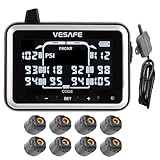
- 7. VESAFE 8-Sensor Anti-Theft TPMS Review — Best for Theft-Prone Storage
- 8. Taimster 10-Sensor Trailer TPMS Review — Best Signal Range for Long Rigs
- 9. LETOURWM M12-3 TPMS Review — Best Low-Cost Six-Sensor Kit
- 10. B-Qtech Flow-Through Sensor TPMS Review — Best for Flow-Through Sensors
- 11. GUTA GT20 Trailer TPMS Review — Best Starter Kit for Mid-Size Trailers
- 12. Flydew Six-Wheel RV TPMS Review — Best for Custom Pressure Alarms
- What a Trailer TPMS Actually Does
- How to Choose a Trailer TPMS in 2026
- Installing Sensors and Metal Valve Stems
- Frequently Asked Questions
- Final Verdict: Which Trailer TPMS Should You Buy
Top 3 Best Tire Pressure Monitoring Systems for Trailers in October

TireMinder i10 TPMS with 4 Transmitters
- 3.15-inch color LCD
- Up to 40 tires
- 0-199 PSI with plus or minus 1 PSI accuracy
- Includes rhino signal booster

TST 507 RV TPMS with Color Display
- 3.5-inch color display
- Expandable to four towables
- Replaceable CR2032 sensor batteries
- Three-year warranty

GUTA GT30 Trailer TPMS with 10 Sensors
- Ten sensors included
- Up to 188 PSI and 185 degrees F
- Wireless sensor programming
- Rechargeable monitor
All 12 Trailer TPMS Systems Compared at a Glance in 2026
This table lists every system we tested, in ranking order, with the numbers that decide whether it fits your trailer. Pay attention to the pressure range first, because several budget monitors top out below what many trailer tires actually run.
| Product | Specifications | Action |
|---|---|---|
| TireMinder i10 TPMS with 4 Transmitters |
|
Check Latest Price |
| TST 507 RV TPMS with Color Display |
|
Check Latest Price |
| GUTA GT30 Trailer TPMS with 10 Sensors |
|
Check Latest Price |
 TireMinder Smart TPMS with 4 Transmitters TireMinder Smart TPMS with 4 Transmitters |
|
Check Latest Price |
 Masoll M13 RV TPMS with 4 Sensors Masoll M13 RV TPMS with 4 Sensors |
|
Check Latest Price |
 Tymate TM7 RV TPMS with 4 Sensors Tymate TM7 RV TPMS with 4 Sensors |
|
Check Latest Price |
 VESAFE Wireless TPMS with 8 Sensors VESAFE Wireless TPMS with 8 Sensors |
|
Check Latest Price |
 Taimster 10-Sensor Trailer TPMS Taimster 10-Sensor Trailer TPMS |
|
Check Latest Price |
 LETOURWM TPMS with 6 Sensors LETOURWM TPMS with 6 Sensors |
|
Check Latest Price |
 B-Qtech TPMS with 6 Flow-Through Sensors B-Qtech TPMS with 6 Flow-Through Sensors |
|
Check Latest Price |
 GUTA GT20 Trailer TPMS with 4 Sensors GUTA GT20 Trailer TPMS with 4 Sensors |
|
Check Latest Price |
 Flydew 6-Wheel RV TPMS with Custom Alerts Flydew 6-Wheel RV TPMS with Custom Alerts |
|
Check Latest Price |
1. TireMinder i10 TPMS Review — Best Overall for Trailers
TireMinder i10 RV TPMS with 4 Transmitters, Black
3.15-inch color LCD
Up to 40 tires
0-199 PSI range
Plus or minus 1 PSI accuracy
Pros
- Large color LCD readable at a glance
- Checks every tire every six seconds
- Supports up to 40 tires for multi-vehicle setups
- Included rhino signal booster holds signal on long rigs
Cons
- Eight lithium metal batteries need periodic replacement
- Costs more than entry-level four-sensor kits
We ran the i10 on a tandem-axle travel trailer for the better part of two months, mostly on highway runs where the trailer wheels sit well behind the cab. The 3.15-inch color screen shows pressure and temperature for every tire at once, which means you glance once instead of scrolling through pages to find the problem wheel.
The scan cycle runs every six seconds and covers slow leaks, rapid leaks, blowouts, low and high pressure, and high temperature. In practice the rapid-leak alert fired a few seconds after I deliberately bled a tire down, well before the reading had dropped enough for me to notice by feel.
Accuracy held within about 1 PSI against a calibrated gauge across the whole range, and the 0-199 PSI ceiling leaves plenty of headroom for tires rated above 50 PSI. That upper limit is one of the reasons we put this system first, since plenty of cheaper monitors stop well below what a loaded fifth wheel runs.
The included rhino signal booster is the part owners mention most often. On our rig it made a real difference at the back of a longer trailer, where sensors without a booster were dropping out intermittently. The booster mounts near the trailer’s front axle and relays the signal forward to the display.
Capacity is the quiet strength here. The monitor tracks up to 40 tires, so a household with a fifth wheel, a travel trailer, a boat trailer, and a truck can carry every sensor on one unit rather than juggling four separate displays.
Where the i10 earns its place in your cab
This is the system to buy if you read the display while driving rather than parking to check. The color screen is large enough to interpret at a glance, and the audible and visual alerts fire for every fault type the system tracks, not just a low-pressure warning.
It also suits households running more than one trailer, because forty tire positions covers roughly four full trailers or a truck plus a stack of tows. For people who also care about tire wear and fuel consumption, the continuous trend of readings helps you catch a tire that has been running a little low for months.
Where the i10 will disappoint you
The kit lists eight lithium metal batteries, which are the batteries in the monitor itself, and they do need replacing on a schedule. If you prefer a display that charges over USB and never asks for a battery change, the TST 507 is the alternative in this group.
It is also more money than the entry-level four-sensor kits, so a small utility trailer that never leaves the pavement does not need this level of hardware. Those owners should look at the simpler kits further down the list.
2. TST 507 RV TPMS Review — Best Expandable System
TST 507 Series TPMS – RV Tire Pressure Monitoring System with 4 Cap Sensors & Color Display Monitor for Travel Trailers, Campers and Motorhomes
3.5-inch color display
Four cap sensors included
Expandable to truck plus four towables
Three-year warranty
Pros
- Expandable to a tow vehicle plus four towables
- Audible and visual alerts with auto-lock on the offending tire
- Tire positions swappable after a rotation
- Three-year warranty with USA-based support
Cons
- Highest price in this group
- CR2032 sensor batteries must be replaced periodically
The 507 arrived pre-paired with four cap sensors, mounted them, and started reporting within a few minutes. For a first install on a trailer with existing metal valve stems, it was the fastest setup of any system we tried, and the display stayed legible in full sun on the dash.
Alerts cover low pressure, high pressure, fast leaks, and high temperature, and the monitor auto-locks onto the tire causing the problem rather than making you hunt through a list. That single behaviour is the reason a lot of owners stay with this system for years.
The expansion path is the real argument for the 507. It can monitor your towing truck plus up to four towable vehicles, and tire locations can be swapped after a rotation so the display layout still matches reality. Families with a fifth wheel and a boat trailer only need one monitor in the cab.
The complete kit includes the display, four cap sensors, a repeater, a magnetic mount, and a charging cable. The 3.5-inch color display runs on a rechargeable battery with a micro-USB charger, so you are not replacing monitor batteries on a schedule.
What makes the 507 worth the premium
If your trailer already has metal valve stems, the 507 is a fit-and-forget install, and the three-year warranty with USA-based support is the strongest coverage we saw among the cap-sensor kits. For full-time RVers who keep equipment mounted permanently, that matters.
The kit also arrives with everything a trailer owner needs, including the repeater, so you are not adding a second purchase to make long trailers behave. Our tests on a fifth wheel showed stable readings across all four trailer tires with no dropouts.
What you give up compared with cheaper kits
This is the most expensive system in our group, and that cost only makes sense if you plan to expand it across multiple vehicles. A single small trailer does not need a truck-plus-four-towables platform, and the money is better spent on a simpler kit.
The sensors use user-replaceable CR2032 cells, which is a real benefit over sealed sensors, but it does mean you will eventually open a sensor with a small screwdriver. Budget roughly for a fresh set every few seasons depending on how often you tow.
3. GUTA GT30 Trailer TPMS Review — Best for Large Trailers
GUTA GT30 Trailer Tire Pressure Monitoring System, RV TPMS with 10 Sensors
10 sensors included
Up to 188 PSI and 185 degrees F
Large multi-tire display
Wireless sensor programming
Pros
- Large display shows all ten tires at a glance
- Wireless programming makes sensor swaps painless
- 188 PSI ceiling handles high-load trailer tires
- Monitor runs 12 to 14 days per charge
Cons
- Cap sensors are best mounted on metal valve stems
- Priced above four-sensor kits
Ten sensors is the headline here, and on a triple-axle trailer plus a truck you fill every slot and still have capacity to spare. The large screen displays up to ten tires on a single page and can view more, which removes the scrolling that forces you to guess which wheel is misbehaving.
Wireless sensor programming is the feature that owners praise most. You configure sensors before installation instead of pairing them while crouching beside a wheel, and rotating tires or replacing a failed sensor becomes a two-minute job at the trailer rather than a roadside chore.
Range and pressure handling are both strong. It monitors up to 188 PSI and temperatures to 185 degrees F, and the alarm range of plus 25 percent to minus 15 percent of reference pressure is a sensible default for trailer tires rather than an arbitrary number.
The monitor carries a built-in rechargeable lithium battery that runs 12 to 14 days after a four-hour charge, and the sensors themselves run up to four years on replaceable CR2032 cells. Six alert modes cover high and low pressure, high temperature, fast leak, missing signal, and low sensor battery.
Why big-rig owners pick this one
Showing every tire at once is not a luxury on a trailer with three axles, because a problem on the far axle can otherwise stay hidden while the display cycles. The GT30 layout also auto-switches between trailer sections, so the screen keeps up with the part of the rig you care about.
If you tow long distances with a heavy load and want to see pressure and temperature for a large number of wheels without piecing several monitors together, this is the system that does it in one screen. The optional signal booster improves range further and resists interference from vehicle electronics.
Where it falls short
Ten sensors is more hardware than a small trailer needs, and the added cost reflects that. If you are monitoring four tires on a short travel trailer, the same brand offers a simpler four-sensor version further down this list.
The cap sensors are happiest on metal valve stems. On rubber stems the added weight of the sensor is the weak point, and owners report more drift and occasional slow leaks that trace back to stem failure rather than sensor failure.
4. TireMinder Smart TPMS Review — Best Phone-Based Monitoring
TireMinder Smart TPMS with 4 Transmitters for RVs, MotorHomes, 5th Wheels, Motor Coaches and Trailers
Smartphone app over Bluetooth 4.0
Up to 22 tires
0-232 PSI range
Bluetooth adapter and booster included
Pros
- Phone-based monitoring removes the need for a dash display
- 0-232 PSI range suits high-load tires
- Included Bluetooth adapter and booster improve reliability
- Supports up to 22 tires for multi-vehicle households
Cons
- Requires a compatible smartphone with Bluetooth 4.0 or later
- App-based workflow is less convenient than a standalone display
The Smart system replaces the dash unit with an app, and if you already keep your phone mounted in the cab you get alerts without adding another screen to the windshield. It pairs over Bluetooth 4.0 or later with iOS 7 or Android 4.4 devices.
The pressure ceiling of 232 PSI is the highest in this group, which makes it a safe choice for tires rated well above the usual trailer range. Monitoring capacity covers up to 22 tires, and readings show pressure and temperature simultaneously.
Alerts cover high and low pressure, slow leak, rapid leak, high temperature, and blowouts, and the app adds auto-scroll, auto-search, and a two-part disconnect so you can hand off monitoring between two vehicles without reconfiguring anything.
Both a Bluetooth adapter and a rhino signal booster are included, which addresses the two most common complaints about phone-based systems: weak connections on long trailers and pairing headaches. The adapter handles the radio link so your phone only does the display work.
Who should choose an app-based system
This suits owners who do not want a dedicated display mounted permanently, particularly people running several vehicles who would rather not fit four monitors. Pulling up the app in a CarPlay or Android Auto layout keeps the data where you already look.
It is also a sensible option for a boat trailer or a seasonal toy hauler you only tow a handful of times a year. You can check pressures on demand rather than keeping live hardware powered up between trips.
Where an app falls short
You are dependent on phone battery, Bluetooth pairing, and an app that has to keep working. Owners who prefer a dedicated unit report the app workflow is less convenient, especially when an alert has to cut through a locked screen.
Bluetooth 4.0 or later is required, which rules out older devices. If your tow vehicle is a decade-old truck with no modern phone integration, a standalone monitor is the more dependable option.
5. Masoll M13 RV TPMS Review — Best for Set-and-Forget Calibration
Masoll M13 Tire Pressure Monitoring System, RV/Trailer TPMS with 4 Sensors
0-87 PSI detection range
1.5 PSI accuracy
Automatic reference-pressure calibration
Solar charging display
Pros
- No manual alarm thresholds
- calibrates from your current tire pressure
- Solar charging keeps the display powered
- Clear color LCD with automatic brightness
Cons
- 0-87 PSI ceiling is low for high-load tires
- Monitor and sensors carry different and shorter warranty periods
The M13 removes the step most people get wrong. Instead of asking you to type in low and high alarm values, it uses your current tire pressure as the reference and sets the alarms 25 percent above and 15 percent below it, then recalibrates automatically after you inflate or deflate.
That single design choice matters if you tow at different loads or run different pressures on the road and at the campground. The thresholds follow the tire rather than forcing you to choose one compromise number.
Readings come in at 1.5 PSI accuracy across a 0-87 PSI range, which covers most passenger-rated trailer tires but not the high-pressure setups found on heavier equipment. The solar panel charges the monitor, with overheat and overcharge protection, plus auto wake-up and sleep.
The color LCD dims automatically and uses an anti-reflective face, so it stays readable on a bright dash and does not light up the cab at night. The whole kit weighs eight ounces and mounts out of the way.
Why auto-calibration appeals to newer owners
If you have never run a TPMS, the settings screens on most systems are where people give up. Watching the M13 learn your pressures after a few minutes of driving removes that friction completely, and it suits anyone who changes tire pressures often.
Solar charging means the monitor does not need a cigarette lighter socket plugged in for the whole trip, which is convenient on a boat trailer or a fifth wheel where cab power is at a premium.
The pressure ceiling is the catch
An 87 PSI ceiling is the limitation to weigh. If your tires are rated for pressures above that, the monitor cannot represent the top of the safe range, and the alarms will not behave as you would expect on a heavily loaded rig.
Warranty coverage also differs between the monitor and the sensors, which is shorter than what the premium kits offer. For a trailer you expect to keep a decade, a longer warranty is worth comparing before you settle.
6. Tymate TM7 RV TPMS Review — Best Value for First-Time Owners
Tymate TM7 RV Tire Pressure Monitoring System, TPMS Set of 4 Sensors
0-144 PSI detection range
Plus or minus 1.5 PSI accuracy
Six alarm modes
12V plug-in with dual USB
Pros
- Accuracy within about 1.5 PSI
- Five-minute setup with pre-paired sensors
- Color LCD with adjustable backlight
- Dual USB outlets double as a phone charger
Cons
- Signal repeater recommended for trailers 36 ft or longer
- Sensor batteries need occasional CR1632 replacement
The TM7 is the most reviewed system in our group by a wide margin, and in a category where review counts thin out fast that tells you something about how widely it has been fitted. Our four-sensor set covered a travel trailer without any fuss.
Setup genuinely took about five minutes. The sensors arrive pre-paired, so you screw them onto the valve stems, plug the monitor into the 12V socket, and start reading pressures. The color LCD has an adjustable backlight that works day and night.
Accuracy stayed within about 1.5 PSI and temperature within roughly 3 degrees F against our reference gauge. Six alarm modes cover high and low pressure, fast leakage, high temperature, sensor low battery, and lost sensor signal, which is a more complete list than most kits at this level.
The 0-144 PSI range covers the great majority of trailer tires, and the long signal transmission works with sedans, SUVs, pickups, RVs, and travel trailers. The dual USB outlets on the monitor are a genuinely useful extra for charging a phone on long trips.
Where the TM7 makes the most sense
It is the system to recommend to someone buying their first trailer tire pressure monitoring system. Nothing about it requires learning, and the pre-paired sensors remove the single most common setup frustration we saw across all twelve kits.
For trailers under about 36 feet, the transmission distance is adequate without extra hardware. That makes it a good match for pop-up campers, small travel trailers, and boat trailers that stay under a moderate length.
What to add on a longer rig
Owners of trailers 36 feet or longer consistently recommend pairing it with an optional Tymate repeater, and without one the rear-most tires can drop out on highway stretches. Budget for that accessory if your trailer is on the longer side.
The sensors use replaceable CR1632 cells, so there is a small maintenance task every few seasons. The manufacturer also recommends metal valve stems, which is a good rule for any cap-sensor system rather than this one in particular.
7. VESAFE 8-Sensor Anti-Theft TPMS Review — Best for Theft-Prone Storage
VESAFE TPMS, Wireless Tire Pressure Monitoring System for RV, Trailer, Coach, Motor Home, Fifth Wheel, Including 8 Anti-Theft sensors.
8 anti-theft sensors included
Observes up to 22 tires
Five adjustable alarm modes
Up to 2500 miles per charge
Pros
- Readings closely match a manual gauge
- Installation often takes under 15 minutes
- Compact display takes little dash space
- Automatic trailer connect and disconnect
Cons
- Unassigned sensors show dashes which can confuse
- Signal booster recommended to reduce interference
- Scrolling display on lower-capacity variants
This kit ships with eight anti-theft sensors, and the theft resistance comes from locking hardware rather than a simple threaded cap. For trailers that live unattended at a storage lot or sit at a rally, that is the point of the kit.
Readings matched our manual gauge and temperature gun closely in testing, and programming was quick enough that the install came in under a quarter of an hour. The display is compact and readable in a dark cab, which suits a small mounting spot.
Five alarm modes cover high and low pressure, temperature, leakage, and battery life, all with adjustable thresholds. The monitor runs up to 2500 miles on a full charge, and sensor batteries last up to two years on replaceable CR2032 cells.
The behaviour we liked most is automatic connect and disconnect based on distance, plus automatic sleep and wake by motion. Hitch up and the trailer joins the system, drive away and it drops out without you pressing a button.
Who should pick this kit
Storage lots, coastal properties, and anyone who leaves a trailer exposed to weather benefit from anti-theft sensors more than anyone else. The larger tire count on the higher-capacity versions also means one kit can cover a truck and trailer together.
If you dislike fiddling with system modes each time you hitch up, the automatic connection logic removes a step that other kits force on you. That convenience shows up every trip.
What to watch for
On lower-capacity versions the display scrolls tires rather than showing them all at once, which is the trade for the compact screen. Unassigned sensor positions show dashes until you program them, and that looks like a fault the first time you see it.
A signal booster is recommended to reduce interference, so treat it as part of the cost on longer trailers. The review base here is much smaller than the mainstream kits, so long-term durability data is thinner.
8. Taimster 10-Sensor Trailer TPMS Review — Best Signal Range for Long Rigs
Taimster Trailer Tire Pressure Monitoring System 10 Sensors,0-188PSI RV TPMS with 4.5″ Large Solar Monitor 6 Alerts, Signal Booster for Truck/Camper/Motor Homes,Long Sensing Distance
4.5-inch display
0-188 PSI range with under 1 PSI error
IP67 sensors with locking nuts
Signal booster included
Pros
- Large 4.5-inch screen with a clear tire layout map
- Sensors link in about 5 to 10 minutes
- Reliable range with the included repeater
- Under 1 PSI sensor error
Cons
- Screen brightness is low in direct daylight
- Sensors not recommended on short or rubber valve stems
- One unit arrived without a manual
The Taimster package includes ten sensors and a signal booster, and on a roughly 30 foot motorhome with a trailer behind it, the repeater is what made the difference. Reviewers consistently report the system holding signal where others drop out.
Error stayed under 1 PSI across a 0-188 PSI range, and the sensors are rated IP67 for dust and water with anti-theft locking nuts. The operating range runs from about minus 4 degrees F to 185 degrees F, which covers winter and summer towing in most climates.
The 4.5-inch display shows pressure and temperature for all tires at once across a 4 to 14 tire layout, and you can customise the on-screen tire map so the positions match your actual rig. Per-axle alarm values mean the steer axle and a trailer axle can carry different limits.
Solar and Type-C charging give roughly 15 days between charges, and the monitor sleeps after five minutes parked. Setup took between five and ten minutes, and the manufacturer shipped replacement sensors when one failed.
Where this system earns its badge
Long rigs are the case. When the display sits in a tow vehicle cab with thirty-plus feet of trailer behind it, an included booster removes the guesswork that forces you to buy a second accessory and find the right mounting spot for it.
The IP67 sensors with locking nuts also handle boat trailers, where a submerged sensor is a realistic scenario rather than a hypothetical. Both water resistance and theft resistance come standard here.
What the owners who rated it lower mention
Screen brightness is lower than ideal in direct daylight, and a reflective windshield makes it worse. If you mount the display facing a sunny windshield, test readability during a daytime shakedown trip before committing.
The sensors should stay off short or rubber valve stems, and one reviewer received a unit without a manual, which made alarm setup difficult. Confirm the manual ships before you install.
9. LETOURWM M12-3 TPMS Review — Best Low-Cost Six-Sensor Kit
RV Tire Pressure Monitoring System -TPMS Tire Pressure Monitor with 6 Sensors,M12-3 TPMS Solar Charge & USB Color LCD Display, 0-9.9BAR/144PSI Range, 6 Alarm Modes for RV/Trailer/Truck IP67
6 sensors included
0-144 PSI and 0-9.9 BAR range
IP67 dust and water resistance
65-foot sensing distance
Pros
- Six sensors at the lowest cost in this group
- Two-minute screw-on installation with tools included
- Color LCD readable in sunlight and at night
- Solar charging kept the display powered
Cons
- Readings drift a few PSI from a manual gauge
- Intermittent sensor connection on larger rigs
- Instructions are hard to follow and sensor numbering is confusing
Six sensors at this cost point is unusual, and it covers a tandem trailer or a truck plus trailer without arithmetic. Installation is a screw-on with jam nuts and a small included wrench, and the listing claims about two minutes per tire.
The display is a large HD LCD with automatic brightness adjustment and voice broadcasting of alerts, which is helpful if you want to know something is wrong without looking at the screen. Solar charging with USB backup kept it powered through our test period.
Range is 0-144 PSI, and six alarm modes cover high and low pressure, high temperature, rapid and slow leaks, sensor failure, and low battery. Rated IP67, the sensors are built for dust, water, wind, and snow exposure.
Owner experiences are genuinely split here. Many appreciate the value, the solar charging, and the sun-readable screen, and some report catching a slow leak before it became a problem. Others note readings that sit a few PSI off a manual gauge.
Why owners on a tight budget pick it
The cost per monitored tire is the lowest in our group, and for an older trailer that needs basic leak protection rather than sophisticated trend data, that is a defensible trade. The 65-foot sensing distance suits mid-size trailers.
Voice alerts are a nice touch if you drive a truck where the display is not always in view. Two-minute installation means you can add it during a pre-trip walkaround rather than planning an afternoon.
What gives us pause
Readings drifting several PSI from a manual gauge means you should still check pressures by hand before a long trip rather than treating the display as the only source. Owners on larger rigs report intermittent sensor connections.
The instructions are also difficult to follow and the sensor numbering is not obvious, which is how a tire ends up mapped to the wrong position on screen. Budget extra time for setup, and customer service resolves many of the failures that do occur.
10. B-Qtech Flow-Through Sensor TPMS Review — Best for Flow-Through Sensors
B-Qtech RV Trailer Tire Pressure Monitoring System with 6 Flow Thru Sensors
6 flow-through sensors
3.2-inch HD LCD
2200mAh battery up to 120 hours
Repeater included
Pros
- Flow-through sensors let you inflate without removing them
- 2200mAh battery gives long runtime
- Included repeater improves signal on longer trailers
- 4/6 tire switching suits mixed use
Cons
- Flow-through sensors require a metal valve stem
- Sensor batteries still need periodic CR1632 replacement
Flow-through sensors are the practical reason to pick this kit. Because air passes through them, you can top up a tire at a gas station without pulling a sensor off, which removes the most common complaint owners have about cap-style systems.
The 3.2-inch HD LCD has a backlight and a recessed screen face that cuts glare in daylight. The built-in 2200mAh rechargeable lithium battery runs up to 120 hours, and solar plus USB charging tops it up on the move.
The included repeater stabilises reception from roughly 8 meters out to about 30 meters, which is a meaningful improvement over relying on the monitor alone. A 4/6 tire switching mode lets you run the tow vehicle in four-wheel mode and the trailer in six-wheel mode on the same unit.
Seven alarm modes with values you can customise per axle sit alongside auto wake-up on entry and sleep after fifteen minutes parked. Sensor batteries are user-replaceable CR1632 cells.
Who should want flow-through sensors
If you check tire pressure often, at stops and at the campground, flow-through design is worth the extra installation care. Anything that makes you avoid pulling a sensor off a valve stem reduces the temptation to skip the check.
The 4/6 switching mode is genuinely useful for someone towing a trailer behind a truck and monitoring both from one display. Owners report the repeater noticeably improving signal over longer trailers.
What to plan for
Flow-through sensors need a metal valve stem. If your trailer runs rubber stems, this kit is the wrong fit and the job grows into replacing stems before any sensor goes on, so check that first.
Sensor batteries still need periodic CR1632 replacement, and a portion of owners report units failing sooner than they expected. The one-year manufacturer warranty is the shortest among the kits we covered.
11. GUTA GT20 Trailer TPMS Review — Best Starter Kit for Mid-Size Trailers
GUTA GT20 Trailer Tire Pressure Monitoring System, TPMS with 4 Sensors
0-188 PSI range
Monitors up to 24 tires
Four pre-paired sensors
Large color LCD
Pros
- Sensors arrive pre-paired so no setup pairing is needed
- 0-188 PSI and minus 40 to 221 degrees F range
- Large color LCD with adjustable orientation and backlight
- Scales to 24 tires for larger RVs
Cons
- The four-sensor kit does not include the signal booster
- Sensor battery replacement requires following the listing guide
The GT20 is the four-sensor version of the same system family as the GT30, and it keeps the wide pressure range that makes the brand attractive. Monitoring spans 0-188 PSI and temperatures from minus 40 to 221 degrees F.
Sensors arrive pre-labelled and factory paired, so there is no pairing step at all. You screw them on, mount the display, and set your units. PSI or BAR and Celsius or Fahrenheit both switch from the menu.
Even with four sensors in the box, the system supports up to 24 tires across configurations, so a mid-size trailer today can grow into a multi-vehicle setup later. Six real-time alert modes handle pressure, temperature, and leak events.
The large color LCD has adjustable orientation, so it can be mounted in portrait or landscape depending on your dash space. The built-in rechargeable lithium battery runs up to 15 hours under heavy use and drops into power-save mode after fifteen minutes without motion.
Where the GT20 fits between the kits
This is the middle option for a travel trailer that needs four to six monitored tires but not a ten-sensor package. The 188 PSI ceiling covers high-load trailer tires, and the temperature range handles winter towing without a separate thermometer.
The adjustable display orientation is a small detail that matters more than it sounds, because the same unit works on a truck dash and a trailer-side mount. Owners rate the large screen and low entry cost as the main draws.
What to add before you rely on it
The four-sensor kit does not include the signal booster, so budget for it if your trailer runs long or your tow vehicle has a lot of electronics between the cab and the axles. The same brand offers it separately.
Battery replacement on the sensors requires following the listing guide rather than guessing, and metal valve stems are recommended for stability. Check the guide once so the first replacement goes smoothly.
12. Flydew Six-Wheel RV TPMS Review — Best for Custom Pressure Alarms
Flydew 6-Wheel RV TPMS with Custom Pressure Alerts, 0-144 PSI
0-144 PSI with plus or minus 1.5 PSI accuracy
Sensors update in 0.3 seconds
Adjustable thresholds
Solar and USB-C charging
Pros
- Customizable per-tire thresholds instead of fixed percentages
- Fast 0.3-second sensor updates
- Solar and USB-C charging suits long trips
- Pre-coded sensors make the three-step install straightforward
Cons
- Limited six-tire capacity compared with 10-sensor kits
- Newer listing with a smaller review base
This Flydew six-wheel kit is the odd one out in this group because its thresholds are set in PSI values you choose, rather than percentages of a reference pressure. That means a heavily loaded tire and a lightly loaded tire on the same trailer can each carry their own realistic limits.
Accuracy is plus or minus 1.5 PSI across 0-144 PSI, and sensors report in 0.3 seconds while the LCD refreshes every six seconds. Six alarm types cover the usual pressure and temperature events plus sensor problems.
Charging is solar plus USB-C, and sensor batteries are replaceable CR1632 cells. A three-year warranty is the longest we saw among the kits with user-replaceable sensor batteries, which matters for a system you intend to keep.
Installation is a three-step process using the included hex nuts and pre-coded sensors, and the kit includes a soapy water leak test to confirm a seal after fitting. The auto-dimming color LCD highlights critical warnings against a darker background.
Why per-tire thresholds are useful
Percentage-based alarms assume every tire on the trailer should run at the same pressure, which is not always true. A tag-along on a fifth wheel or a boat trailer with different tire ratings will produce better warnings when each tire carries its own number.
It also suits owners who tow in stages, since you can set limits that match a light trailer on local roads and tighten them for a mountain grade without relearning the menu.
What the smaller review base means
This is a newer listing with a much smaller body of reviews than the established systems, and the rating spread shows a meaningful share of mixed experiences. Long-term durability data simply does not exist yet.
Capacity is limited to six tires, so a triple-axle trailer or a truck plus trailer combination needs a second kit. Compare that against the ten-sensor options before buying for a big rig.
What a Trailer TPMS Actually Does
Every system in this roundup falls into one of two categories. Direct TPMS systems put a physical sensor on each tire and read the pressure inside it, which is what every aftermarket trailer system uses. Indirect TPMS systems infer pressure from wheel speed sensors through the anti-lock brakes, and those are factory-only on vehicles.
Within direct systems there are three sensor styles. Cap sensors screw onto the existing valve stem and must be removed to add air. Flow-through sensors replace the valve cap but let air pass through, so you can still inflate. Internal sensors mount inside the rim, out of sight and out of the weather.
Cap sensors are by far the most common on trailers, and they are the reason metal valve stems come up so often. The sensor adds weight to the valve stem, and rubber stems are the first thing to fail under that load at high pressures. If your trailer still has rubber stems, replacing them with metal ones is the most useful thing you can do before installing any monitor.
Alerts fall into a few useful categories. Slow-leak warnings catch the gradual losses that cause uneven tire wear and heat damage. Rapid-leak and blowout warnings catch the dramatic failure. High-temperature warnings catch the case where pressure reads fine but a dragging brake or a failing bearing is cooking the tire.
Temperature matters because pressure alone misses real problems. A tire that is losing pressure and a tire with a seized brake both heat up, and a system that reports both numbers gives you a warning that a pressure-only monitor would miss entirely.
How to Choose a Trailer TPMS in 2026
The first filter is your tires’ pressure rating, not the trailer length. Several budget monitors stop at 87 PSI or 144 PSI, which is fine for many light trailers but leaves no headroom on high-load setups. Check the maximum cold pressure printed on your tire sidewalls before anything else.
Second is tire count. A tandem axle trailer needs six or eight sensors, a triple axle needs nine or ten, and a fifth wheel owner towing a tag-along plus a truck needs more still. Several systems list a maximum capacity far above the sensors included, which is how you grow into a multi-vehicle setup later.
Third is signal range. Reviewers consistently report dropouts on long rigs without a booster, and the manufacturer thresholds matter: 65 feet covers many trailers, while ratings of 100 feet or a bundled repeater cover a fifth wheel plus trailer. Treat the repeater as part of the cost, not an optional extra.
Fourth is alarm logic. Percentage-based alarms are simple and forgiving. Fixed PSI values, like the Flydew’s, let you set different limits per tire or per axle. Auto-calibration, like the Masoll’s, removes setup entirely. Whichever you pick, set thresholds on a warm tire at the pressure you tow at, not a cold tire at rest.
Fifth is sensor battery life and warranty. Every kit here uses replaceable cells, which is good, but the interval differs a lot between systems. Longer warranties like the TST’s three years and Flydew’s three years cover more seasons of service before a sensor failure becomes your cost.
Finally, think about where the monitor lives. A dedicated color display that auto-locks onto the problem tire is easier to read at speed than an app on a phone. If you already run CarPlay or Android Auto and prefer one screen, an app-based system like the TireMinder Smart keeps your data where you already look.
Matching a system to your trailer type
Travel trailer and fifth wheel owners are best served by a color display with a bundled booster, since both place the trailer far from the cab. Boat trailer owners should prioritise IP67 rating and anti-theft locking hardware. Horse and livestock trailers carry living cargo, so temperature warnings deserve more weight than pressure range.
Cargo and utility trailers that stay close to home can run a small four- or six-sensor kit without extras. Full-time RVers who keep hardware mounted permanently should prioritise solar or rechargeable displays and long warranties. Anyone running more than one trailer benefits from a system with twenty-plus tire capacity and swappable tire locations.
What to check before you buy
Confirm whether metal valve stems are installed or included, whether the kit includes a repeater or booster, and whether sensors are user-replaceable. Those three answers cover most of what separates a disappointing kit from a good one, and all three are cheap to verify before you commit.
Installing Sensors and Metal Valve Stems
Installation usually takes under an hour, and most of the work happens before the sensors come out of the box. Start by replacing rubber valve stems with metal ones if your trailer still has them, which removes the most common source of slow leaks after a sensor goes on.
Next, mount the sensors on each valve stem, tightening firmly but not aggressively, and confirm the seal with soapy water. Some kits, like the Flydew, include a leak test as part of the setup. Skip the sealant tape on threads where a sensor will screw on, since it can affect sealing.
Then place the repeater or booster near the trailer’s front axle if your kit includes one, and mount the display in the tow vehicle where you can read it without looking away from the road for long. Pair the sensors, set your alert thresholds, and verify each tire reads at roughly the same pressure as your gauge.
Finally, walk the whole rig once with the system live. Confirm that every tire position on the screen corresponds to the actual tire, because a mislabeled layout is the most common cause of a false alarm later. Owners who skip this step usually find out about it at the worst possible moment.
For winter storage, most owners remove the monitor from the tow vehicle and bring it indoors, since cold temperatures shorten battery life in stored devices. Leaving sensors mounted on the trailer is generally fine, and cold weather can cause temporary connection blips that resolve once the tires warm back up.
Frequently Asked Questions
What are the two types of TPMS systems?
The two types are direct and indirect. Direct systems put a physical sensor on each tire and read the actual pressure inside it, which is what every aftermarket trailer TPMS uses. Indirect systems infer pressure changes from wheel speed sensors through the anti-lock brakes, and those are factory-installed on vehicles rather than sold as trailer add-ons.
Can I install a trailer TPMS aftermarket?
Yes, almost every trailer TPMS is aftermarket and installs without drilling or removing tires. You screw sensors onto existing valve stems, place the repeater if the kit includes one, mount the display, and pair it. Metal valve stems are strongly recommended because rubber stems can fail under the weight of a sensor at high pressures.
What PSI should I set my trailer TPMS alerts to?
Set your thresholds based on the cold pressure printed on your tire sidewall. Most percentage-based systems default to about 25 percent above and 15 percent below your reference pressure, which matches how trailer tires actually behave. If your system takes fixed PSI values, set the low alarm a few PSI under your normal towing pressure rather than at the sidewall maximum.
Does temperature affect tire pressure readings on a trailer TPMS?
Yes, and that is why every system in our roundup reports temperature alongside pressure. Air pressure rises as a tire heats up and falls as it cools, so a cold reading in the morning and a hot reading after highway driving will differ even with no leak. Temperature also catches problems pressure alone misses, such as a dragging brake or a failing bearing.
How far does a trailer TPMS signal reach?
It depends on the system. Some entry-level monitors quote about 65 feet, which suits most small and mid-size trailers. Others reach 100 feet or bundle a signal repeater that relays the signal forward from the trailer’s front axle. For a fifth wheel plus tag-along, or any rig where sensors drop out on highway runs, choose a kit with a repeater included.
Final Verdict: Which Trailer TPMS Should You Buy
The TireMinder i10 is our pick for the best tire pressure monitoring systems for trailers in 2026. It pairs a genuinely readable 3.15-inch color display with a six-second scan cycle across every fault type, accuracy within about 1 PSI, and a bundled rhino signal booster that holds signal on longer trailers. Forty tire positions also mean one monitor can cover a whole household of tows.
The TST 507 is the alternative for anyone who plans to expand across a truck plus several trailers, and its three-year warranty with USA-based support is the strongest coverage in this group. For a large multi-axle rig, the GUTA GT30 shows all ten tires at once and programs sensors wirelessly before installation. First-time owners on a shorter trailer get the simplest path with the Tymate TM7, while the TireMinder Smart keeps everything on your phone.