
Short answer: the ROVE R2-4K Dual is the best dash cam for Uber drivers overall, because its Sony STARVIS 2 front sensor, built-in GPS, 20MB/s Wi-Fi and 1TB card ceiling handle full-time shifts without a subscription. Drivers who need cabin coverage should look at the REDTIGER F17 or the VIOFO A229 Plus, and anyone who needs true 360 sightlines should check the IIWEY N6.
A rideshare car is a workplace, a storefront and a legal proceeding all at once. Everything that happens in it gets argued about later, often weeks later, by someone who was not there. A dash cam for Uber drivers is the cheapest piece you can buy that produces an impartial record of what actually happened.
We compared 10 multi-channel dash cams side by side, reading the review data on each one and weighing the things that decide real disputes: cabin coverage, infrared night vision, plate readability, heat tolerance, storage headroom and how fast you can pull a clip to your phone before loop recording overwrites it. The winners cover everything from a first weekend of driving to eight-hour nights downtown.
New to the platform and still working out which gear matters? Our dash cam guide for new drivers covers the basics before this roundup gets into channel counts and parking mode.
Table of Contents
- Top 3 Picks for Best Dash Cams for Uber Drivers in October
- Comparing the Best Dash Cams for Uber Drivers in 2026
- 1. ROVE R2-4K Dual – Best Overall Front and Rear Setup
- 2. REDTIGER F7NP – Best for Native 4K Front Footage
- 3. IIWEY N6 – Best for True 360 Coverage
- 4. REDTIGER F17 – Most Versatile 3-Channel System
- 5. COOAU D30S – Best for Front and Cabin on a Budget
- 6. 70mai T800E – Best for First-Time Drivers
- 7. VIOFO A229 Plus – Best for Low-Light Clarity
- 8. ROVE R3 – Best for a Large Touchscreen Interface
- 9. Vantrue N4S – Best for Magnetic Tool-Free Install
- 10. FREEXAR D4 – Best for Native 4K With 4 Channels
- How to Submit Dash Cam Footage to Uber and Lyft Support
- Dash Cam Buying Guide for Uber Drivers
- Frequently Asked Questions
- The Best Dash Cam for Your Driving Pattern
Top 3 Picks for Best Dash Cams for Uber Drivers in October


IIWEY N6 4-Channel 360
- True 4-channel 360 coverage
- 8 IR LEDs
- Swivel side cameras
- 48-hour parking mode

REDTIGER F17 3-Channel
- 4K front plus cabin and rear
- Built-in GPS
- IR cabin camera
- 64GB card included
Comparing the Best Dash Cams for Uber Drivers in 2026
Every camera in this table records continuously to a microSD card and locks footage on impact. Read the channel column first, because it decides which disputes the camera can actually answer.
| Product | Specifications | Action |
|---|---|---|
| ROVE R2-4K Dual Dash Cam |
|
Check Latest Price |
 REDTIGER F7NP 4K Dash Cam REDTIGER F7NP 4K Dash Cam |
|
Check Latest Price |
| IIWEY N6 4-Channel 360 Dash Cam |
|
Check Latest Price |
| REDTIGER F17 3-Channel Dash Cam |
|
Check Latest Price |
 COOAU D30S 4K Front and Inside COOAU D30S 4K Front and Inside |
|
Check Latest Price |
 70mai T800E 3-Channel Dash Cam 70mai T800E 3-Channel Dash Cam |
|
Check Latest Price |
 VIOFO A229 Plus 3-Channel VIOFO A229 Plus 3-Channel |
|
Check Latest Price |
 ROVE R3 3-Channel Dash Cam ROVE R3 3-Channel Dash Cam |
|
Check Latest Price |
 Vantrue N4S 2.7K 3-Channel Vantrue N4S 2.7K 3-Channel |
|
Check Latest Price |
 FREEXAR D4 4-Channel 360 Dash Cam FREEXAR D4 4-Channel 360 Dash Cam |
|
Check Latest Price |
1. ROVE R2-4K Dual – Best Overall Front and Rear Setup
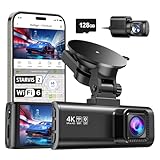
ROVE R2-4K Dual Dash Cam Front and Rear, STARVIS 2 Sensor, Free 128GB Card
2.5K front upscaled to 4K + 1080P rear
Sony STARVIS 2 IMX675
Built-in GPS
1TB card support
Pros
- Sony STARVIS 2 IMX675 sensor reads plates in low light
- Built-in GPS with live speed and compass on a 3-inch IPS screen
- 20MB/s dual-band Wi-Fi for fast clip downloads
- Free 128GB card included and microSD support up to 1TB
- Supercapacitor with thermal protection suits hot climates
Cons
- 4K mode is upscaled from 2.5K rather than native
- No cabin channel for passenger disputes
- Parking mode needs a hardwire kit sold separately
This is the camera I would put in my own car if I ran full-time shifts. The front channel records at 2.5K and upscales to 4K, the rear runs 1080P, and both use wide-angle glass at 150 and 140 degrees. That is enough coverage to see a car’s quarter panel entering your lane.
Reviewers consistently single out plate readability in low light, and the data backs that up. It holds 4.5 stars across 14,109 ratings with 76% five-star and only 6% one-star, the largest clean rating base in this group. A 20MB/s transfer rate means a three-minute clip reaches your phone in seconds, which matters when you are standing on a corner deciding whether to file a claim.
The 1TB card ceiling is the sleeper feature. At roughly a week of continuous dual-channel driving, a single card can cover an entire multi-car rotation without a swap. The built-in GPS stamps speed, compass and route directly onto each clip, so a red-light or speeding dispute has a data overlay attached.
Three parking modes are available: 1fps time-lapse, motion detection and collision detection. All three need a hardwire kit, which is standard across this entire roundup. The 3-inch IPS screen is large enough to aim the camera and check framing before you pull away.
Why drivers pick the R2-4K Dual
It is the rare dash cam where the spec sheet and the review complaints line up in the same place: strong sensor, strong transfer speed, strong card support, and no cabin camera. If your disputes are about other vehicles, lane changes and parking damage rather than passenger behavior, this is the right pick and the extras you skip cost you nothing.
The dual-band 5.8GHz and 2.4GHz Wi-Fi also holds up in cars with a lot of electronics noise, which is where cheaper units stall on download.
When the R2-4K Dual is the wrong choice
If any of your driving involves a passenger claim, a deactivation dispute, or an allegation about rider conduct, this camera cannot help. It has no interior channel at all. Choose the REDTIGER F17 or the VIOFO A229 Plus instead.
Also note the upscaling. If you need to read a plate at long range on a highway, a genuinely native 4K front channel, like the FREEXAR D4’s, will do more for you.
2. REDTIGER F7NP – Best for Native 4K Front Footage
REDTIGER F7NP 4K Dash Cam Front Rear, STARVIS 2 Sensor, Free Card Included
4K front plus 1080P rear
Sony STARVIS 2 with F1.5 aperture
Built-in GPS
128GB card included
Pros
- Largest review base in this roundup at 25796 ratings
- True 4K front footage from a Sony STARVIS 2 sensor
- 5.8GHz Wi-Fi at up to 20MB/s through the Redtiger Cam app
- Free 128GB card included so it records out of the box
- Supercapacitor design resists parked-car heat
Cons
- No cabin or interior channel
- Parking mode requires a separately sold hardwire kit
- 3.16-inch screen is small for reviewing menus
- 10% of reviews are one-star
This is the most proven camera in the list by volume. Its 25,796 ratings make the reported weak spots unusually well documented, which is useful when you are spending your own money on evidence gathering.
The front channel records at genuine 4K with a 170-degree lens and a Sony STARVIS 2 sensor behind an F1.5 aperture and six-layer optics. The rear records 1080P at 140 degrees. WDR and HDR handle the headlight glare that ruins cheaper footage on night shifts.
Buyers cite three things constantly: the sharpness of the 4K front image, how fast the app pulls clips at up to 20MB/s, and the fact that a 128GB card is in the box. Built-in GPS stamps route, speed and location on every file, and microSD support runs to 512GB.
Loop recording handles the continuous write, and the G-sensor locks the file around any impact so it is not overwritten. Parking mode offers time-lapse and collision detection once a hardwire kit is installed.
Where the F7NP wins
Long-range plate capture. On open roads, a true 4K channel holds detail at distances where an upscaled sensor gives up, and the wide 170-degree front lens means fewer vehicles sit just outside frame. For airport runs and highway transfers, that is the difference between a readable plate and a colored blur.
The 4.2 average with 65% five-star is a mature product score rather than a perfect one. The single largest group of complaints is not quality, it is the absence of a cabin camera.
Where the F7NP falls short
Its one-star share runs at 10%, the highest among the 4K dual-channel models here, and most of those reviews point at the missing cabin channel or the hardwire kit not being included. If you share a vehicle, the unit is also only as private as your card management.
The small 3.16-inch LCD is fine for confirming the camera is recording and nothing more. Budget an afternoon with a routing diagram if you care about tidy cable runs.
3. IIWEY N6 – Best for True 360 Coverage
IIWEY N6 360° Dash Cam 4 Channel, Free 128GB Card, 8 IR Lights Night Vision
Front, rear and both sides at once
8 IR LEDs
Wi-Fi 6 at about 20MB/s
48-hour parking mode
Pros
- Only true 4-channel 360 coverage option in this range
- Swivel side cameras can be aimed at side windows or rear quarters
- 8 IR LEDs give usable cabin night visibility
- 128GB card included with no app subscription
- Reviewers report good heat handling in parked cars
Cons
- All four channels record at 1080p
- Side camera adhesive pads can loosen on bumpy roads
- SD card needs periodic reformatting to keep timestamps accurate
- Parking mode requires a separately sold hardwire kit
Nothing else in this roundup records what happens beside your rear quarters. The N6 runs four channels simultaneously: front, rear and a camera on each side, mounted with adjustable swivel brackets you can aim at a passenger window or a blind spot.
That makes it the pick for city driving, where side-impact and T-bone incidents account for a meaningful share of claims. A 170-degree field of view covers front and rear, 150 degrees covers each side.
There is no internal battery. The unit is fully wired, which means no swelling battery in a parked car in July, and reviewers specifically note it handles hot parked interiors well. Parking modes include time-lapse at 1, 3 or 5 fps and impact detection, running up to roughly 48 hours on a hardwire kit.
Eight infrared LEDs light the cabin when it goes dark, and Wi-Fi 6 on 5.8GHz pushes clips at around 20MB/s. Built-in GPS logs speed and route against a map on playback.
What makes the N6 worth wiring in
Coverage area. If you drive dense urban routes, a T-bone happens beside you, and a front-and-rear camera simply was not pointed at it. Two swivels aimed at the rear side windows also double as a check on what a rider is doing in the back seat during a dispute.
Reviewers treat it as a feature-per-dollar winner: 4.4 stars across 8,771 ratings with 75% five-star, and an 18-month warranty behind support that has shipped replacement parts for missing accessories.
Where the N6 asks more of you
Every channel is 1080p. There is no 4K anywhere in the system, so a plate at long range will not resolve the way the F7NP’s front channel does. You are trading sharpness for sightlines.
It is also a four-camera install with three cable runs, and reviewers report the side camera adhesive pads loosening on rough roads. Reformatting the card periodically is needed to keep timestamps accurate, which is a habit you should have anyway.
4. REDTIGER F17 – Most Versatile 3-Channel System
REDTIGER F17 4K 3CH Dash Cam, STARVIS 2 Sensor HDR, 64GB Card, 5.8GHz WiFi
4K front plus 1080P cabin and rear
Sony STARVIS 2 IMX675
Built-in GPS
64GB card included
Pros
- 3-channel front
- cabin and rear coverage in one unit
- STARVIS 2 IMX675 sensor with WDR and HDR
- Adjustable G-sensor sensitivity avoids lock-ups from potholes
- Screen saver blanks the display at night without stopping recording
- IR night vision works in the cabin channel
Cons
- Wi-Fi defaults to off at every power-up
- App connection needs Bluetooth disabled on the phone
- Some cameras auto-format the SD card repeatedly
- 64GB card fills quickly on three channels
This is the configuration most drivers actually want, at a price most drivers can absorb. Three channels: 4K front, 1080P cabin, 1080P rear, all recording at once. Nothing in this list covers front, inside and behind at this tier.
The 160-degree cabin lens is the part that matters for you. It frames a rear bench seat and both side windows from a windshield-mounted position, which is where a passenger dispute actually happens.
You get two recording modes: 4K front plus 1080P rear, or 2.5K across all three channels. Drivers who need more hours per card tend to use the second one. Four IR lights handle the cabin after dark, and the screen saver lets you blank the LCD at night without stopping recording, which keeps the unit from glowing in a rider’s eyes.
Built-in GPS stamps location and speed onto the footage rather than tracking the vehicle remotely, a distinction reviewers are quick to clarify. Dual-band 5GHz and 2.4GHz Wi-Fi transfers at 4x speed on the 5GHz band.
Why the F17 earns its place
Adjustable G-sensor sensitivity is a genuinely useful rideshare feature. A fixed threshold on city streets with rail tracks, potholes and speed humps locks the card full of worthless clips. Turning it down means the 4K front channel stays available for the collision you actually need.
Its 160-degree cabin lens sits between the Vantrue N4S at 165 degrees and the VIOFO A229 Plus at 140, which is a sensible middle ground between a very wide fisheye framing and a tighter one.
Before you buy the F17
Two setup annoyances are widely reported. Wi-Fi resets to off every time the unit powers up, so connecting means a long button press, and the app expects Bluetooth to be turned off on your phone, which is counter to most people’s habits.
The included 64GB card is also tight for three channels. Reviewers recommend buying a larger card immediately. And a small number of cameras sit in an auto-format loop that deletes footage, so check the card after the first week.
5. COOAU D30S – Best for Front and Cabin on a Budget
COOAU D30S 4K Dash Cam with GPS Wi-Fi, Front and Inside Dual 2.5K 1080P, Uber Car Camera with Infrared Night Vision, Supercapacitor, 4 IR LEDs, G-Sensor, Parking Mode, Loop Recording
4K front or 2.5K front plus 1080P inside
4 IR LEDs in the cabin
Built-in GPS
No subscription
Pros
- Front and inside cabin cameras aimed directly at rideshare safety
- Cabin IR LEDs give daytime-like clarity in full darkness
- Built-in GPS and Wi-Fi with no subscription or data fees
- Suction mount holds in desert heat
- Two-year warranty with responsive replacement support
Cons
- Some owners report gaps in loop recording around an incident
- COOAUDash app drops Wi-Fi and needs a camera restart
- SD card is not included and must be formatted every few weeks
- Micro-USB power connector instead of USB-C
The D30S is among the least expensive ways on this list to point a camera at your passenger bench, and the cabin IR is the reason to look past the price. Four infrared LEDs turn a pitch-black back seat into something you can actually review after a late-night run.
The D30S records 2560x1440p front plus 1080p inside at 30fps in dual-channel mode, with 170 and 150 degree views. In single-lens mode the front camera does 4K at 25fps. You choose per shift.
There is no subscription and no data fee, which matters if you are watching recurring costs. Built-in GPS syncs route, location and speed, and the company rates the unit for -4 to 158 degrees F, which is an unusually wide published range for a supercapacitor design.
Parking mode offers collision detection, motion detection and time-lapse. Loop recording with G-sensor auto-lock is standard, and microSD support runs to 256GB.
Why the D30S makes sense on a budget
It does the two jobs most disputes require: the road ahead and the person sitting behind you. Drivers running evenings or weekends who want cabin coverage without a three-camera install will find few cheaper routes. The suction mount is also the one reviewers praise for holding up in desert heat, where adhesive pads often let go.
A two-year warranty is the longest in this group, and owners report responsive replacement support.
Where owners report trouble
Two complaints are serious enough to plan around. First, a recurring gap in loop recording right around the moment footage is needed, which some owners attribute to formatting habits rather than the unit itself. Second, the COOAUDash app dropping the Wi-Fi connection mid-download and requiring a camera restart.
The memory card is not included despite the listing referencing 256GB support, so budget for that separately. The unit is also bulky enough that some owners remove it from the windshield when parked in a shared vehicle.
6. 70mai T800E – Best for First-Time Drivers
70mai 4K Dash Cam Front and Rear Inside, 3 Channel Car Dash Camera for Cars, Dashcam with GPS, Wi-Fi 6, Voice Control, Parking Monitor, Night Vision, Loop Recording, 64GB SD Card Included (T800E)
4K front + 1080P cabin and rear
Switchable cabin IR
Wi-Fi 6 at 10MB/s
64GB card included
Pros
- Three-channel coverage at an entry-level price
- 64GB card and window films included for immediate mounting
- Voice control saves clips without taking hands off the wheel
- Wi-Fi 6 and Bluetooth live view make positioning easy at install
- Firmware support fixed a cabin-recording bug
Cons
- 4K is upscaled from a 2K sensor rather than native
- Parking monitoring needs a hardwire kit and is reported as unreliable
- App only connects while the vehicle is running
- Interior channel is limited to 15fps
If you are picking up your first dash cam, the T800E removes almost every decision. A 64GB card and window films are in the box, the three cameras come pre-positioned, and Bluetooth live view lets you aim them before you commit to the adhesive.
It records 4K front plus 1080P interior and 1080P rear. The interior channel has switchable infrared, which is the feature that keeps a night shift legible rather than black.
Voice control is genuinely useful here. Saving a clip hands-free, mid-conversation, is a small thing that you will appreciate the first time it matters. Wi-Fi 6 transfers at roughly 10MB/s, and the 5-mode GPS logs location, speed and route.
Reviewers frame it as the best bang-for-buck entry-level 3-channel system. One detailed comparison reported that its front lens and processing read plates better than a VIOFO A229 Duo, which is a strong claim for this tier.
What first-time drivers get here
Three channels at an entry price, IR in the cabin, GPS built in and a card included. That is the complete package most new drivers want, and the install is close to plug-and-play with the supplied films.
The 4.4 average across 560 ratings comes with 72% five-star and a low 4% one-star share, which is a healthier distribution than most products with a similar rating.
Plan around the T800E limits
The advertised 4K is upscaled from a native 2K sensor, so it will not match the F7NP or FREEXAR D4 for long-range plate work. The interior channel records at 15fps, which smooths out slightly less than a 30fps cabin channel.
Two practical notes: the included 64GB card fills in under half a day across three channels, and the app only connects while the vehicle is running, so you cannot pull footage remotely after a crash while the car is off.
7. VIOFO A229 Plus – Best for Low-Light Clarity
VIOFO A229 Plus 3 Channel Dash Cam, Dual STARVIS 2 Sensors, 3-Channel HDR, 1440P+1440P+1080P Front Inside and Rear Car Camera, 5GHz Wi-Fi, Voice Control, Ultra-Precise GPS, 24 Hours Parking Mode
2K front plus 2K interior and 1080P rear
Dual Sony STARVIS 2 IMX675
3-channel HDR
Voice control
Pros
- Highest average rating in this roundup at 4.6 with only 3% one-star
- Dual STARVIS 2 sensors give noticeably cleaner low-light footage
- 3-channel HDR keeps plate detail consistent across all cameras
- 12 voice commands respond immediately and confirm audibly
- Cables have 90-degree heads for tidy routing behind the head unit
Cons
- Rear camera rotates only up and down so it must sit centrally on curved glass
- Cabin IR can produce a narrow tunnel-vision effect
- Wi-Fi needs a 4-5 second long press to activate
- 2K loses detail at long range
On pure image quality, this is the strongest camera here. It runs two Sony STARVIS 2 IMX675 sensors rather than one, with 2.5x dynamic range and 3-channel HDR applied across front, interior and rear. That combination is what keeps a license plate legible when a headlight is pointed straight at your windshield.
Channels record at 2K plus 2K plus 1080P at 30fps. The interior camera carries a light sensor and four automatic infrared LEDs, so it switches to IR only when it needs to rather than washing out daylight footage.
It also pairs hands-free voice control with app control: 12 commands including take photo, lock video and toggle Wi-Fi, each confirmed audibly so you know it registered. Quad-mode GPS supports GPS, BEIDOU, GALILEO and GLONASS, and it is built into the head unit so installing a hardwire kit does not disable it.
The removable head unit slides out without unmounting the windshield base, so you can take it with you and leave a mount behind.
Why nighttime drivers should look here
Night and dawn shifts, and the tunnel-and-garage stretches of downtown work, are where a cheap sensor fails. Reviewers describe the A229 Plus as a step up in both hardware and software from budget units, and the 4.6 average is the highest in this group.
Its review base is small at 219 ratings, so treat the score as a signal about build quality rather than a long-term reliability record. What matters is the distribution: 80% five-star against 3% one-star is the cleanest profile here.
Where the A229 Plus needs care
The rear camera rotates up and down but never across, so it has to mount centrally on curved rear glass or it will not frame the traffic you want. It also cannot double as a backup camera feed despite the head unit display, and it is not waterproof for external mounting.
Cabin IR mode can produce a narrow tunnel-vision effect on some units, and Wi-Fi activation needs a 4-5 second long press. If you need long-range plate capture, 2K is not the answer.
8. ROVE R3 – Best for a Large Touchscreen Interface
ROVE R3 3 Channel Dash Cam Front and Rear with Cabin, 3in IPS Touch Screen
1440P+1080P+1080P 3-channel
3-inch IPS touchscreen
Always-on 5GHz Wi-Fi 30MB/s
Quad-mode GPS
Pros
- Fastest Wi-Fi transfer in this roundup at up to 30MB/s on always-on 5GHz
- 3-inch IPS touchscreen makes in-car menu changes easy
- Quad-mode GPS acquires satellites quickly
- Supercapacitor avoids heat and cold failures
- Customer service has replaced failed cameras without charge
Cons
- Memory card not included and ROVE branded cards cost several times market rate
- Rear camera is not waterproof and must be mounted inside the glass
- Firmware needs an update right after purchase
- Touchscreen UI can be unresponsive and the unit runs hot
The R3 is the easiest camera in this roundup to operate while parked. A 3-inch IPS touchscreen replaces the button-and-menu ritual that eats ten minutes of your first shift, and the always-on dual-band 5.8GHz and 2.4GHz Wi-Fi transfers at up to 30MB/s, the fastest figure here.
It records 1440P front, 1440P interior and 1080P rear at 30fps simultaneously. Four hidden IR LEDs on the cabin camera cover darkness, and an f/1.5 aperture with digital image stabilization keeps the front image steady.
Always-on Wi-Fi matters more than it sounds. Most units drop their radio at every power cycle, which means you are holding a button to start a download. The R3 is ready the moment the engine is running.
USB-C ports, a 24-hour parking monitor with G-sensor lock, loop recording, a screen saver and microSD support up to 512GB round out the package. Reviewers note the ROVE R&D manager responds directly to bug reports with firmware fixes.
Who benefits most from the R3
Drivers who pull footage often. At 30MB/s a full incident clip moves in seconds, which matters when you are standing at a passenger’s car trying to establish what happened before either of you leaves. The touchscreen also means fewer button presses with a passenger in the seat, which reads as less fuss.
It is a well-built unit with a 1-year warranty, and support has replaced failed cameras without charge according to multiple reviews.
Where the R3 costs you
The memory card is not included, and ROVE-branded cards are priced at several times the market rate, so plan on buying a third-party high-endurance card. The rear camera is not waterproof and has to be mounted inside the glass, and firmware needs updating immediately after purchase.
The touchscreen UI is reported as occasionally unresponsive, and the unit runs hot during operation. A rear camera feed can also be mirrored to the head unit, which is a nice trick rather than a substitute for a real backup camera.
9. Vantrue N4S – Best for Magnetic Tool-Free Install
Vantrue N4S 2.7K 3 Channel Dash Cam, Triple STARVIS 2 Night Vision
1944P front + 1440P cabin and rear
Triple STARVIS 2
Magnetic static-film mount
Rotating rear cam
Pros
- Only 3-channel model here with 1440P interior and rear alongside a 2.7K front
- Triple STARVIS 2 sensors with Night Vision 4.0 handle headlights and dark roads
- Magnetic mount and static film make installation tool-free
- 5GHz Wi-Fi transfers are quick with no SD removal needed
- Rear camera rotates 360 degrees
Cons
- Overheating shutdowns reported in mild 60-75F weather
- Requires a specific high-end SanDisk Express card
- PlatePix does not reliably read plates in motion
- No suction mount included and adhesive mounting only
The N4S is the only unit here with a magnetic mount and static cling film, which is a bigger deal than it sounds for anyone using a shared vehicle. No adhesive residue, no drilling, and you can pull the camera off the windshield in under a second when you hand the car back.
It is also the most evenly resolved 3-channel system on the list: 1944P on the front camera, plus 1440P interior and 1440P rear, all at 30fps. Lenses run 158 degrees front, 165 degrees cabin and 160 degrees rear.
Three STARVIS 2-powered sensors feed HDR processing, and the rear camera rotates 360 degrees so you can aim it at rear traffic or at cargo in the boot. Four proprietary parking modes are offered, including a 10-second pre-event capture that saves the seconds before an impact.
5GHz Wi-Fi handles transfers without removing the card, OTA firmware updates are supported, and quad-mode GPS with BeiDou positioning stamps your route. microSD support runs to 1TB, matching the ROVE R2-4K Dual for the largest ceiling here.
Why the N4S fits shared and rental cars
Drivers who hand a vehicle back, or who rotate between two cars, will value the magnetic base more than any resolution figure. The cable clips included keep the runs tidy, and the 18-month warranty applies once registered.
Reviewers also like that the pre-event buffer captures before an impact rather than after, which is exactly what an insurance adjuster asks for.
Two things to know first
Overheating shutdowns are reported in mild 60-75F weather, sometimes daily. That is the most serious complaint in this roundup, and in a hot climate it is disqualifying.
Second, the unit is fussy about memory cards. One detailed review explains it required a specific SanDisk Express card after several equivalent-speed cards were rejected with slow-card errors. Plan to buy that specific card rather than whatever is on hand.
10. FREEXAR D4 – Best for Native 4K With 4 Channels
FREEXAR 4K 360° Dash Cam with 128GB Card for Uber & Lyft Drivers
Native 4K front + three 1080P channels
8 auto IR lights
Built-in GPS
128GB card included
Pros
- 4-channel coverage recording front
- rear
- both sides and cabin simultaneously
- First 4-channel dash cam with a native 4K front camera
- Eight IR lights with Super Night Vision 2.0 handle dark roads and garages
- 128GB card included and a free app with no upsell
- 24-month warranty with lifetime technical support
Cons
- The three secondary channels are only 1080P
- Side camera hinges can loosen and drop the camera on bumps
- App downloads top out around 8MB/s
- 24/7 parking mode requires a separately sold ACC hardwire kit
The D4 pairs the coverage of a four-channel system with a front camera that is genuinely native 4K rather than an upscale. The other three channels sit at 1080P, and the product is honest about that in the specification list.
That combination makes it the most complete coverage picture available. Front, rear, both sides and the cabin, all recording at once, with eight automatic infrared lights that engage in low light without being switched on manually.
Super Night Vision 2.0 pairs an F1.8 aperture with six-layer optical glass and WDR. Three separate ways to lock a clip are provided: G-sensor lock, voice control and a one-press emergency button, which is useful when your hands are on the wheel and a rider is escalating.
Built-in GPS logs speed, time and location for claims, and loop recording protects files around an impact. Parking modes cover impact detection and time-lapse, with a 24/7 mode available through a separate ACC hardwire kit.
Who should buy the D4
Drivers who want the IIWEY N6’s sightlines with better front resolution. Reviewers single out the 360-degree side coverage as the deciding feature versus ordinary front-and-rear units, particularly for staged-accident and insurance-scam scenarios on rideshare trips.
It carries a 24-month warranty with lifetime technical support, and the 128GB card in the box means it is recording the day it arrives.
Where the D4 is not finished
Only the front channel is 4K. Anyone expecting 4K across the cabin and rear will be disappointed, and the marketing sometimes obscures that.
Side camera hinges can loosen and let a camera swing down onto the windshield over rough roads, one owner reported an included car adapter failing within a week, and app downloads top out at roughly 8MB/s, well below the ROVE units. Only 120 ratings exist, so treat the 4.4 average as provisional.
How to Submit Dash Cam Footage to Uber and Lyft Support
This is the part most guides skip, and it is where footage gets lost. Platforms accept video, but they want it organized, unclipped and attached to the correct trip record.
Follow these steps whether the incident is a safety report, a rider complaint or an insurance matter.
Step 1: Export from the app, not the card. Companion apps produce a share-ready clip with GPS data and the correct timestamp baked in. Files pulled straight off a microSD card often lack the metadata a claim needs.
Step 2: Keep the clip continuous. Start a few seconds before the event and end a few seconds after. Trimming to the impact alone invites questions about what happened earlier.
Step 3: Do not re-encode. Save the original file alongside your clip. Re-compressing strips metadata in some tools.
Step 4: Attach to the specific trip. In the app, use the safety or incident reporting flow tied to that trip ID rather than emailing a generic support address. Footage submitted without a matching trip record is much harder to place.
Step 5: Submit quickly. Platform review windows are short. Send footage the same week, and keep your own copy of everything you submit.
Step 6: Keep the card. Do not format the memory card until the dispute closes. Loop recording will overwrite the original within hours, and claims adjusters sometimes ask for a wider window than the one you sent.
For insurance claims, the process is separate from the platform process and the same clip usually serves both. Submit to your carrier with the GPS overlay intact, because speed and route are often the first thing a coverage decision turns on.
Forum drivers report mixed results on platform responsiveness, so the practical advice is to treat the platform submission and the insurance submission as two independent tracks started on the same day.
Dash Cam Buying Guide for Uber Drivers
Most buying guides lead with resolution. For rideshare work, channel count and heat tolerance matter more, and resolution matters most only on the front channel.
How many channels do you actually need
One channel records the road. Two adds a rear view. Three adds the cabin. Four adds the sides.
A front-and-rear dual channel is enough if your disputes are about other vehicles. Add a cabin channel the moment a rider complaint becomes part of your week, because that is the channel you cannot retrofit later without new wiring.
Go to four channels if you drive dense city routes where side impacts are common, or if you run late-night and airport shifts where what happens behind and beside you matters as much as what is ahead. The IIWEY N6 and FREEXAR D4 are the two options here, and the difference is front resolution rather than coverage.
For a decision framework: highway and airport transfers favor front and rear. Downtown favors three channels. Dense urban with heavy curb and bike-lane exposure favors four.
Why infrared cabin coverage beats a better front sensor
After sunset, a front camera pointed at unlit road and a cabin camera pointed at a dark back seat are both hard. Adding IR LEDs to the interior channel is the cheapest fix. The COOAU D30S, IIWEY N6, REDTIGER F17, VIOFO A229 Plus, 70mai T800E, ROVE R3, Vantrue N4S and FREEXAR D4 all light the cabin.
Two of them, the ROVE R2-4K Dual and REDTIGER F7NP, do not, which is the trade you accept when your disputes are purely about other drivers.
Watch for tunnel-vision framing, reported on some A229 Plus cameras, where a wide cabin lens combined with IR produces a narrow central image. The 3-channel cabin views here range from 140 degrees on the A229 Plus to 165 on the Vantrue N4S, with the REDTIGER F17 at 160 in between.
Supercapacitor or lithium battery
This is a heat question, not a preference. A lithium battery inside a dash cam parked in a hot city can swell, and a swollen battery behind a windshield is a safety problem. A supercapacitor charges quickly, tolerates heat, and has a much longer cycle life.
Every product in this roundup uses a supercapacitor rather than a lithium battery. Published operating ranges range from -4 to 158F on the COOAU D30S, 14 to 140F on the 70mai T800E, and -4 to 140F on the Vantrue N4S. In a hot climate, treat a unit with no published temperature rating as a risk.
Storage math for a full shift
Storage scales fast with channel count, and the numbers here are concrete. The 70mai T800E’s included 64GB card fills in under half a day across three channels. The ROVE R3 and Vantrue N4S ship without a card, and the ROVE R2-4K Dual and Vantrue N4S accept cards up to 1TB, which is the practical answer to long multi-car rotations.
Buy a 256GB or larger high-endurance card rated U3 or V30, and check it against the camera’s supported maximum. Then set a calendar reminder to format the card once a month. Format it and a file system that has been overwritten thousands of times stops corrupting, and your timestamps stay accurate. The IIWEY N6 is specifically noted for timestamp drift on unformatted cards.
GPS and app reliability
Built-in GPS is not the same as app-based location. GPS here stamps speed, compass and route onto the clip itself, which survives a phone with no signal. All ten products in this roundup have it built in.
Wi-Fi speed matters more than most guides admit, because a 3-minute multi-channel clip on a slow transfer can take longer to download than the next three minutes of driving take to record. The ROVE R3 is fastest at 30MB/s, the ROVE R2-4K Dual and IIWEY N6 reach about 20MB/s, the 70mai T800E manages about 10MB/s, and the FREEXAR D4 tops out near 8MB/s.
Also check whether Wi-Fi is always on. Several units reset it to off at every power-up, which means a long button press before you can pull anything.
Audio recording and two-party consent
This is the part to get right before your first paid shift, and the part drivers most often skip.
Uber and Lyft both permit drivers to install recording devices. The platform policy is explicit that you may not broadcast a customer’s image, audio or video, which means uploading a clip publicly from your account is a different act from keeping it as evidence. Hold footage for claims and safety reports, not for social media.
On audio, the law varies by state. One-party consent states allow recording a conversation you are part of without telling the other person. Two-party consent states require all parties to agree, which in a rideshare car means telling the passenger. Courts and state statutes are the authority here, not a roundup page, including this one.
Pennsylvania is commonly listed among two-party consent states, so if you drive in and around Philadelphia, notify the rider and use the audio toggle honestly. The practical move: announce it in the first thirty seconds the way you announce the trip purpose, and turn the microphone off if a passenger asks. Drivers who are straightforward about it report far fewer complaints than those who say nothing and hope nobody notices.
Check your own state statute before relying on any list, including published ones, because the lists disagree with each other and change.
Mounting, power and parking mode
Adhesive mounts are permanent and reliable but leave residue on shared vehicles. Suction mounts come off easily and hold in heat better than most people expect, which is why the COOAU D30S’s suction mount draws praise in hot climates. Magnetic mounts, as on the Vantrue N4S, are the cleanest option for rotating between cars.
Parking mode on every product here needs a hardwire kit to the fuse box. The 12V socket cuts power when you shut the car off, which means parking mode never triggers. Route the hardwire line along the headliner pillar and down to the fuse box, and leave enough slack at the mount so the head unit still pivots.
State law also governs where you mount. A few states restrict windshield mounting to the area above the rearview mirror or require dashboard mounting instead, so check before you stick anything to glass.
If you want a second opinion before committing, our dash cam picks for new drivers break the same decisions down for people still building their first setup.
Frequently Asked Questions
What dash cam do most Uber drivers use?
Most drivers settle on a dual-channel front-and-rear or front-and-cabin setup from a brand like Vantrue, REDTIGER, ROVE or Viofo, because that pair of angles covers the two disputes drivers actually face: collisions with other vehicles and complaints about rider behavior. Three-channel systems are the next step up, and four-channel 360 coverage is now common on cars doing full-time urban shifts.
Which camera is best for Uber drivers?
It depends on your disputes. The ROVE R2-4K Dual is the strongest all-round choice for front and rear coverage with GPS and fast Wi-Fi. The REDTIGER F17 is the best value 3-channel option. The VIOFO A229 Plus has the cleanest low-light footage, and the IIWEY N6 or FREEXAR D4 give you true 360 coverage.
Is a dashcam allowed in Uber?
Yes. Uber and Lyft both allow drivers to install recording devices in their vehicles. The restriction is on how you use the footage: platform policy prohibits broadcasting a customer’s image, audio or video. Keeping clips for safety reports, trip-specific claims and insurance purposes is permitted.
Is it legal for Uber drivers to record passengers?
It depends on the state’s consent rules. In one-party consent states you may record a conversation you are part of without telling the other person. Two-party consent states, which commonly include Pennsylvania, require all parties to agree, so you should notify the passenger. Video recording rules differ from audio rules, so check your own state statute rather than relying on a general list.
Can a dash cam record audio?
Yes, and most models in this roundup include a microphone with an audio toggle. The legal question is separate from the technical one. Recording audio in a two-party consent state without telling the passenger can be unlawful, and Uber policy also restricts broadcasting a customer’s audio. Tell the rider, and mute the mic if they object.
Does dash cam footage hold up in court?
Footage is regularly accepted by insurers and platform safety teams, particularly when it is continuous, unedited and timestamped. Admissibility ultimately depends on the court and the circumstances of capture. What strengthens a clip far more than the resolution is an unbroken recording with built-in GPS speed and route data, exported from the app with metadata intact.
Do Uber drivers need a dash cam?
Not required, but close to essential for independent drivers. A company fleet has telematics and a legal department. An independent driver carries the cost of disputes and the deactivation risk with only a phone and whatever the other party agrees to. A dash cam produces an impartial record for rear-end and side collisions, false damage claims, unruly passenger incidents, underage-rider disputes and parked-car hit-and-runs.
How do I submit dash cam footage to Uber?
Use the in-app safety or incident reporting flow tied to the specific trip ID, and export the clip from the companion app so GPS and timestamp metadata stay attached. Keep the clip continuous, do not re-encode the file, submit within the platform’s review window, and do not format your memory card until the dispute closes. Submit a separate copy to your insurer on the same day, since platform and insurance processes are independent.
The Best Dash Cam for Your Driving Pattern
The ROVE R2-4K Dual wins this roundup because it solves the most common problem well: a Sony STARVIS 2 front sensor, built-in GPS, 20MB/s transfers, supercapacitor heat tolerance and a 1TB card ceiling, with no subscription attached and 4.5 stars across 14,109 ratings behind it.
Match it to your pattern rather than buying blind. Full-time urban drivers who need sightlines beside the car should take the IIWEY N6 or the FREEXAR D4, the latter for its native 4K front channel. Drivers whose disputes involve passengers should take the REDTIGER F17 on a budget or the VIOFO A229 Plus for the best night and low-light clarity. Shared or rotating vehicles get the Vantrue N4S magnetic mount. Weekend and evening drivers get the COOAU D30S, and first-timers get the 70mai T800E with everything in the box.
Whichever you pick, buy a 256GB high-endurance card, install the hardwire kit, format the card monthly and keep the first clip intact. That last habit matters more than any spec on this list. This guide covers the best dash cams for Uber drivers in 2026, and the camera that actually helps you is the one that is installed, formatted and recording before your next shift.