
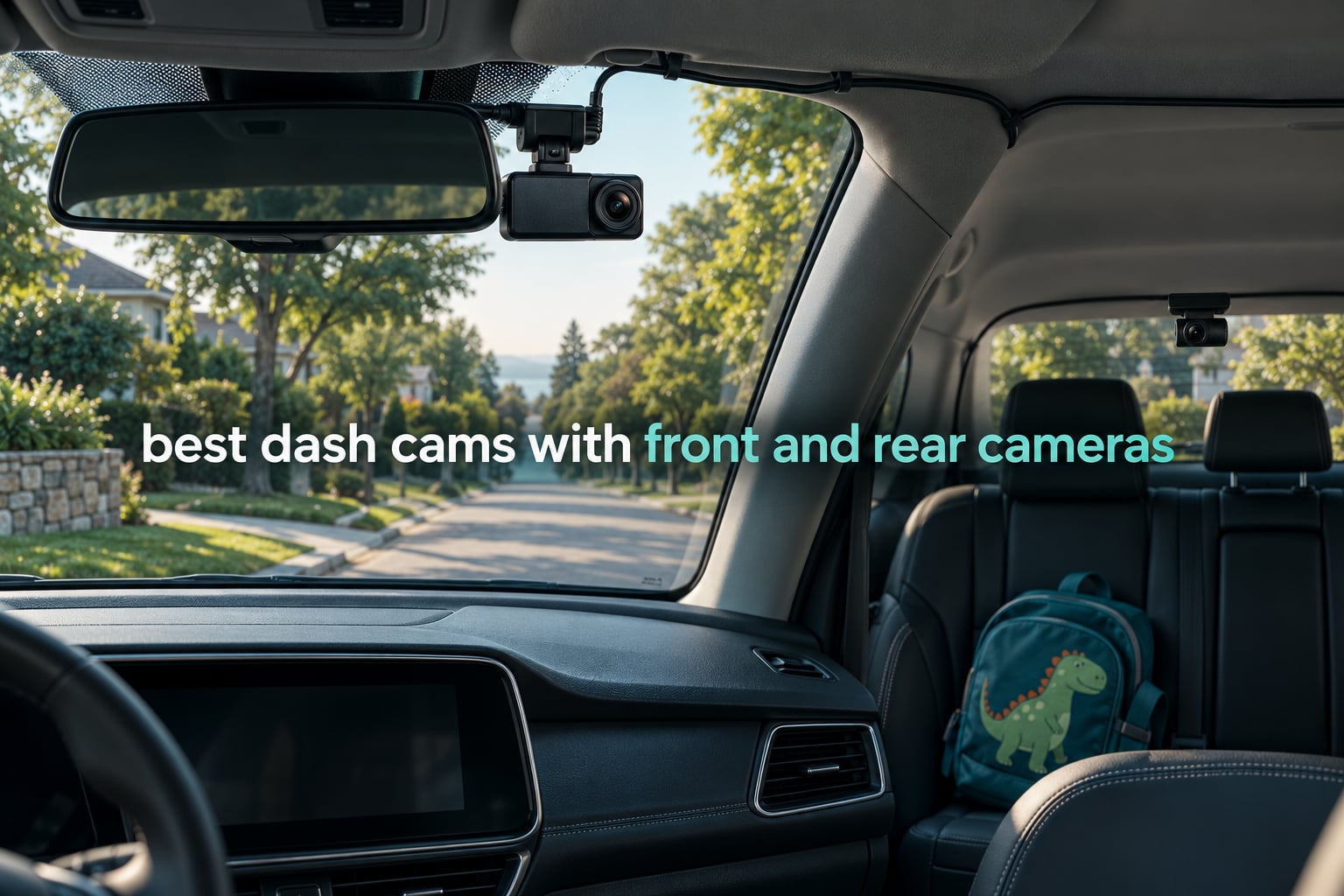
A front and rear dash cam is a two-channel video system: a windshield camera records the road ahead while a second camera captures what is behind your car, so one incident is documented at both ends. On a rear-end collision the other driver is almost always at fault, and rear footage is often the only proof you have.
That proof matters more in a household than it does in a single car. School-run traffic, back parking lots and evening pickups create exactly the low-speed fender-bender situations where drivers argue about what actually happened. If a new teenage driver in your family is behind the wheel, a dual channel dash cam turns “it was not my fault” into a clip you can pull up in under a minute.
We ranked the 10 dual channel kits below on published specifications and on what thousands of owners report after living with them. Sensor generation, night performance, parking mode behaviour, heat handling, app reliability and mount security carried the most weight, because those are the things that decide whether a camera is still protecting you two years from now. We also flag what is not in the box, because the SD card and hardwire kit gaps are where most buyers get caught out. If you are still choosing a first camera, start with our dash cam picks for new drivers first.
Table of Contents
- Top 3 Best Dash Cams With Front and Rear Cameras in 2026
- All 10 Best Dash Cams With Front and Rear Cameras in October
- How Front and Rear Recording Actually Works
- 1. ROVE R2-4K Dual Dash Cam – Our Best Overall Front and Rear Pick
- 2. REDTIGER F7NP 4K Front and Rear – Best Value Dual Channel Dash Cam
- 3. WOLFBOX G840S 12-Inch Mirror Dash Cam – Best for Reducing Blind Spots
- 4. Affver 4K Plus 2.5K Dual Dash Cam – Best Rear Resolution for the Money
- 5. REDTIGER F7N TOUCH 4K Front and Rear – Best Touchscreen and Voice Control Kit
- 6. VIOFO A229 Pro 4K HDR Front and Rear – Best Picture Quality and Parking Capture
- 7. E-YEEGER 2.5K Plus 1080P Dual Dash Cam – Best Budget Front and Rear Starter
- 8. BOTSLAB G300H Plus 4K STARVIS 2 – Best Wide-Angle Coverage Per Dollar
- 9. ZMOPO D435 4-Channel 360 Dash Cam – Best Full Perimeter Coverage
- 10. Navycrest Q7 4K Front and Rear – Lowest-Cost Way to Start Recording Both Ends
- What to Look for in a Front and Rear Dash Cam in 2026
- Frequently Asked Questions
- What is the best dash cam that offers both front and rear cameras in one?
- Which dual dash cam is best?
- Is there a dash cam that records front and back?
- Should you get both front and rear dash cam?
- What is the best dash cam for both front and rear of a car?
- Will your insurance go down if you have a dash cam?
- What is the best dash cam front and back?
- Is it worth getting a front and rear dash cam?
- Do I need a hardwire kit for parking mode?
- What microSD card does a dash cam need?
- Which Front and Rear Dash Cam Should You Buy?
Top 3 Best Dash Cams With Front and Rear Cameras in 2026

ROVE R2-4K Dual Dash Cam
- 4K front and 1080P rear
- STARVIS 2 IMX675 sensor
- Built-in GPS and 3-inch IPS screen
- Three 24-hour parking modes
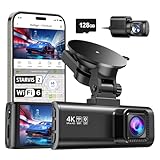
REDTIGER F7NP Front and Rear Kit
- 4K front and 1080P rear
- STARVIS 2 with F1.5 aperture
- 5.8GHz WiFi at 20MB/s
- 128GB card included

WOLFBOX G840S Mirror Dash Cam
- 12-inch touch mirror display
- 4K front and 1080P rear
- External GPS antenna
- Split-screen reverse guides
Our overall winner is the ROVE R2-4K, because it pairs the highest owner rating in this group with a sensor generation that holds up after dark and a GPS receiver built in. If you want the shortest possible learning curve, the REDTIGER F7NP is the one most families end up with, since it arrives with a memory card already in it. Drivers who hate the small screen and narrow view of a stick-on camera tend to land on the WOLFBOX G840S, which replaces the rearview mirror with a 12-inch display.
All 10 Best Dash Cams With Front and Rear Cameras in October
| Product | Specifications | Action |
|---|---|---|
| ROVE R2-4K Dual Dash Cam |
|
Check Latest Price |
| REDTIGER F7NP Front and Rear Kit |
|
Check Latest Price |
| WOLFBOX G840S 12-Inch Mirror Dash Cam |
|
Check Latest Price |
 Affver 4K Plus 2.5K Dual Dash Cam Affver 4K Plus 2.5K Dual Dash Cam |
|
Check Latest Price |
 REDTIGER F7N TOUCH 4K Front and Rear REDTIGER F7N TOUCH 4K Front and Rear |
|
Check Latest Price |
 VIOFO A229 Pro 4K HDR Front and Rear VIOFO A229 Pro 4K HDR Front and Rear |
|
Check Latest Price |
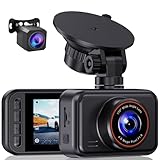 E-YEEGER 2.5K Plus 1080P Dual Dash Cam E-YEEGER 2.5K Plus 1080P Dual Dash Cam |
|
Check Latest Price |
 BOTSLAB G300H Plus 4K STARVIS 2 BOTSLAB G300H Plus 4K STARVIS 2 |
|
Check Latest Price |
 ZMOPO D435 4-Channel 360 Dash Cam ZMOPO D435 4-Channel 360 Dash Cam |
|
Check Latest Price |
 Navycrest Q7 4K Front and Rear Navycrest Q7 4K Front and Rear |
|
Check Latest Price |
How Front and Rear Recording Actually Works
A two-channel setup records both ends of the car onto a single high-endurance microSD card. The front unit usually sits behind the rearview mirror and powers from the cigarette lighter or a hardwire kit, while the rear camera is either cabled through the headliner or linked wirelessly and stuck to the rear glass. Both channels write continuously, loop over the oldest files when the card fills, and lock a clip permanently when the G-sensor registers an impact or hard brake.
Choosing between two channels and three is straightforward once you know what the third camera is. A third channel points inside the cabin, which matters for rideshare, delivery and taxi work where you need proof of what a passenger did. For a family car carrying child seats, most drivers are better off spending the same money on a better sensor and a hardwire kit, which is why we lean toward two-channel kits here.
Two warnings before you buy anything. First, rear cameras are not waterproof, so mounting one under a trunk lip or on a tow hitch exposes it to the one environment that kills it. Second, a lithium battery inside a camera parked in direct summer sun degrades and swells, which is why the supercapacitor models in this list are the safer choice for 24-hour parking mode.
1. ROVE R2-4K Dual Dash Cam – Our Best Overall Front and Rear Pick
ROVE R2-4K Dual Dash Cam Front and Rear, STARVIS 2 Sensor, Free 128GB Card
4K front plus 1080P rear
Sony STARVIS 2 IMX675 with F1.5 aperture
Built-in GPS and 3-inch IPS screen
Free 128GB card included
Pros
- Highest owner rating in our list at 4.5 stars
- Low-light clarity from the STARVIS 2 sensor
- Fast 5.8GHz and 2.4GHz dual-band WiFi
- Built-in GPS stamps route speed and compass
- Full install kit and 128GB card in the box
Cons
- Front 4K is upscaled from native 2.5K rather than true 4K
- Parking mode needs a hardwire kit bought separately
- Rear channel is limited to 1080P
The ROVE R2-4K is the camera we keep coming back to for family cars, and the reason is simple arithmetic. It carries the highest owner rating of the ten kits here, and it does so on a review base large enough that the rating means something. Roughly 76 percent of owners gave it five stars, which for a dash cam in a category full of thin plastic boxes is a genuine signal rather than a lucky week.
Video comes from a Sony STARVIS 2 IMX675 sensor behind an F1.5 aperture on the front channel, with HDR on top. That sensor generation is the difference you notice on an unlit side street or on a road behind a truck at night, where an older CMOS sensor smears headlights into a white smear and loses the plate. The rear channel records 1080P, which is lower than the front but entirely adequate for proving a rear-end impact.
Two details separate this from cheaper kits. The built-in GPS logs route, speed and compass data and shows them live on the 3-inch IPS screen, with a free PC and Mac player for reviewing a drive afterwards. Dual-band WiFi on both 5.8GHz and 2.4GHz pushes clips to a phone at up to 20MB/s, so you are not waiting on a hotspot to pull the file you need right now.
There is one honest caveat about the headline number. The front channel records natively at 2.5K QHD and upscales that to a 4K file, so you get the storage convenience of 4K without the full detail of genuine 4K capture. Compare it against the VIOFO below if plate readability at highway speed is the deciding factor. Built-in thermal protection and a supercapacitor handle hot climates properly, and the unit accepts cards up to 1TB.
Why parents on this list keep coming back to it
Three parking modes cover most household needs without a subscription. Time-lapse at one frame per second keeps a week of parking surveillance on a large card, motion detection records only when something moves, and collision detection locks the moment a bump registers. Add the hardwire kit and it watches the car overnight on a street outside the house, which is when a school-night parking spot is most exposed.
The screen showing speed and compass in real time is more useful than it sounds during a lesson drive. A new driver can be told to slow down and then watch the number fall as they lift off, which turns an abstract instruction into visible feedback.
Where it falls short
The parking mode is the sticking point. No hardwire kit is included, so 24-hour recording costs extra and needs a fuse-box install. Buyers who are not comfortable routing a cable behind the dashboard should know that before they commit.
At 4.5 stars the rating is the strongest here, but roughly a quarter of owners did not give it five stars, and the upscaled front channel is the reason most cite. If your priority is raw image quality rather than features per unit of effort, step up to the VIOFO.
2. REDTIGER F7NP 4K Front and Rear – Best Value Dual Channel Dash Cam
REDTIGER F7NP 4K Dash Cam Front Rear, STARVIS 2 Sensor, Free Card Included
4K front plus 1080P rear
STARVIS 2 sensor with F1.5 aperture
5.8GHz WiFi at 20MB/s
128GB card and 18-month warranty
Pros
- Most reviewed kit in our list with 25796 ratings
- Sharp 4K front and 1080P rear from a STARVIS 2 sensor
- Fast 5.8GHz WiFi transfers
- GPS route and speed data in the suction mount
- Memory card already in the box
- Supercapacitor for hot climates
Cons
- Parking mode requires a separate hardwire kit
- About 10 percent of ratings are one star on long-term reliability
- 1080P rear channel only
Ask owners on the dash cam forums what to buy without spending weeks reading spec sheets and the REDTIGER F7NP comes up again and again. It is the most reviewed camera in this roundup by a wide margin, and a large review count on a 4.2-star rating tells you something useful: the product is good, and it is not perfect. That is exactly what you want from a device that has to work unattended for years.
The imaging is closer to the premium tier than the entry tier suggests. A STARVIS 2 sensor with an F1.5 aperture and a six-layer optical lens feeds the 4K front channel, with WDR and HDR handling the headlights-versus-darkness problem on night roads. The 170-degree front lens and 140-degree rear lens cover more of the car’s surroundings than most rivals, which means fewer blind spots at junctions.
The GPS antenna sits inside the suction cup mount, so speed and route are stamped on the footage without an extra box on the dashboard. Loop recording with a G-sensor incident lock protects the clip that matters from being overwritten. Support for cards up to 512GB means a large high-endurance card is a straight upgrade rather than a compatibility gamble, and the 18-month warranty is among the longest in this group.
Owners repeatedly single out the phone experience. Downloads at up to 20MB/s over 5.8GHz WiFi mean a two-minute clip arrives in seconds rather than minutes, which is the difference between reviewing an incident while it is fresh and putting it off for a week. The compact 3.16-inch screen is useful for quick checks without opening the app.
What this camera is genuinely good at
It is the best first dash cam for a household running two cars on a budget, because the card is included and there is nothing else to buy before it works. The supercapacitor replaces a lithium battery, so leaving it in parking mode through a hot summer is a normal thing to do rather than a risk.
For delivery drivers covering long shifts, the combination of a wide field of view, fast clip transfer and incident locking covers the whole working day without draining a battery.
What to watch out for
Roughly one rating in ten is a single star, and the long-term reliability complaints cluster around units that stopped recording or needed resets. Nothing in the packaging protects against that; buying a high-endurance card of your own instead of trusting the supplied one is the single most effective precaution.
Parking mode still needs a hardwire kit, and the 1080P rear channel is the ceiling rather than a choice. If you want more detail out of the back camera and your vehicle is large enough to run a longer cable, the Affver below records the rear at 2.5K.
3. WOLFBOX G840S 12-Inch Mirror Dash Cam – Best for Reducing Blind Spots
WOLFBOX G840S 12″ 4K Mirror Dash Cam Backup Camera with 32GB Card and GPS
12-inch 2.5D curved touch mirror
4K front plus 1080P rear
170-degree front and 140-degree rear lenses
External GPS antenna
Pros
- Large screen cuts real blind spots on a family crossover
- 4K front footage with clear rear coverage
- Reversing guide lines are adjustable
- Low-reflectivity screen readable in direct sun
- Accurate external GPS with easy setup
Cons
- Rear camera blooms and flares badly at night
- Phone app is clunky and creates duplicate files
- 12-inch body can overhang sun visors
- Some units stop recognising the SD card
Most dash cams make you trade away your rearview mirror to get a screen, and most drivers then put the screen in the glovebox. The WOLFBOX G840S takes that trade differently: a 12-inch 2.5D curved touch display that clips onto the factory mirror and gives roughly one and a half times the viewing area of the mirror it replaces. For a parent reversing a car with children in the back, that extra field of view is worth more than another megapixel.
Underneath the screen, the cameras do their job. The front records 4K UHD through a 170-degree lens and the rear records 1080P through a 140-degree lens, with a split-screen mode that shows both at once and cuts to the rear feed when you engage reverse. Adjustable parking guide lines are drawn over the image, which is a genuinely useful training aid for a learner driver.
The low-reflectivity LCD earns its keep in daylight. Dash cam screens are notorious for turning into mirrors at midday, and a screen you cannot read is a screen you will not check before a long trip. An external GPS antenna feeds live speed and route to the display, and 5.8GHz WiFi handles phone transfers through the WOLFBOX app. A 32GB card is included, and a 12-month guarantee is standard.
Night handling is where this design makes its trade. The sensor side is respectable, but the large glossy panel and the rear camera both struggle with oncoming headlights, and the rear feed in particular blooms badly at night. If your driving is mostly after dark, a small screenless camera with a superior sensor will serve you better.
Why the mirror format fits certain households
Drivers of pickups, vans and crew-cab trucks get the most from this because the side and rear visibility gains are largest in a tall vehicle. Parents who reverse into a school parking space every morning use the guide lines more often than they expect to.
Because the display replaces the mirror rather than sitting beside it, the dash stays uncluttered. For older drivers who find small cameras fiddly to mount and adjust, one large touch target is easier to manage than a sticky mount and a phone app.
Where it falls short
The app is the most criticized part. Owners describe it as clunky and laggy, and report duplicate or confusing files after transfers, which is exactly the moment you do not want friction. Pull the clip from the card on a laptop instead if the file matters.
Check your mirror before buying. A 12-inch body does not fit every factory mirror and can overhang a sun visor, and the rear image cannot be flipped, which limits where you can mount the rear camera on some vehicles.
4. Affver 4K Plus 2.5K Dual Dash Cam – Best Rear Resolution for the Money
Affver 4K+2.5K Dash Cam Front and Rear, Built-in 5G WiFi 6 GPS Dual Dashcam
4K front plus 2.5K rear at 155 degrees
WiFi 6 transfers up to 10MB/s
Built-in GPS with PC and Mac player
64GB card pre-installed
Pros
- 2.5K rear channel is far sharper than the usual 1080P
- 76 percent of ratings are five stars
- WiFi 6 transfers are quick and the app syncs smoothly
- GPS route and speed data with a free desktop player
- Card pre-installed so it works out of the box
- Longest warranty here at 24 months
Cons
- Parking mode is limited unless the kit is hardwired into the fuse box
- Rear wiring still needs tidying after routing
Almost every dual channel kit in this price bracket pairs a 4K front with a 1080P rear, which means the camera pointing at the vehicle that rear-ended you is the weakest link in the system. The Affver is the exception. Its rear camera records at 2.5K through a 155-degree lens, and when you need to read a plate in footage from behind you, that difference is the whole point of the exercise.
Other owners rated it 4.4 stars with 76 percent giving five, a strong showing for a kit with a smaller review history than the leaders. The F1.5 aperture and six-layer lens pull in about 60 percent more light than a basic lens, and WDR balances a bright sky against a dark road so the exposure does not blow out on the way out of a tunnel.
The WiFi 6 radio moves clips at up to 10MB/s, roughly 25 percent faster than the previous 5GHz standard, and the built-in GPS logs speed, route and coordinates that display in the app or in a free Windows and Mac player. The 3.59-inch IPS screen uses a low-profile hidden design so it does not catch the eye through the windscreen, which matters if you do not want the camera advertising itself.
Small touches add up here. The supplied car charger has a second USB port, so a phone can charge at the same time without an adapter. A trim tool, clips, an adhesive pad and electrostatic films are all in the box, and the 64GB card is already installed, so nothing needs buying before first use. The 24-month warranty is the longest in this group.
Where the extra rear detail pays off
Rear footage matters most in two situations: a vehicle hits you and drives away, and a vehicle follows too closely then brakes. In both cases the evidence is behind you, and 2.5K is the difference between a smudge and a plate number an insurer can act on.
For a household with one shared family car, one good camera doing both jobs beats two cheap ones. The 4K front and 2.5K rear pairing here covers a school-run commute and a street-parked overnight without a second device or a second card.
Where it falls short
Parking mode on this kit is properly useful only when it is hardwired into the fuse box. Left on the cigarette lighter it will wake and record, but the time on ACC in most family cars is not enough to cover a full night outside.
Installation is otherwise straightforward, though buyers should expect to tidy the rear cable along the headliner and pillar trim. Budget ten minutes for that rather than assuming a five-minute job.
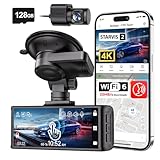
5. REDTIGER F7N TOUCH 4K Front and Rear – Best Touchscreen and Voice Control Kit
REDTIGER 4K STARVIS 2 Dashcam Front Rear, 5GHz WiFi 20MB/s, Free 128GB Card
4K front plus 1080P rear
3.18-inch touch screen with voice control
5.8GHz WiFi at 20MB/s
128GB card and 18-month warranty
Pros
- Crisp 4K front and 1080P rear with vivid daylight colour
- Touch screen is fast and responsive
- Voice commands save fumbling with buttons
- Plenty of cable for clean hidden routing
- Compact body fits between glass and mirror
- Support responds quickly
Cons
- App requires a REDTIGER account before it will connect
- Several voice commands do not work reliably
- App playback is choppy and the Mac version is unfinished
- Parking monitor takes about 10 seconds to wake
If you dislike fumbling with small buttons while the car is moving, this is the kit built for you. The 3.18-inch touch screen is genuinely snappy, and twelve voice commands let you snap a photo or lock a clip hands-free. On a family car, that means nobody has to hunt for a button with their eyes off the road.
The imaging sits on a STARVIS 2 sensor with WDR and HDR, feeding a 4K front channel through a 170-degree lens and a 1080P rear through a 140-degree lens. Frame rate options are generous, with the rear running at 30 or 60 FPS and the front at 24 or 30, so you can choose smoother footage for a slow parking manoeuvre or longer recording for everyday driving.
GPS data is captured through the suction mount and can be reviewed in the REDTIGER Cam app, and the 5.8GHz WiFi radio delivers up to 20MB/s. Cable length is a detail that matters more than any spec sheet admits, and this kit comes with enough of it to run the rear camera cleanly along the headliner and down the pillar without stretching a joint.
The body is compact enough to sit between the windscreen and the mirror without shading the driver’s view, which is a problem with several larger kits. A supercapacitor handles heat, over-the-air firmware updates keep it current, and the 18-month warranty matches the brand’s other kit above.
Best suited to shared family vehicles
Voice control and a large touch screen are worth the most in a car with several drivers of different heights and temperaments, where nobody wants to fiddle to save a clip. Locking a video without touching anything is a small quality-of-life feature that people notice every single time.
The generous rear cable length also makes this a good fit for SUVs and wagons where the rear glass is far from the front unit. Less strain on the connection means fewer intermittent rear-camera dropouts over time.
Where it falls short
The account requirement is the first thing to know. The app will not connect until you create a REDTIGER account, and some owners find that a VPN on the phone blocks the WiFi connection entirely. Set the camera up somewhere with clean WiFi before you need the footage.
Parking monitor takes roughly ten seconds to wake, so a very quick event can be missed, and the front and rear files carry slightly different timestamps that do not auto-sync, which can matter if you are reconstructing an incident frame by frame.
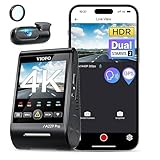
6. VIOFO A229 Pro 4K HDR Front and Rear – Best Picture Quality and Parking Capture
VIOFO A229 Pro 4K HDR Dash Cam Front and Rear, Dual STARVIS 2 Sensors
True 4K front plus 2K 1440P rear
Dual STARVIS 2 sensors,IMX678 and IMX675
Buffered parking mode with 15-second pre-event capture
CPL anti-glare filter pre-fitted
Pros
- Only kit here with genuine native 4K front and 2K rear
- Best license plate readability in the group
- Buffered parking mode saves footage from before an impact
- CPL filter pre-fitted and cuts windscreen glare
- Quad-mode GPS module is stable
- Supercapacitor rated from 5F to 149F
Cons
- Most expensive option in the roundup
- SD card is not included
- Hardwire kit sold separately
- Small 2.4-inch screen for on-device review
Everything else in this list scales up or down from a baseline. The VIOFO A229 Pro raises the baseline. It is the only kit here with genuine native 4K on the front channel and 2K 1440P on the rear, and it pairs two flagship STARVIS 2 sensors for the job, an IMX678 up front and an IMX675 at the back. That pairing is what produces the clearest plate numbers at highway speed in this group.
HDR runs on both channels as part of Night Vision 2.0, which is how the camera holds detail in a scene lit only by headlights and streetlamps. A CPL anti-glare filter comes pre-affixed to the front lens, so the washed-out haze you get shooting through a windscreen in daylight is reduced without any extra purchase or fiddly assembly.
The parking mode is the standout feature for anyone who actually uses it. Buffered recording stores 15 seconds before the detected event and 30 seconds after, so a rear-end shunt in traffic still shows the brake lights coming on before contact. Three parking modes are available, including a low bitrate option and time-lapse, and the supercapacitor is rated from 5F to 149F with no batteries included at all.
Quad-mode GPS covers GPS, BEIDOU, GALILEO and GLONASS, which matters in dense urban canyons where a single-band receiver can wander. Twelve voice commands and spoken notifications handle settings and warn you when the card needs attention, and a 6m rear cable is included with 8m and 10m options for long vehicles.
Where the extra image quality is worth paying for
Insurance claims are the reason. When the other driver disputes what happened, plate legibility and time-stamped GPS speed data decide the conversation, and this is the kit that gives you the most to argue with. The same applies to any driver whose commute involves unlit roads or higher speeds.
The buffered parking capture is the second reason, and it is the feature most families only appreciate after an incident. Footage that begins at the moment of impact does not show who was responsible for it, and this camera records the fifteen seconds that answer that question.
Where it falls short
It is the most expensive kit here, and two essentials are not included. No SD card and no hardwire kit, so budget for a high-endurance card between 64GB and 512GB and a kit if you want parking mode at all.
The 2.4-inch screen is small for reviewing footage on the device, and the review base is smaller than the leaders, so long-term reliability data is thinner here than on the best-reviewed kits.
7. E-YEEGER 2.5K Plus 1080P Dual Dash Cam – Best Budget Front and Rear Starter
Dash Cam Front and Rear for Cars, 2.5K+1080P Dual Camera with 2″ Screen
2.5K front plus 1080P rear
170-degree wide-angle lens with starlight sensor
WDR and HDR balance
2-inch IPS screen
Pros
- Genuine front and rear kit at the entry end of the range
- 2.5K front footage clears license plates at day
- Small 2-inch body sits near the mirror out of the way
- Suction mount holds through hot weather
- WDR holds up under streetlights
Cons
- SD card is not included despite the modest cost
- Front camera can detach from the glass during hard braking
- Suction mounts can let go after months of heat and cold cycling
- Rear camera can catch the car interior on slanted back glass
Sometimes the honest answer is that most households do not need a 4K sensor. The E-YEEGER covers both ends of the car with a 2.5K front camera and a 1080P rear, adds WDR and HDR for night balance, and includes a 2-inch screen for checking a clip without an app. For a first dash cam on an older car or a second vehicle in the household, it does the job properly.
The 170-degree front lens with a starlight night vision sensor and six-layer glass gives wider coverage than most cameras at twice the resolution, so you capture more of the car’s surroundings at junctions. The suction mount rotates 360 degrees, and loop recording locks a clip when the G-sensor detects an impact or hard braking. Cards up to 256GB are supported, with USB-C power.
The warranty is short but honest, one year with a 45-day refund guarantee, which tells you what the manufacturer expects. A Type-C hardwire kit enables the optional 24-hour time-lapse parking monitor, though it is not in the box, and hardwiring it straight to the battery without a voltage cutoff will risk draining your car.
This is the kit where mounting is the thing to think about hardest. It ships with no memory card, so add a high-endurance card of your own before the first drive rather than after the first incident.
A sensible first purchase for a second car
Many households run a second car for errands, school pickups and older teenagers. Front and rear coverage at this specification level gives you the evidence you need without the fuss of a large install, and the small footprint suits a windscreen with an existing sensor mount or a ticket.
If you want to learn what a dash cam can and cannot do before committing to a premium kit, this is a low-stakes way to find out how you will actually use it. Some owners discover they never check footage at all until something goes wrong.
Where it falls short
Mount security is the real complaint and it is a serious one. Owners report the front camera detaching from the windscreen during hard braking, which means the incident that mattered most is the one not recorded. Several also report suction mounts letting go after a few months of sun and cold cycling, so re-seat it every few weeks.
On sloped rear windscreens the rear camera can pick up the inside of the car, which wastes storage and is unhelpful. The app transfer workflow is also awkward and slow, so read footage from the card on a computer instead.
8. BOTSLAB G300H Plus 4K STARVIS 2 – Best Wide-Angle Coverage Per Dollar
BOTSLAB G300H Plus 4K STARVIS 2 Dual Dash Cam Front and Rear
4K front plus 1080P rear
170-degree front and 150-degree rear lenses
F1.5 front and F2.0 rear apertures
Supercapacitor rated -20C to 70C
Pros
- 4K front footage from a STARVIS 2 sensor
- Very wide 170-degree front and 150-degree rear coverage
- Supercapacitor rated from -20C to 70C
- Voice control keeps hands on the wheel
- 64GB card included
- Slim body fits neatly
Cons
- Parking mode needs a hardwire kit that is not included
- Small 2-inch screen limits on-device playback
- Smallest review base here so long-term data is thin
The BOTSLAB G300H Plus does something none of the other kits here do: it pairs a STARVIS 2 sensor with unusually wide lenses on both ends. The front sees 170 degrees and the rear sees 150, which means a large vehicle pulling out of a driveway beside you, or a car approaching from behind in a blind spot, is more likely to be in frame at all.
Apertures are specified separately and correctly for the job. The front runs F1.5 and the rear F2.0, so the back camera is not simply a lesser copy of the front. Voice control handles photo and recording commands, 5.8GHz WiFi covers app access, and GPS is built in. The 64GB card is in the box and can be swapped for anything up to 256GB.
The supercapacitor specification is the one to notice. Rated from -20C to 70C, it is explicitly an automotive-grade capacitor in place of a lithium battery, and that rating is the honest measure of whether a camera can sit in a parked car through a summer. Cameras with unrated internal batteries are the ones that shut down and corrupt footage on the hottest week of the year.
The slim, distinctive body sits low against the glass and does not shade the driver’s view, which matters in a car where the mirror and a rear-seat occupant already compete for space.
Best when your vehicle is large or your angles are bad
Wide coverage pays off most in vehicles with big pillars, upright seating and poor rear visibility, and in cars that spend time in dense city traffic where gaps open and close quickly. Anyone who has had a side-swipe claim denied will appreciate the extra margin.
It also suits a first upgrade from a single front camera, because the wide rear lens covers both adjacent lanes rather than only what is directly behind.
Where it falls short
Parking mode appears in the product highlights but requires a hardwire kit, which is the single most common disappointment in this category. Treat it as a driving recorder until you have fitted one.
The 2-inch screen is small for reviewing footage, and the review base here is the smallest in the group at 1770 ratings. A young brand with a thin ownership history is a different kind of risk than a well-reviewed one, so keep your footage backed up rather than relying on the single card.
9. ZMOPO D435 4-Channel 360 Dash Cam – Best Full Perimeter Coverage
360 View 4 Channel Dash Cam Front and Rear Left Right Inside Camera for Cars, GPS and 5G Band WiFi, Night Vision, 160 Wide Angle, WDR, 24H Parking Mode, Supercapacitor, Included 128GB Card
Front, rear and both side channels at 1080P
160-degree wide-angle lenses
Eight infrared lights for night vision
Time-lapse compresses 60 minutes to 1
Pros
- Only kit here covering four directions at once
- 160-degree wide-angle lenses on every channel
- Eight infrared lights for night recording
- Plenty of adjustment on each camera
- Simple on-screen menu with few settings
- App downloads work reliably for most owners
Cons
- All four channels are 1080P rather than 4K
- WiFi connection can drop with an unhelpful error message
- Adhesive mount does not hold in high heat
- Oversized suction cup can block the driver's view
Everything else in this list is two channels. The ZMOPO D435 records four, covering front, rear and both sides simultaneously, which turns a camera that documents a collision into one that documents a car drifting out of its lane or a door being opened into you at a car park. For a first-time driver, seeing what happened at their own door is sometimes the most valuable clip of the week.
The trade is resolution. Every camera records Full HD 1080P at 30 FPS through a 160-degree lens, with eight infrared lights for night recording and WDR to balance bright and dark areas. Time-lapse mode compresses an hour of parking footage into a minute, and loop recording locks clips on collision. A 128GB card is included and a supercapacitor handles the heat.
The setup is approachable. Each camera adjusts individually, the on-screen menu is short enough to learn in a minute, and the instructions are thorough enough that a first-time installer can get it right. 5GHz WiFi and an iOS and Android app handle viewing and downloads, and a 24-month assistance period covers the unit.
Two things are separate purchases. The ACC hardwire kit for parking mode and the GPS logger that adds location, speed and time tracking both cost extra, so factor them into the total before deciding.
Where four channels genuinely help
Side coverage proves who was parked next to you, and it captures near-misses that a front and rear pair simply does not see. For a learner driver on busy neighbourhood roads, that is often more useful than higher resolution.
It also suits a family that wants one camera covering a vehicle used by several people, where you cannot predict which direction an incident will come from.
Where it falls short
All four channels at 1080P means no single view is as sharp as the premium single-channel kit above, so plate reading at speed is weaker. If your priority is evidence quality over coverage, take the trade the other way.
Mounting hardware is the recurring issue. The adhesive mount does not hold in high heat, the suction cup is oversized and can block part of the driver’s view, and the power cord ends in a cigarette-lighter style plug rather than USB-C. Owners also report WiFi dropping with an error message that offers no support number.
10. Navycrest Q7 4K Front and Rear – Lowest-Cost Way to Start Recording Both Ends
Navycrest 4K Dash Cam Front and Rear, Built-in 5G WiFi, Dash Camera for Cars 4K Front and 1080P Rear, Dashcams for Cars Loop Recording, Gravity Sensor, 24-Hours Parking Mode, SD Card NOT Included
4K front plus 1080P rear
Sony IMX sensor with 6-glass lens
5G WiFi at up to 8MB/s
Compact 1.5-inch body
Pros
- Lowest entry point to a 4K front and 1080P rear kit
- 5G WiFi is roughly four times faster than 2.4GHz
- Compact body does not block the driver's sightline
- Wiring tool and simplified cable make fitting straightforward
- Expandable to 256GB cards
- Gravity sensor protects incident clips
Cons
- SD card is no longer included in the box
- Parking mode requires a separate hardwire kit
- Small 1.5-inch screen is hard to review footage on
- Lowest average rating in this roundup at 4.1 stars
The Navycrest Q7 exists to answer one question: is a 4K front and 1080P rear kit worth having at all if you spend as little as possible? The answer is yes, provided you buy a memory card and re-check the mount every few weeks. It covers both ends of the car, records in 30 FPS, and includes parking mode with collision detection or time-lapse once it is hardwired.
The Sony IMX sensor sits behind a 6-glass lens with WDR for night performance and a 1.6 aperture. A 5G WiFi module moves clips at up to 8MB/s, roughly four times faster than a 2.4GHz module, and the app gives live front and rear viewing with album editing. A 3-axis gravity sensor locks incident clips against being overwritten by loop recording.
The physical design is the best part. At 1.5 inches the body is genuinely tiny and will not shade the driver’s sightline, which is a real problem with larger kits in cars that already have sensors behind the mirror. A wiring tool and simplified cable design make installation straightforward, and cards up to 256GB at Class 10 U3 are supported.
Note that the box no longer includes an SD card, and that a lithium polymer battery is listed in the specifications. In a car parked in summer sun, a lithium cell is the component most likely to cause problems, so treat parking mode as occasional rather than continuous on this kit.
A reasonable stopgap on a budget
If the vehicle is used for a few months, resold, or is a second car for short journeys, this kit does what a dash cam needs to do at the lowest sensible outlay. Both ends of the car are covered with usable daytime and night footage, and nothing about the setup is fiddly.
It is also a reasonable first camera for a learner driver who will move up to a better unit once they are insured on the family car.
Where it falls short
The 4.1 average rating is the lowest here, with around 11 percent of ratings at one star, and the most common complaints trace back to the missing card and the small screen. Expect to buy storage and to review footage on a computer rather than on the unit.
Parking mode needs a separate hardwire kit, and given the lithium polymer battery in this unit, we would not leave it running unattended in a hot climate. For continuous overnight monitoring, choose a supercapacitor model.
What to Look for in a Front and Rear Dash Cam in 2026
Sensor generation beats headline resolution more often than buyers expect. A 4K file upscaled from 2.5K looks worse on a phone than a native 4K file, and a 2.5K capture from a STARVIS 2 sensor can beat a native 4K from an older CMOS sensor after dark. Check which sensor sits behind the lens, not just the resolution printed on the box.
Two channels are enough for almost every family car; three only matter if you carry passengers whose behaviour you may need to prove. A cabin camera adds privacy considerations for anyone driving with children in the back, and it competes for budget with a better sensor and a hardwire kit. Our ranking uses two-channel kits for that reason.
Storage and card choice decide how long the footage survives. SD card failure is the most common hardware failure in this category, and many cameras ship without a usable card. Use a high-endurance card, format it in the camera rather than on your computer, and check it every few months. A 128GB card is a sensible minimum for two channels with parking mode running.
Parking mode needs power that does not stop when you turn the key, which means a hardwire kit into the fuse box. Expect 30 to 60 minutes of work, a trim tool, and the need to identify an ACC or constant-fuse slot. Never hardwire straight to the battery without a voltage cutoff, and remember that most kits here ship without the kit itself.
Heat is the failure mode nobody warns you about. A camera with a supercapacitor rated for extreme temperatures survives a parked summer car; one with an internal lithium battery may shut down and corrupt footage at exactly the moment you need it. In this list the ROVE R2-4K, REDTIGER F7NP, BOTSLAB G300H Plus and VIOFO A229 Pro all use supercapacitors.
The rear camera is not waterproof. Mount it inside the rear windscreen, route the cable along the headliner rather than under a trunk lip, and never leave it on a tow hitch. On long vehicles check that the supplied cable reaches; several kits here include 6m or longer for that reason.
Mount security is the boring factor that decides whether any of this matters. Suction mounts let go in hot and cold cycling and can throw the camera off the glass in hard braking, which is the one moment you needed it. Adhesive mounts are steadier but harder to reposition. Re-seat a suction mount every few weeks and after every temperature swing.
Finally, think about what happens after you pull a clip. App reliability varies more than any other feature, and a camera that cannot export footage quickly is useless at the roadside. Set up the app and pull a test clip before you need it, keep a card reader in the glovebox as a backup, and consider a backup camera watching the cabin if a child or pet travels regularly. If you also want interior coverage for rear-seat monitoring, our car baby camera and rear monitor picks cover that side of the cabin.
Frequently Asked Questions
What is the best dash cam that offers both front and rear cameras in one?
The ROVE R2-4K is our overall pick because it pairs a Sony STARVIS 2 sensor with built-in GPS, three parking modes and a free 128GB card, and it holds the highest owner rating in our roundup. The REDTIGER F7NP is the value alternative for anyone who wants the least fuss, and the VIOFO A229 Pro wins on raw image quality.
Which dual dash cam is best?
For most households the ROVE R2-4K is the best dual channel dash cam, with 4K front and 1080P rear recording, a STARVIS 2 sensor, built-in GPS and dual-band WiFi. If your priority is plate readability at speed rather than features, choose the VIOFO A229 Pro with its native 4K front and 2K rear sensors.
Is there a dash cam that records front and back?
Yes. Any two-channel dash cam records the road ahead through a windshield-mounted front camera and what is behind the car through a second camera, both writing to the same high-endurance microSD card. They loop over old footage automatically and lock a clip when the G-sensor detects an impact.
Should you get both front and rear dash cam?
Yes, in most cases. Front footage shows what you approached, rear footage shows who hit you, and in rear-end collisions the other driver is usually at fault. The rear channel is often the only proof you have of a claim, and insurers regularly accept it to settle liability without a dispute.
What is the best dash cam for both front and rear of a car?
Check three things in order: the sensor generation rather than the resolution headline, whether the unit uses a supercapacitor if you plan to use parking mode, and whether a high-endurance microSD card is included or must be bought separately. On balance, the ROVE R2-4K covers all three, while the REDTIGER F7NP covers the first two and includes the card.
Will your insurance go down if you have a dash cam?
Most insurers do not offer a discount purely for having a dash cam. What a dash cam changes is the outcome of a claim: clear footage of a collision usually settles fault quickly, and insurers commonly reward documented incidents with faster processing. Ask your own insurer, since policies and rates vary by state and by provider.
What is the best dash cam front and back?
The REDTIGER F7NP is the easiest front and back recommendation for most drivers, because it includes a memory card, uses a supercapacitor for heat resistance and has the largest review base in our roundup. The ROVE R2-4K is the better all-round choice if you want built-in GPS and stronger low-light performance.
Is it worth getting a front and rear dash cam?
It is worth it for anyone who commutes, parks on the street overnight, or shares a vehicle with a new driver. Rear footage is the evidence that matters most in the collisions people actually have, and the cost of a dual channel kit is far below a single uninsured excess on an unsettled claim.
Do I need a hardwire kit for parking mode?
Yes, if you want the camera to keep recording after you switch the car off. Plugging into the cigarette lighter only powers it while the ignition is on. A hardwire kit taps an ACC or constant fuse and typically takes 30 to 60 minutes with a trim tool, and most kits in our roundup do not include one.
What microSD card does a dash cam need?
Use a high-endurance microSD card, not a standard one. A 128GB card is a sensible minimum for two channels with parking mode running, and 256GB gives more days of footage. Check the card manufacturer’s approved list, format it inside the camera, and replace it every few months because card failure is the most common hardware problem.
Which Front and Rear Dash Cam Should You Buy?
For most families, the ROVE R2-4K is the front and rear dash cam to buy. It has the highest owner rating of the ten we reviewed, a STARVIS 2 sensor that holds up after dark, built-in GPS, dual-band WiFi, three parking modes, a supercapacitor and a memory card in the box, which is a rare combination of capability and readiness.
Pick a different one when your situation is specific. The REDTIGER F7NP suits anyone who wants zero extra purchases and the widest base of owner experience to lean on. The WOLFBOX G840S is for drivers who want a bigger view and reversing guides. The Affver is worth a look if your priority is rear detail, and the VIOFO A229 Pro if plate legibility and buffered parking capture matter more than cost.
Whichever you choose, budget for a high-endurance microSD card and, if you want 24-hour coverage, a hardwire kit. Check the mount every few weeks, and test that you can pull a clip on your phone before you ever need one. If a new driver shares the car, our extended rear-facing car seat guide covers the safety kit they will be riding in alongside it.
This roundup was evaluated and updated for 2026. Specifications and owner experiences change with each firmware release, so re-check the details on the listing before you buy.