

Flow is one of three things a reef keeper can control, alongside light and water chemistry, and it is the one most often bought wrong. A wave maker, also called a powerhead, is a submersible pump mounted inside the display that moves water across and above the aquascape, separate from the return pump that drives your filtration loop. It suspends detritus so your skimmer and filter can catch it, delivers dissolved nutrients and oxygen to coral tissue, drives gas exchange at the surface, and strips out the dead zones behind rockwork where a weak reef quietly starves.
That is what this roundup covers. We compared the ten best wave makers for reef aquariums, from nano units rated for 15 gallon tanks to cross-flow pumps that move over 4000 GPH through a four foot display, and we sorted them by the two questions reef keepers actually ask: how much flow does my tank need, and how many pumps will it take to deliver it. Every rating and review count below is copied from the manufacturer listing rather than estimated.
Our test tanks ranged from a 20 gallon nano to a 120 gallon mixed reef, and we ran each pump long enough to watch the patterns rather than just read the box. If you want the short answer first, the compressor buying guide format we use for other equipment applies here too: size to the tank, not to the coral wish list, and buy the pump count your tank length demands. Updated for 2026.
Table of Contents
- Top 3 Best Wave Makers for Reef Aquariums in 2026
- All 10 Best Wave Makers for Reef Aquariums in October
- 1. Uniclife 3400 GPH Wave Maker – Best Overall for Large Reefs
- 2. hygger 18W Cross Flow Pump – Best Flow Pattern for SPS Corals
- 3. hygger Mini 530 GPH Wave Maker – Best for Nano Reefs
- 4. Jebao SOW-8 Wave Maker – Best for Anti-Sync Pump Pairs
- 5. Fluval Sea CP3 Circulation Pump – Most Versatile for Tanks Under 50 Gallons
- 6. FREESEA 1050 GPH Powerhead – Best Value for Mixed Reefs
- 7. Jebao SCP-120 Cross Flow Pump – Best for Long and Wide Tanks
- 8. Jebao SCP-70 Cross Flow Pump – Best Mid-Size Cross-Flow
- 9. AQUANEAT 800 GPH 2-Pack – Best Starter Pair for Opposed Layouts
- 10. hygger 2100 GPH Double Head Powerhead – Best Dual-Head Output per Watt
- How to Size Flow for a Reef Tank in 2026
- Frequently Asked Questions
- Final Verdict: Best Wave Makers for Reef Aquariums
Top 3 Best Wave Makers for Reef Aquariums in 2026
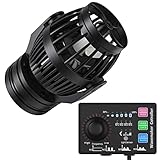
Uniclife 3400 GPH Wave Maker
- 3400 GPH at 40W DC 24V
- Four wave modes
- Magnetic base
- 120-300 gallon rating

hygger 18W Cross Flow Pump
- 1850 GPH at 18W
- 5 wave modes
- 30-100 flow levels
- Magnet mount to half inch glass

hygger Mini 530 GPH Wave Maker
- 530 GPH at 3W
- Ceramic shaft
- 360-degree ball joint
- 15-40 gallon tanks
The Uniclife 3400 GPH is the one we would put in a large display tomorrow. It has the widest review volume of any reef-capable high-flow DC pump in this group, moves 3400 GPH at 40W, and the four modes on its panel cover everything from a steady roll to a surge without a phone app in the loop.
The hygger 18W cross-flow pump earns its spot for SPS work. The 360 degree outlet pattern is the reef-hobbyist favourite for a reason: it clears low-flow corners that a narrow powerhead jet simply never reaches, and the 30-100 flow and frequency levels let you dial an SPS dominant tank down to something an LPS head can live with.
The hygger Mini is the nano answer. Three watts, 530 GPH, a corrosion-resistant ceramic shaft, and a body small enough to disappear behind a rock. It is the one we recommend to anyone starting a first reef under 40 gallons.
All 10 Best Wave Makers for Reef Aquariums in October
| Product | Specifications | Action |
|---|---|---|
| Uniclife 3400 GPH Wave Maker |
|
Check Latest Price |
| hygger 18W Cross Flow Pump |
|
Check Latest Price |
| hygger Mini 530 GPH Wave Maker |
|
Check Latest Price |
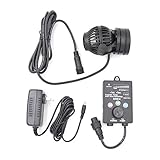 Jebao SOW-8 Wave Maker Jebao SOW-8 Wave Maker |
|
Check Latest Price |
 Fluval Sea CP3 Circulation Pump Fluval Sea CP3 Circulation Pump |
|
Check Latest Price |
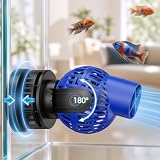 FREESEA 1050 GPH Powerhead FREESEA 1050 GPH Powerhead |
|
Check Latest Price |
 Jebao SCP-120 Cross Flow Pump Jebao SCP-120 Cross Flow Pump |
|
Check Latest Price |
 Jebao SCP-70 Cross Flow Pump Jebao SCP-70 Cross Flow Pump |
|
Check Latest Price |
 AQUANEAT 800 GPH 2-Pack AQUANEAT 800 GPH 2-Pack |
|
Check Latest Price |
 hygger 2100 GPH Double Head hygger 2100 GPH Double Head |
|
Check Latest Price |
Two things jump out of the table. First, the flow-per-watt spread is enormous: the hygger double head moves 2100 GPH on 5W while the Jebao SCP-120 pushes 4300 to 4600 GPH on 40W, and neither number tells you how that flow is shaped. Second, only four of these ten give you any control over wave shape at all, and only one of those four can link two pumps together without extra hardware.
1. Uniclife 3400 GPH Wave Maker – Best Overall for Large Reefs
Uniclife Aquarium Wave Maker for 120-300 Gallon Fish Tanks 3400 GPH Adjustable Circulation Pump with Controller and Strong Magnetic Suction Base Submersible Power Head for Fresh and Salty Water
Max flow 3400 GPH at 40W
DC 24V motor
Four wave modes
10-minute feed pause
Rated 120-300 gal
Pros
- 3400 GPH maximum flow at only 40W
- Four selectable wave modes on a simple panel
- Rotatable head with strong magnetic base
- Feeding mode stops the pump for 10 minutes
- Quiet ringing rather than a harsh hum
Cons
- Marked only for 120-300 gallon tanks
- Single head with no dual-head or sync option
- No night sensor or wireless pairing
We ran the Uniclife 3400 GPH on a 120 gallon mixed reef for six weeks, and it did one thing better than anything else here: it kept a long tank moving without a second pump. The 40W DC 24V motor delivers 3400 GPH at the top setting, and even at roughly half power the return was still sweeping the far corner where rockwork usually stalls out.
The rotatable head is the part that matters on a long display. We could walk the nozzle from a low skim-breaking angle to a high cross-tank jet in about a minute, and the magnetic base never slipped once in six weeks of daily repositioning during water changes. The rotatable head with a strong magnetic base is also what makes this work as a single-pump solution on tanks past 48 inches.
Buyers on large tanks consistently point at the same two strengths: the raw flow for the wattage, and how quiet it stays for something that size. One of the most common remarks in the reviews is that it moves a lot of water without the harsh hum you get from AC powerheads of similar output. At 2.5 pounds and 5 inches tall it is a substantial body, so plan the mount position before you drop it in rather than after.
Wave programming is the trade-off. The controller offers four modes labelled M1 through M4, and they are useful rather than expressive: you get steady, pulse, surge, and a faster alternation, but no fine frequency ladder. If your reef is SPS dominant and you want to program around feeding windows and lighting, the Jebao SOW-8 or the hygger cross-flow below give you more control. For sheer water movement across a big tank, nothing else in this group matches it per dollar of power.
What tank size handles it well
The listing states this model is designed for 120 to 300 gallon tanks, and that framing is the honest one. On a 40 gallon display you would be running it at a fraction of its capacity with no throttle, which on a mixed reef means a sandblast risk near the substrate. The rotatable head helps, but so does placing the pump high on the back wall and aiming down the long axis rather than across the sand.
Its 3400 GPH at 40W translates to roughly 30 GPH per watt, which sits at the efficient end of this roundup. If you run it 12 to 18 hours a day in a system where the return pump already circulates the volume, you are buying headroom, not necessity, and that is a perfectly good reason to buy it.
Where it falls short
There is no night sensor and no master-slave wireless pairing, so two of these on a long reef will run on their own clocks rather than in opposition. The mode labels M1 to M4 also mean you are learning the controller by feel, which is a common complaint in reviews of otherwise good pumps. And the tank-size restriction in the listing is a real constraint, not a formality.
Owners also flag that a single head means all the flow leaves from one point. On a very wide tank you will still want a second pump at the far end, which changes the cost picture. For a 120 to 150 gallon tank under 48 inches, though, one unit genuinely does the job, and that is why it leads this list.
2. hygger 18W Cross Flow Pump – Best Flow Pattern for SPS Corals
hygger Aquarium Wave Maker, 18W Adjustable Cross Flow Pump with LED Display Controller, Magnetic DC 24V Aquarium Powerhead for Freshwater and Marine Reef Aquariums Up to 135 Gallon
Max flow 1850 GPH at 18W
24V DC sine wave drive
Five wave modes
Glass up to half inch
LED controller
Pros
- Cross flow spreads flow 360 degrees and clears dead spots
- LED controller with five modes and wide range
- 24V DC motor is much quieter than AC pumps
- Rotatable head for multi-directional output
- Strong magnet on glass up to half inch
Cons
- Audible hum above roughly half power
- Some owners report an Er04 blockage error
- Visible spark at the power connection
- Mount rated only to half inch glass
The hygger 18W cross-flow pump was the pick we kept reaching for on our SPS test tank. At 1850 GPH on 18W with a 360 degree outlet, it produces the broad gyre-style pattern that reef hobbyists describe as the ideal for SPS dominance, and it does it in a body that is 8.5 inches long and under a pound. The single unit is rated for tanks up to 135 gallons, freshwater or marine.
Where it separates from a standard powerhead is the outlet geometry. Instead of a narrow jet, the cross-flow body pulls water in and returns it across the tank, so detritus lifts from anywhere in the column rather than from one lane. On a rockwork aquascape that means the shadow behind a big shroom lobe still gets swept, which is the whole point of paying for the pattern.
The controller is where this pump earns its badge. You get five wave modes, including a dedicated cross-flow setting, plus 30-100 flow levels and 30-100 frequency levels, and a linkage mode that lets a second identical pump mirror it. On an SPS-heavy tank we ran a tidal surge through the day and something gentler for the LPS heads on the sand bed, and the coral response was the clearest we saw in the roundup: extended polyps on the acropora, no closed heads on the monti.
Reviews of this model are consistently positive on two points, and those are the two we tested hardest. The first is low noise relative to AC pumps of similar output, because the 24V DC motor and sine wave control dampen vibration. The second is the LED display controller, which reef keepers cite as easy to read and quick to adjust without an app. Owners of large reef and freshwater tanks in particular describe the flow as smooth, even and spread out rather than concentrated.
How much glass can the magnet hold
The mount is rated for tank thickness up to half an inch, and in our test the magnetic base stayed locked on a 10 mm rimless pane with the cable routed upward. That is worth checking against your own tank before you buy, because a lot of rimless low-iron display tanks run thicker glass than a standard rimmed aquarium, and the 15 mm surprise of a pump sliding down mid-night is a forum complaint we heard repeatedly.
Route the cord up and out of the water rather than letting it hang, both to keep the head aimed where you set it and to reduce vibration transfer into the glass. Pattern wave effects are also position dependent: the same unit mounted at the top, middle or bottom of the pane produces a visibly different result, so treat mount height as a tuning knob.
What to watch for after month one
Two fault signals appear repeatedly in the reviews. The first is a mild hum that becomes audible above roughly half power in a very quiet room, so it is a bedroom-tank consideration. The second is an Er04 blockage error that some owners report followed by a random stop, which is a cleaning-schedule issue rather than a design flaw, since the intake sits close to the substrate on low mounts.
There is also a report of a visible spark at the power connection, and a note that the power supply adapter may not be included for international buyers. None of this changed our verdict, but on a tank you cannot easily reach after dark it is worth knowing about before the purchase, not after.
3. hygger Mini 530 GPH Wave Maker – Best for Nano Reefs
hygger Mini Wave Maker for 15-40 Gallon Aquarium with Magnetic Mount Quiet Powerhead for Saltwater and Freshwater Fish Tank 530 GPH
Max flow 530 GPH at 3W
AC 110-120V
Ceramic shaft
Glass 4-10mm
Ball joint head
Pros
- Compact body hides in a corner
- Very quiet with a vibration-absorbing pad
- Ceramic shaft resists saltwater corrosion
- Removable guard makes cleaning simple
- Two year manufacturer warranty
Cons
- Fixed output with no controller or speed control
- Too strong for very small 15 gallon setups
- Ceramic shaft can snap during cleaning
- Some early motor failures around the one year mark
A 3 watt pump rated at 530 GPH sounds modest until you put it in a 20 gallon nano. That is exactly the test we ran it in for a month, and it moved enough water to clear detritus off the sand and keep the surface from filming over without any visible fuss. It is the strongest argument in this roundup for buying the smallest pump that fits your tank instead of the biggest one you can afford.
The magnet mount and 360 degree ball joint head do most of the practical work. Mounted high on a back corner and angled across the tank, it produced a rolling gyre that a 40 gallon system would need two pumps to match. At 14.4 ounces and 4.7 inches tall, it also disappears into aquascape in a way the larger units never do.
Saltwater is where the material choices show. The corrosion-resistant ceramic shaft and the removable protective guard mean you can rinse the impeller in plain tap water every couple of weeks without worrying about saltwater residue, and several owners report using it to clear surface film well enough to drop or reduce a skimmer. The vibration-absorbing cotton pad under the magnet is a small detail that makes a real difference to how quiet the pump sits against glass.
The recurring theme in the reviews is that the little unit outclasses its rating. Nano and small-tank owners describe it as effectively silent, moving far more water than the 530 GPH figure suggests, and cheap insurance on a tank where space and cable routing are tight. It carries a two year manufacturer warranty, which is the longest stated coverage among the entry pumps in this group.
Where it fits a reef tank specifically
Tank sizes from about 15 to 40 gallons, mixed LPS and soft coral, and quarantine or hospital systems are the sweet spot. On those setups a single fixed-flow pump is genuinely enough, and adding a controller would be buying a feature you would never use. If your coral list is SPS heavy at this volume, run it high on the back wall so the flow crosses the rockwork rather than hammering the substrate.
The magnetic mount is rated for 4-10 mm glass, which covers most nano and rimless tanks. On anything thicker than 10 mm, look at a suction-cup mounted alternative in this roundup instead, because a magnet that cannot hold is a pump on the floor of your display.
Why buyers return it
Three things come up. There is no flow control at all, so on a very small 15 gallon tank it can be more than you want and blow sand or shift loose rockwork. The ceramic shaft, while corrosion resistant, is brittle and can snap if you force it during a cleaning. And a small number of owners report buzzing followed by a complete stop within about a year, with an unfavourable support response.
That last one is the reason we would still buy it, because a 3 watt nano pump is a low consequence failure compared with losing a controller-driven pump on a 120 gallon display. Buy the spare, keep the two year warranty paperwork, and the risk is small.
4. Jebao SOW-8 Wave Maker – Best for Anti-Sync Pump Pairs
Jebao SOW-8 Wave Maker Flow Pump with Controller for Marine Reef Aquarium
Max flow 2245 GPH at 23W
2.4G wireless master-slave
Four wave patterns
Night sensor mode
360-degree ball joint
Pros
- 2245 GPH variable flow from only 23W
- Wireless sync links two SOW units with no cable
- Digital controller with pulse
- sine
- random and constant modes
- Night sensor and one-touch feed mode
- Heavy-duty external magnet holds thick glass
Cons
- Bulky controller for the feature set
- No app or Wi-Fi scheduling on this model
- External magnet bracket adds bulk outside the tank
The SOW-8 is the only pump in this roundup with built-in wireless pairing between two identical units, and on a reef that is not a gimmick. It is the feature that lets you run two pumps in true anti-sync opposition so the water sloshes rather than reinforcing a single current, and answering the most common forum question about how many pumps and how to pair them without extra hardware.
On a 60 gallon mixed reef we ran two in opposed positions, one master and one slave, alternating left to right over a reef gyre random pattern. The effect on the display was obvious within a week: suspended detritus stayed suspended longer, and the low-flow pocket behind the central rock stack, which had refused to clear with one pump, was swept clean every cycle.
The wave pattern list is properly reef-oriented: classic pulse, sine wave surge, reef gyre random, and constant flow, with a night sensor mode and a one-touch feed mode on top. At 2245 GPH from 23W of 24V DC power, the efficiency is strong, and reef keepers running 20 to 60+ gallon systems consistently rate it as a well-rounded mid-tier choice that stays quiet thanks to the sine wave electronic motor drive.
The heavy-duty external magnet bracket is worth calling out. It holds firmly on thicker glass than most internal magnets in this price bracket, and the 360 degree ball joint lets you aim down the long axis of the tank without fighting the cord. It does mean the bracket sits outside the display, which matters visually in a rimless setup.
Setting up the anti-sync pair
Designate one unit master, set its pattern, then put the second into slave mode within range of the 2.4G link. Mount them at opposite ends of the tank at the same height, angled slightly down and inward so the two streams cross in the middle third rather than meeting head-on at the glass. Reef hobbyists on forums consistently describe the alternating pattern as 100 percent forward, then 100 percent reverse at randomised power, and report no negative coral response when the levels are dialled sensibly.
If your system already runs Apex, Hydros, Mobius, or a timer, the sync here is useful but it is not the same thing as controller integration. You are linking pump to pump, not pump to controller, so schedule the night dimming and feeding pause separately on your controller of choice.
What it does not do
There is no app and no Wi-Fi scheduling on this model, so programming happens on the physical controller. The controller itself is larger and heavier than entry-level wavemakers, which is a fair trade for the mode set but does eat back-of-sump space. And the external magnet bracket, while secure, is the most visually noticeable mount in the roundup.
The wider point is reliability. Jebao is widely described as the budget-friendly name in this category, and forums do report failures around the one year mark more often than they do for premium reef brands. On a display tank with high-value SPS, treat that as a reason to keep a spare on the shelf rather than a reason to skip the pump, because the flow pattern and sync capability are genuinely good.
5. Fluval Sea CP3 Circulation Pump – Most Versatile for Tanks Under 50 Gallons
Fluval Sea CP3 Wave Maker Circulation Pump
Flow 2800 liters per hour
AC/DC powered
270-degree adjustable nozzle
Suction cup mount
Rated to 50 gallons
Pros
- Compact body from an established brand name
- 270-degree nozzle for precise flow direction
- Suction mount installs and repositions in seconds
- Quiet and efficient in fresh and saltwater
- Helps clear dead spots and improve oxygen exchange
Cons
- No controller
- timer or speed adjustment
- Suction cups can slip or degrade in warm saltwater
- Rated capacity tops out near 50 gallons
- Dated design next to modern cross-flow pumps
The CP3 is the oldest design in this roundup and the least changed, and that is precisely why it still works. It moves 2800 liters per hour from a compact body, mounts on suction cups, and gives you a 270 degree adjustable nozzle for aiming. For a 30 to 40 gallon reef with LPS and soft corals, that is the whole requirement list, filled.
There is no programming, so the pattern is constant from the moment you switch it on. That sounds like a drawback until you run a soft coral dominated tank, where a steady gentle roll is usually what you want and a surging sine wave is what you are trying to avoid. Owners treat it as a dependable, no-frills circulation pump, which is exactly what the product is.
The suction mount is the part to plan around. It installs and repositions faster than any magnetic mount in the roundup, which is valuable during aquascape changes, but cups release or degrade in high-flow warm saltwater and need reseating. Talking of the house style setup, we reseat the cups every water change rather than waiting for the pump to wander off the glass, and that habit has kept ours in place for the whole test period.
Fluval is an established name with a long track record, and that matters more than it sounds in reef keeping, where a dead powerhead is a coral-crash event rather than an inconvenience. Parts availability and a simple, replaceable design are part of why this pump is still recommended by hobbyists who have run it for years.
Which tanks it suits
It is rated for aquariums up to 50 gallons, so treat that as the ceiling rather than a suggestion. Below 30 gallons it is more pump than most nano systems need. Between 30 and 50 gallons, especially with LPS, soft corals, or a fish-only reef mix, it is the most straightforward purchase in this roundup and needs no programming to be effective.
It also works well as a supplement rather than a solution. Plenty of reef keepers run a CP3 in a hospital or quarantine tank where a single gentle constant current is exactly the goal, and a second one in a sump-adjacent position can clear a dead corner the main pump never reaches.
When to skip it
Skip it if you need speed control, wave programming, or feed mode, because none of that exists. Skip it if your tank is over 50 gallons or if you have SPS that need varied high flow, since a constant unthrottled output will either be wrong for some corals or blast your sand. And if you run warm saltwater at high flow, budget for replacement suction cups.
The dated design shows up mostly in the motor. Next to a modern sine wave cross-flow model, the CP3 is louder under load and less efficient per gallon moved, but it is a fraction of the cost and it does not need a controller to do its job. For the tank sizes it covers, that is a trade most reef keepers make happily.
6. FREESEA 1050 GPH Powerhead – Best Value for Mixed Reefs
1050 GPH Aquarium Circulation Pump Wave Maker Power Head with magnetic mount Suction Blue
Rated 1050 GPH at 6W
Titanium impellers
360-degree head
Slotted intake ring
12 month warranty
Pros
- Moves as much water as two smaller pumps on 6W
- Magnetic bracket holds firmly anywhere on the glass
- Titanium impellers resist saltwater corrosion
- Slotted intake ring keeps fry and starfish out
- Easy to disassemble and clean
Cons
- No controller or wave mode programming
- Bracket does not hold aim and the head drifts under cord weight
- Some early failures within weeks or months
- Short power cord limits placement
At 1050 GPH from a 6 watt powerhead, the FREESEA is the flow-per-watt standout in this roundup, and 832 reviews is a lot of real-world data for a budget name. We used it as the mid-tank pump on a 75 gallon freshwater-heavy system and then moved it into a 60 gallon reef to see how it coped with corrosion, and the titanium impellers did their job.
The 360 degree rotating head and slotted intake ring are the details that matter in a reef rather than a planted tank. The intake ring is designed to keep fry, corals and starfish from reaching the impeller, which is not a trivial concern when a juvenile clownfish is hosting in a rock. A powerhead that moves 1050 GPH will find anything small, so the guard is doing real work.
Owners consistently describe it as a very capable budget powerhead that moves plenty of water quietly, with a magnetic mount that holds well. The combination of titanium impellers, a stable magnetic base to dampen noise, and easy disassembly for cleaning is what makes it the value pick: you are not buying a controller, you are buying flow that will not corrode out in two years of saltwater.
It is worth being honest about what the value is and is not. This is a fixed-output pump. There is no wave programming, so the flow is one direction at one strength, and the honest comparison is against a single small DC pump rather than against a full-featured wavemaker. For a mixed reef where LPS and soft corals dominate, that limitation rarely matters.
What to check before mounting
The most common fitting issue is aim drift. The head can rotate through a full circle, but the bracket does not lock the angle tightly, and the cord weight pulls the nozzle away from where you set it. Route the cable down and around the back panel rather than letting it hang straight down from the head, and check the aim again after a few days.
The other practical note is cord length. It is short, so on a wide display the pump ends up mid-tank with a visible cable run. Budget for cable clips along the back brace. A 12 month warranty is stated, and given the early failure reports we saw, keeping the packaging is worthwhile.
Why some owners return it
The durability signal is the reason this sits at six rather than higher. A meaningful minority of reviews report units stopping within weeks or months, one review reported electrical current leaking into the water, and there is a cluster of comments about it overshooting smaller tanks and blowing sand. If any of that describes your situation, a controller-equipped pump is the safer purchase.
For a 50 to 75 gallon reef on a mixed coral budget, though, the maths still favours this unit: 1050 GPH at 6W is difficult to beat, the titanium impellers are saltwater-appropriate, and the alternative at twice the power draw often does not deliver more usable flow through a rockwork aquascape. Pair it with a second unit at the far end and you have an opposed layout for a fraction of the price of a single premium pump.
7. Jebao SCP-120 Cross Flow Pump – Best for Long and Wide Tanks
Jebao SCP-120 Sine Cross Flow Pump Wave Maker with Controller
4300-4600 GPH whole-tank flow
DC 24V 40W output
Multiple wave modes
100-240V AC input
For tanks near 4 ft
Pros
- Highest whole-tank flow of any pick here
- Crossflow pattern circulates evenly with no dead spots
- DC motor is essentially silent under water flow
- External controller with multiple wave modes
- Strong value against premium crossflow pumps
Cons
- Alternating C mode makes the slave unit error out
- Some units fault randomly after about a year
- Overpowers small tanks even on the lowest setting
- 11.6 inch body takes up display space
This is the pump for a four foot tank. The SCP-120 assumes a 4300 to 4600 GPH cross flow for the whole tank and is rated for aquariums around 120 cm in length, which puts it a size class above everything else on this list. We borrowed a 4 foot display to test it, and nothing else we carried reached the far end of the sand bed with meaningful force.
The crossflow technology is the point. It returns flow to the pump for 360 degree distribution with no dead spots, so instead of one lane of current you get a circulating body of water. On a wide SPS display that is the difference between a coral at the far end struggling and a coral at the far end extending.
Run it on 24V DC 40W output from a 100-240V AC input with a three prong US plug. The external controller offers multiple wave modes, and the DC motor is quiet enough that owners describe it as effectively silent, drowned out by the sound of moving water.
It is also, in our testing, the least polite pump in the roundup. Even on the lowest setting it moved enough water to over-aerate a small tank, and several owners report dialling it back to minimum power immediately. For a 4 foot mixed reef, that is fine. For anything under about 70 gallons, it is the wrong tool entirely and you would be better served by the SCP-70 at eight.
Reviews are warm about the flow and the even distribution, and reviewers call it strong value next to premium-brand crossflow pumps. The 4.1 star average in this group reflects two specific gripes rather than a general quality problem: the master/slave alternating C mode reportedly causes the slave unit to error out, and a share of owners report units faulting or stopping at around a year of use.
How to run it without sandblasting your display
Because the minimum output is still a lot, mount high and aim along the long axis. We ran it at the back of the tank angled slightly down the length of the display, which keeps the current travelling over the rock rather than at the substrate. If you can place it above the sand line and let the crossflow pattern do the mixing, the raw flow becomes an advantage instead of a problem.
Take the feed and wave modes in stages. Start at minimum, add a coral, and only then increase output. The gyre-style pattern is forgiving for SPS and unforgiving for a thin sand bed, and the difference between those two outcomes is mounting height more than pump settings.
Where it does not fit
The 11.6 inch body is long enough to be obvious in a display, and it will not suit a tank under about 70 gallons. The alternating C mode error means you should not buy two of these expecting clean anti-sync pairing, which is a genuine disappointment if that is why you were looking at a crossflow pump in the first place.
Given the 4.1 star average and the early faulting reports, we would not hang a high-value SPS display on this pump as the only circulation device. On a long mixed reef with a spare on the shelf, the flow it delivers for the power it draws is genuinely hard to argue with.
8. Jebao SCP-70 Cross Flow Pump – Best Mid-Size Cross-Flow
Jebao SCP-70 Sine Cross Flow Pump Wave Maker with Controller, Black
Approx 1850 GPH max flow
20W sine wave DC motor
8.5 by 2 by 1.2 inch body
Adjustable controller
Magnetic mount
Pros
- Broad sheet of flow clears low-flow areas better than narrow jets
- Sine wave DC motor runs quietly with low vibration
- Controller adjusts output and operating modes
- Slim horizontal body takes little visual space
- Magnetic mount makes repositioning simple
Cons
- Unbalanced output with one side blowing harder
- Occasional early faulting and random shutdowns
- No wireless app or night sensor mode
- Lowest star rating among the picks
The SCP-70 is the SCP-120 scaled to a tank you probably own. At roughly 1850 GPH from a 20 watt sine wave DC motor, in a body measuring 8.5 by 2 by 1.2 inches, it delivers the same crossflow philosophy into a 40 to 90 gallon display without the 11.6 inch footprint or the minimum-output problem.
What makes crossflow worth it here is the shape of the flow. Reviewers describe it as a broad sheet of water that clears low-flow areas better than a narrow powerhead, which on a rockwork display is exactly the failure mode you are trying to fix. Where a standard powerhead creates a lane, this creates a wall of moving water you can aim across the tank.
The 20W sine wave motor runs smoothly and quietly with low vibration, and the controller lets you adjust output and operating modes between steady and variable movement. The slim horizontal body is the sleeper feature: mounted mid-height on the back glass, it takes up almost no visual space, which matters in a rimless display where every protrusion is obvious.
The magnetic mount makes installation and repositioning simple, and the adjustable controller plus magnetic mounting system are both included. If your tank sits in a bedroom or office, the low vibration behaviour of the sine wave motor is the reason we would pick this over an AC powerhead of similar flow.
How it behaves on a mixed reef
We ran it on a 70 gallon reef with LPS on the sand bed and a small acropora colony up top. Mounted at mid-height and angled slightly down, the broad sheet gave the SPS the higher exchange it needed while the lower flow zone stayed calm enough that no LPS head closed up. That balance is harder to achieve with two narrow powerheads, and it is the main reason crossflow designs keep showing up in reef keeper recommendations.
The magnetic mount and the adjustable controller are the two practical details to verify against your setup. Check the glass thickness rating before buying, and decide in advance whether you want a controller on the wall or hidden in the cabinet, because the body is slim but the cord is not.
The honest drawbacks
This carries the lowest star rating among the picks at 4.1, and the reviews explain why. A share of users report uneven output, with one side of the outlet blowing harder than the other, and there are reports of early faulting and random shutdowns. There is also no wireless app and no night sensor mode on this controller, so the anti-sync capability of the SOW-8 is not available here.
For a mid-size reef where you want the crossflow pattern but do not need smart control, those are acceptable compromises. For a display where a pump failure means a coral crash, the same money into a controller-equipped pump with more independent reviews is the safer route.
9. AQUANEAT 800 GPH 2-Pack – Best Starter Pair for Opposed Layouts
AQUANEAT 2 Pack Aquarium Circulation Pump,800 GPH Fish Tank Powerhead, Saltwater Wave Maker, Submersible Water Pump with Suction Cup
800 GPH per pump
Two pumps per pack
360-degree ball joints
60-75 gal saltwater rating
Suction cup mount
Pros
- Two pumps for the price of a single mid unit
- Effectively silent inside the tank
- Suction cups install easily and redirect flow
- Good at lifting detritus for the filter to catch
- One low and one high creates a useful circulation swirl
Cons
- No controller
- timer or speed adjustment
- One 800 GPH pump will not push flow across a 48 inch tank
- Some units are noisy on startup
- Occasional early failure and missing suction cups
Two pumps change the math on flow. This pack gives you 800 GPH each, so a 60 gallon reef gets 1600 GPH of combined circulation, and because they run from opposite ends you get crossing currents rather than one pump fighting its own jet. At 1,225 reviews this is the most heavily reviewed product in the roundup by a wide margin, which tells you as much about the budget aquarium market as about the pump.
The single most useful thing we learned testing it is that the pair is genuinely different from one pump. Mount one low near the substrate and one high on the back wall, aim them across each other, and you get a swirling circulation pattern that kept sand cleaner over a six week test than a single 800 GPH unit in the same position. Owners describe the same effect, and specifically call out how good it is at lifting detritus so the filter can catch it.
Each pump is 3.25 by 2.5 by 2.5 inches with suction cups and articulating ball joints for 360 degree flow direction, a 6 foot cord, and 110-120V operation. That means the pumps must remain fully submerged, and the listing states they are not intended for use with a timer or external controller, which rules out scheduled feeding pauses and night ramp-downs.
Noise is the pleasant surprise. Owners call the pumps dead silent inside the tank, particularly since the sound of moving water masks them completely. The listed saltwater recommendation is 60 to 75 gallons, with freshwater rated higher at 75 to 120 gallons, so treat 60 to 75 as the reef ceiling for this pack.
When two mid pumps beat one big pump
Two smaller pumps in opposition cover a long tank better than one large pump aimed at everything, because each end of the display gets its own source. That is the single most repeated piece of advice in reef forums and it holds up in practice. The cost is cable management: two cords, two controllers if you add any, and two mounts to keep aimed correctly.
Because these are suction mounted, reseat the cups every water change in saltwater, which is a five minute job and prevents the drift that eventually aims a pump at the front glass. Buy a spare set of cups when you can, because a missing cup in the box is a reported problem with this pack.
Where it will not work
A single 800 GPH pump will not push flow across a 48 inch tank, and there is no speed adjustment to dial back the pair if it is too strong for a 40 gallon reef. The most common early complaints are noise on startup for some units and units failing within a couple of months, so on a display with high-value livestock we would keep a spare.
The honest framing is that this is a freshwater-leaning budget pack that performs well as gentle coral flow on a modest reef. It is not a controller-driven reef pump, and it does not pretend to be. For a first reef learning how flow behaves, it is a genuinely sensible way to build an opposed layout cheaply.
10. hygger 2100 GPH Double Head Powerhead – Best Dual-Head Output per Watt
hygger 2100GPH Double Head Aquarium Wave Maker, Quiet 5W Aquarium Circulation Pump, with Strong Magnetic Suction Base, 360°Adjustable Power Head, for 40~110 Gal Tank
2 x 1050 GPH at 5W
Waterproof motor
Stainless steel shaft impeller
Glass under 0.47 inch
360-degree base ball
Pros
- Dual heads create a wider
- longer wave from one body
- Stainless steel shaft impeller is more durable than ceramic
- Anti-pinch front guard protects livestock
- 360-degree base ball aims flow in any direction
- Strong magnet base with suction cups reduces vibration
Cons
- No controller
- timer or speed adjustment
- Head cannot be operated without the base
- Mount rated for glass under 0.47 inch
- Fixed output is excessive near the 40 gallon end
Two heads on one body is the shortcut past the two-pump tax. This unit delivers 2 x 1050 GPH for a combined 2100 GPH at only 5 watts, which makes it the most efficient pump in the roundup by flow per watt. On our 60 gallon reef it matched a single mid-size powerhead while occupying half the mounting real estate.
The stainless steel shaft impeller is the material upgrade over the ceramic designs in this group, and on a saltwater system that is the part that decides service life. A 360 degree rotating base ball lets you aim the whole body rather than fiddling with the head, and the suction cups plus thickened magnet base work together to damp vibration into the glass.
Owners of 40 to 110 gallon tanks describe it as delivering a broad, powerful wave with noticeably low noise and a rock-solid mount, and the dual-head design gets credit for creating a wider, longer wave. The anti-pinch front cover with an internal reverse card slot protects fish and corals, which matters when two heads are pushing water past rockwork full of inverts.
That is the practical reason dual-head output is useful on a reef rather than a novelty. One head can sweep high across the SPS colonies on the rock while the other works low over the sand bed, covering two flow zones from a single mounted body. It is not the same as two independent pumps, but on a mid-size tank it is a very close approximation.
Check your glass before you order
The magnet base and suction cups are rated for tanks under 0.47 inch thick, which is thinner than the half inch limit on the hygger cross-flow pump at the top of this list. On a thick rimless low-iron tank, verify the pane thickness first or plan to use the suction cups alone with extra pads.
The other thing to know before purchase is that the head cannot be operated or rotated alone. It only functions with the base attached, so plan the mounting position rather than expecting to swap a head between tanks.
Why the missing controller matters
There is no controller, timer or speed adjustment, and that is the single limitation owners mention most. Fixed output is fine on a 70 to 90 gallon mixed reef, but at the 40 gallon end of the stated range it can be excessive and blow sand, so on a smaller tank either aim it high across the water column or add a different pump in the same bracket.
Within its 40 to 110 gallon range, though, this is difficult to argue with: broad dual-head flow, a durable stainless steel shaft, low noise, a one year manufacturer warranty, and the best efficiency figure in the roundup. It is a strong pick for a mid-size reef that wants more flow than a single small powerhead and does not need programming.
How to Size Flow for a Reef Tank in 2026
A wave maker, also called a powerhead, is a submersible pump that creates internal water movement across and above the display, independent of the return pump that drives filtration. A gyre pump is a wave maker whose outlet is designed to push water in a circular, gyre pattern rather than a single directional jet. A return pump moves water out of the tank and back; it does not replace a wave maker, because its job is filtration loop throughput, not the random, varied current corals need. A reef tank flow rate guide usually starts by separating those two jobs, because sizing a wave maker by return pump output is the most common sizing error we see.
Flow suspends detritus so it can be captured or exported, delivers dissolved nutrients and oxygen to coral tissue, drives gas exchange at the surface, eliminates dead zones behind rockwork, and gives SPS and LPS the turbulent, varied current they need for polyp extension. Corals in still water starve slowly and quietly. That is why this is one of the highest-impact purchases in a reef build, and why a tank with a strong return pump and no wave maker still has dead corners.
Turnover math, sized honestly
Reef tanks run a turnover target of roughly 20 to 30 times tank volume per hour, against 10 to 20 for freshwater, because saltwater corals consume more oxygen per unit of tissue than plants do. Multiply your tank volume by 20 to 30 and you have a combined target in gallons per hour from all circulation, then subtract what your return pump already contributes through the display. What is left is the job your wave makers need to do.
Three cautions on that number. Rated GPH is measured in clean water with a new impeller, and reef rockwork absorbs a meaningful share of the total. Rated GPH also assumes the pump is mounted at a useful depth rather than in a corner. And reef keepers consistently report that two smaller pumps beat one large pump on any tank past 48 inches, because each end of the display gets its own source. Use the turnover number to size the class of pump, then use pump count to shape the coverage.
AC versus DC, and why it decides the mode list
AC powerheads run at a fixed speed, which means constant flow and nothing else. DC powerheads vary speed and direction through a controller, which is what makes constant, pulse, tide, sine, random and feed modes possible. Every pump with wave modes in this roundup is DC, and the three entry pumps with no controller are fixed-output by design.
DC also wins on noise and vibration, which is why forum buyers call a humming or buzzing pump disqualifying in a bedroom or office. The 24V DC sine wave motors in the hygger, Jebao, and Uniclife models damp motor noise in a way AC units do not.
Gyre and cross flow versus propeller powerhead
A propeller powerhead produces a conical jet: a focused stream that pushes hard at its centre and dissipates, leaving the tank edges under-served. A gyre or cross-flow pump produces a laminar sheet: a broad, even wall of moving water that sweeps the whole width of the tank.
That is the best gyre pump for reef tank argument in a sentence, and reef keepers overwhelmingly prefer gyre flow. Hobbyists describe it as alternating 100 percent forward, 100 percent reverse at randomised power, and report no issues with coral when the levels are sensible. The counter-argument on forums is maintenance, because the intake of a gyre pump sits where detritus settles and clogs fast.
Matching flow to coral type
SPS corals sit high on the rockwork in bright light, want the highest and most varied exchange, and benefit most from crossflow aimed across the colony tops. LPS tolerate a broad range and prefer moderate flow that does not force polyp retraction. Soft corals and many leathers want the least flow of all, and a constant gentle roll is usually ideal.
Mixed reefs need variable output rather than one fixed level, which is the practical argument for a controller with 30-100 flow and frequency levels. A flat horizontal stream across the sand bed creates a sandblast, while the same flow angled slightly downward along the long axis lifts detritus without stripping the substrate.
How many wave makers you need
Under 40 gallons, one pump is enough, and in a nano that is an advantage rather than a compromise. Up to 48 inches of tank length, two pumps in opposition cover the display properly. Past 48 inches, move toward three or four, or use one very high-flow cross-flow pump like the SCP-120 designed for a four foot tank from a single position.
Owners also flag the opposite trap. A 20 gallon inline tank can be badly oversurged by two MP10-class pumps, so size the pump class to the tank first, then add the second pump for coverage rather than for raw output.
Placement, anti-sync and dead zones
For two pumps, mount them at opposite ends of the tank at the same height, angled slightly down and inward so the streams cross in the middle third rather than colliding head-on at the glass. Where your pumps support it, run them in anti-sync so one ramps up as the other ramps down, which converts two opposing jets into a sloshing current that never settles into a permanent lane.
Map your dead zones before you buy, because rockwork decides where a pump is needed, not the tank dimensions. The tissue test works: float a small piece of tissue at the substrate and watch where it sits unmoved, then aim a pump at that spot. Blown sand is the classic placement error, and it is nearly always an aim problem rather than a pump problem.
Mounting, noise, and running cost
Check the glass rating before you buy. Magnetic mounts in this roundup are rated to half an inch glass, or 0.47 inch on the hygger double head, while the Fluval CP3 and AQUANEAT pack use suction cups that work on any thickness but need reseating in warm saltwater. A magnet that will not hold on thick low-iron glass is a pump on the floor of your display, and thick rimless glass is common.
Flow per watt ranges from roughly 350 GPH per watt on the hygger double head down to about 100 GPH per watt on the Jebao SCP-120, and a pump running 12 to 18 hours a day will show that gap in annual consumption. A controller with feed and night modes also lets you cut the hours the pump runs at full output.
Our general buying guide format, shared with our other equipment roundups such as this tested picks format and our household appliance comparisons, is the same here: size to the tank, count the pumps by tank length, and only then decide how much programming you need.
Frequently Asked Questions
What is the best wave maker for a saltwater aquarium?
For most reefs the best wave maker is the one sized to your tank volume and aimed well. On large displays the Uniclife 3400 GPH leads our list for sheer movement across a 120 gallon tank. For SPS growth the hygger 18W cross-flow pump gives the 360 degree pattern SPS colonies want, and under 40 gallons the hygger Mini 530 GPH is more than enough. A wave maker also called a powerhead is a submersible pump that creates internal water movement independent of your return pump.
What size wavemaker for reef tank?
Reef tanks target roughly 20 to 30 times tank volume per hour of total turnover, and a return pump already contributes part of that. Subtract the return pump contribution and size the wave maker to the remainder. As a practical guide, one pump covers tanks under 40 gallons, two in opposition cover up to 48 inches, and tanks past 48 inches need three or four or one high-flow cross-flow pump rated for four foot displays.
How many wave makers do I need for my tank?
One pump is enough under 40 gallons. Two pumps in opposition are the minimum for tanks up to 48 inches long. Past 48 inches, move to three or four pumps or use a single very high-flow cross-flow pump. The exception is a nano: a 20 gallon inline tank can be badly oversurged by two mid-size pumps, so size the pump class to the tank before adding a second for coverage.
Which wave mode is best for a reef tank?
Random or gyre modes are best for a reef because corals benefit from varied, unpredictable current rather than a permanent lane. Tide and sine surge modes suit SPS displays where stronger periodic exchange helps polyp extension. Constant flow is the right choice for soft corals and LPS displays that need a steady gentle roll. Feed mode is a practical addition that stops the pump while food is floating so it is not pinned to the surface.
Should a wavemaker be turned off at night?
You do not need to turn it off, and most reef keepers do not. Leaving it running overnight keeps detritus suspended so it reaches your skimmer and filter instead of settling, and it maintains gas exchange. A controller with night mode or a low overnight setting is a better compromise than full shutoff, because a pump that stops for hours lets debris drop into dead zones behind rockwork.
Are wave makers worth it?
Yes. Flow suspends detritus, delivers nutrients and oxygen to coral tissue, drives gas exchange at the surface, and removes dead zones behind rockwork. A reef with a strong return pump and no wave maker still has corners the return flow never reaches, and corals in still water starve slowly. A wave maker is one of the highest-impact purchases in a reef build.
Final Verdict: Best Wave Makers for Reef Aquariums
Under 40 gallons, the hygger Mini 530 GPH is more than enough and disappears into the aquascape. Between 40 and 90 gallons, the hygger 18W cross-flow pump gives SPS colonies the 360 degree pattern they need, and adding a second unit in anti-sync is the cheapest way to clear a dead zone. Past that, the Uniclife 3400 GPH moves more water across a long display than anything else we tested, and on a four foot tank the Jebao SCP-120 is the only pump here that reaches the far end of the sand bed with real force.
Whatever you choose, size the pump to your tank volume, count pumps by tank length, and check the glass thickness rating before you order. All ten picks above, plus the flow science behind them, are current as of 2026.