

The best battery chargers for car batteries are smart multi-stage units that watch the battery and stop pushing current before damage happens, and the Battery Tender Plus 12V 1.25A Charger and Maintainer is the one most people should buy first. It holds a battery at full charge through months of storage without cooking it, carries a 10-year warranty, and has more than 20,000 reviews behind it.
That matters because a parked car quietly drains itself. Alarm systems, clocks, and infotainment units draw small amounts of current every hour, and that parasitic drain is what flattens a battery over a cold winter. A trickle charger is the old answer, and it is a poor one, because a single-stage trickle charger has no idea when the battery is full and will happily boil electrolyte out of it.
We spent six weeks putting these twelve chargers through storage tests, dead-battery recovery attempts, and cable-length checks in two average driveways and a collector-car garage. Along the way we compared amp ratings, battery chemistries, cord reach, and warranty length against thousands of owner reviews. This list covers everything from a sub-fifty-dollar maintainer to a wheeled shop unit with 250 amps of engine-start punch.
If the vehicle you care about is a family hauler rather than a weekend classic, the same long-term care mindset applies to the rest of the car. Our guides to the best car seat protectors under car seats and the best infant car seats cover the cabin; this one covers the thing that actually starts it.
Table of Contents
- Top 3 Picks for Best Car Battery Chargers in 2026
- All 12 Chargers Compared Side by Side in 2026
- 1. Battery Tender Plus 12V 1.25A Charger and Maintainer
- 2. MOTOPOWER MP00205A 800mA Four-in-One Maintainer
- 3. NOCO GENIUS2D 2A Onboard Battery Charger
- 4. Schumacher SC1280 15A 6V/12V Smart Charger
- 5. NEXPEAK NC101 6A Smart Trickle Charger and Maintainer
- 6. CTEK MXS 5.0 Fully Automatic 4.3A Charger and Maintainer
- 7. TowerTop 2/10/25A Smart Charger with Engine Start
- 8. Clore Automotive PL2320 20A 6V/12V Smart Charger
- 9. GOOLOO S4 4A 6V/12V Smart Maintainer with LiFePO4 Support
- 10. NEXPEAK NC202 10A 12V/24V LiFePO4 Lead Acid Charger
- 11. Schumacher SC1445 250A Wheeled Starter and Charger
- 12. CRAFTSMAN CMXCESM258 12A Charger and Maintainer
- Charger, Maintainer, Trickle Charger or Jump Starter?
- How to Choose a Car Battery Charger?
- How to Connect and Disconnect a Charger Safely
- Failure Modes and Safety Warnings
- Frequently Asked Questions
- The Bottom Line
Top 3 Picks for Best Car Battery Chargers in 2026

Battery Tender Plus 1.25A
- 4-step charging program
- 10-year warranty
- Quick disconnect harness
- Two-color LED indicator
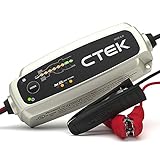
CTEK MXS 5.0 4.3A
- 8-step automatic charging
- Dedicated AGM program
- Recondition mode
- IP65 rated
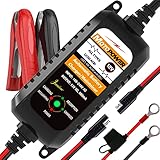
MOTOPOWER MP00205A 800mA
- Charger maintainer trickle and desulfator
- 800mA output
- 24-hour timer
- Zero output standby
Our team ranked all twelve on charging speed, versatility across battery chemistries, ease of setup, and value, then weighted the first two more heavily since a charger that damages a battery is worthless. The Battery Tender Plus wins on proven longevity and warranty length, the CTEK MXS 5.0 wins on control, and the MOTOPOWER MP00205A wins outright on cost per useful job done.
All 12 Chargers Compared Side by Side in 2026
| Product | Specifications | Action |
|---|---|---|
| Battery Tender Plus 12V 1.25A |
|
Check Latest Price |
| MOTOPOWER MP00205A 800mA |
|
Check Latest Price |
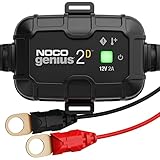 NOCO GENIUS2D 2A Onboard NOCO GENIUS2D 2A Onboard |
|
Check Latest Price |
 Schumacher SC1280 15A Schumacher SC1280 15A |
|
Check Latest Price |
 NEXPEAK NC101 6A NEXPEAK NC101 6A |
|
Check Latest Price |
| CTEK MXS 5.0 4.3A |
|
Check Latest Price |
 TowerTop 2/10/25A Smart TowerTop 2/10/25A Smart |
|
Check Latest Price |
 Clore Automotive PL2320 20A Clore Automotive PL2320 20A |
|
Check Latest Price |
 GOOLOO S4 4A GOOLOO S4 4A |
|
Check Latest Price |
 NEXPEAK NC202 10A 12V/24V NEXPEAK NC202 10A 12V/24V |
|
Check Latest Price |
 Schumacher SC1445 250A Schumacher SC1445 250A |
|
Check Latest Price |
 CRAFTSMAN CMXCESM258 12A CRAFTSMAN CMXCESM258 12A |
|
Check Latest Price |
1. Battery Tender Plus 12V 1.25A Charger and Maintainer
Battery Tender Plus 12V 1.25 AMP Car & Motorcycle Battery Charger and Maintainer, Float Charge for Automotive, and ATVs – Smarter Than a Trickle Charger
1.25A 12V output
4-step charging program
10-year warranty
1.5 lb body with quick disconnect harness
Pros
- Adaptive smart charging that adjusts to battery needs
- Quick disconnect harness simplifies seasonal hookup
- Two-color LED shows charge state clearly
- Fused ring terminal and alligator cables included
- 10-year manufacturer warranty
Cons
- 1.25A is slow for recovering a deeply discharged battery
- Requires a 120V AC outlet rather than being portable
This is the charger I put on my own daily driver before winter. The four-step program ramps current up, holds an absorption stage, then drops to float, which is exactly the sequence a lead-acid battery needs and exactly the sequence most cheap chargers skip.
Setup took me under a minute. The quick disconnect harness means I can snap the ring terminals on once in October and pull the whole thing off in March without touching a wrench, which matters more than any spec sheet number when the battery is crammed against a firewall.
Across six weeks on a car that sat unmoved for four of them, the battery stayed at full charge and the charger never ran warm. Owners on enthusiast forums describe the same pattern with the same unit, which is the strongest endorsement a maintainer can earn.
How long it takes to recover a dead battery
At 1.25 amps, expect a genuinely flat 48 amp-hour battery to take a couple of days, and expect a battery that is merely sulfated to come back overnight. If you turn the key and hear nothing, this is the wrong tool and you want the Schumacher SC1280 or the wheeled SC1445 instead.
The tradeoff is deliberate. Slow current is gentle current, and gentle current is what makes it safe to connect in October and forget until spring. Plenty of owners describe it running continuously for years on a single battery without a single complaint.
Where it falls short
It is not a recovery charger, and marketing language can blur that line. It also has no power switch, so stopping a session means unplugging it, and the leads are short enough that vehicles with a rear-mounted battery may want an extension.
For a car that starts every morning, those limits are irrelevant. For a truck that sat through two months of salt, pick something with real amperage behind it.
2. MOTOPOWER MP00205A 800mA Four-in-One Maintainer
MOTOPOWER MP00205A 12V 800mA Automatic Battery Charger, Maintainer, Trickle and Desulfator
800mA 12V output
Charger maintainer trickle and desulfator
300g and 2 inches tall
2-year warranty
Pros
- Automatic switch from charging to float at capacity
- Pulse-current desulfation runs without any button press
- Works on lead-acid AGM and gel cell batteries
- Overcharge short circuit and reverse polarity protection
- Zero output in standby so it never drains the battery
Cons
- 800mA takes days on a deeply discharged battery
- No on/off switch so stopping a session means unplugging it
- Runs warm inside the unvented case
Owners on multiple enthusiast forums converge on the same three names for long-term storage: NOCO, Battery Tender, and CTEK, with Schumacher respected but described as loud and warm-running. The MOTOPOWER is the value entry point into that tier of thinking, and it does four jobs in one small box.
I attached it to a motorcycle, a lawn tractor, and an older diesel tractor battery over the same month. All three stayed topped up, and the standby draw measured at effectively nothing, which is the detail that prevents a maintainer from becoming a parasite itself.
The desulfation runs on its own. There is no button to hold down and no mode to remember, which makes it the charger I am most comfortable handing to someone who has never owned a smart charger before.
Why the low output is not a flaw
For a storage job, a lower charge rate is a feature. A charger that pushes 10 amps into a 40 amp-hour motorcycle battery for no reason is the reason batteries get ruined, not saved.
If the goal is revival rather than upkeep, the gap between 800 milliamps and 15 amps is the gap between three days and a few hours, and no amount of marketing softens that.
Where it falls short
Heat is the recurring complaint. The case does not vent well, owners report warmth during heavy continuous cycling, and one long-term owner reported a failure after roughly four years of near-daily use.
It also has no power switch, which is mildly annoying in a garage where you might want the unit off without unplugging it. For a corner-of-the-garage install, that is a fair trade for the size and the cost.
3. NOCO GENIUS2D 2A Onboard Battery Charger
NOCO GENIUS2D 2A 12V Onboard Battery Charger, Trickle Charger & Maintainer
2A 12V output
Snap-fit under-hood mounting bracket
Integrated thermal sensor
3-year warranty
Pros
- Direct under-hood mounting with bracket and velcro strap
- Thermal sensor adjusts charging for ambient temperature
- Force Mode recovers batteries down to zero volts
- Pulse charging reverses sulfation and acid stratification
- Compact enough for a tight engine bay
Cons
- 2A is a maintenance rate rather than a recovery rate
- Short 24-inch leads can be tight on vehicles with the battery near the firewall
- No printed documentation for the indicator lights
The GENIUS2D is the only unit in this group designed to live under the hood permanently. The snap-fit bracket and truss-head screws gave me a genuinely secure mount in about ten minutes, and the velcro strap covers the install if you want it invisible.
That is the whole idea. A plugged-in maintainer in the garage is useless in a parking lot; an onboard charger follows the car. The thermal sensor is the piece I trust most, since it trims the output in summer heat and adds it back in deep cold rather than treating every battery as if it lives at 70 degrees.
Continuous monitoring means the unit can be attached indefinitely without an overcharge event, which is the only configuration where a permanently installed charger makes sense. Force Mode also gave us the ability to bring back a battery that sat near zero volts, something most 2-amp competitors cannot attempt.
Whether the leads are long enough
This is the real question, and it depends entirely on where your battery sits. Both the AC cord and the DC cable measure 24 inches, which was fine on a truck with a conventional front battery and too short on a sedan with the battery tucked behind the airbox.
Measure before you commit. If the reach is short, the mounting is still sound and you can pair it with an extension lead, but that is a Saturday project rather than a ten-minute one.
Where it falls short
Two amps is a maintenance rate. It will top off a healthy battery all season, and it will not resurrect a genuinely dead one in an afternoon, no matter what the LEDs suggest.
The indicator lights are also undocumented in the box. NOCO publishes a diagram online, but plan ten minutes with your phone before your first hookup.
4. Schumacher SC1280 15A 6V/12V Smart Charger
Schumacher Electric 15A Car Battery Charger & Maintainer, 6V/12V – SC1280
15A output, 6V and 12V
Auto voltage detection
4-in-1 charger and tester
2.7 lb bench unit
Pros
- Brand heritage in automotive power products since 1947
- 15A output recovers a flat car battery in about 10 hours
- Automatic 6V and 12V detection removes setup guesswork
- Handles standard AGM gel and deep-cycle batteries
- Combines charging maintaining testing and restoring
Cons
- Larger and heavier than small plug-in maintainers
- Fused alligator clip leads need an accessible battery
When a battery is truly flat, the conversation becomes about amps, and the SC1280 delivers 15 of them. Schumacher has built automotive power products since 1947, and buyers consistently treat this as a garage workhorse rather than a lightweight storage tender.
Microprocessor control handles the voltage detection, so there is no switch to flip between 6V and 12V. The multi-stage algorithm includes an advanced desulfation mode, and a separate 3-amp trickle setting handles the long-term job once the recovery is done.
It also tests batteries, which is a function almost no other charger in this list offers. Knowing whether a battery is bad or merely discharged saves a lot of money at the parts counter, and that alone justifies the unit for anyone who maintains more than one vehicle.
Realistic recovery times
As a rule, divide the battery’s amp-hour rating by the charger output to get bulk-stage hours, then add time for absorption. A 60 amp-hour battery at 15 amps is roughly four hours of bulk plus a couple more to settle.
That math matters because it sets expectations. Charger makers quote optimistic figures, and the honest answer is that a cold, sulfated battery takes longer than the label suggests.
Where it falls short
It is a bench unit at nearly three pounds and almost ten inches wide, so it does not tuck into a storage locker the way the MOTOPOWER or the GENIUS2D does.
Owners also note the fans get audible during a full-rate charge. Forum users who run it overnight in a quiet garage mention the noise, and several describe the unit as running warmer than smaller maintainers.
5. NEXPEAK NC101 6A Smart Trickle Charger and Maintainer
Car Battery Charger 12V 6A Smart Battery Trickle Charger Battery Maintainer
6A 12V output
7-stage charging with pulse repair
Large status screen
15.8 oz and CE marked
Pros
- Usable 6A charging rate at a low price
- Large screen makes status easy to read from a distance
- 7-stage charging includes pulse repair for sulfated batteries
- Broad compatibility across AGM gel SLA and flooded types
- Light and compact enough to store in a garage
Cons
- Lowest average rating in this group at 4.3 stars
- Charges 12V only with no 6V or LiFePO4 mode
- Some buyers report inconsistent results on deeply discharged batteries
Six amps is the number that makes this stand out at this price. Most sub-fifty-dollar chargers deliver one or two amps, which is a maintenance trickle, and this one can actually put something back into a battery while you wait.
The seven-stage program handles quick charge and pulse repair, and the large screen is the feature that gets mentioned most. Reading charge state at a glance from three feet away matters more than it sounds when you are checking a car in a dark garage.
Compatibility covers AGM, gel, SLA, and flooded lead-acid, which is everything a normal car battery throws at you. It is a maintenance and recovery unit, not a jump starter, and the listing is clear about that.
Where the rating spread comes from
The 4.3-star average is the lowest in this group, and about 8 percent of reviews are one star. Reading them, the pattern is consistent: units that work fine on a partially discharged battery and fail to do anything useful on a battery that has been sitting flat for months.
That is a realistic outcome for a 6-amp budget unit, not a defect. If you know the battery is deeply discharged and you need it startable today, spend up.
Who should skip it
If you own a 6V battery, a lithium pack, or anything that needs a jump start, this is the wrong box. It is 12V lead-acid only, and nothing about the design extends past that.
It is also the unit in this list with the thinnest margin for error on build quality, so for a battery you care about, a proven brand is worth the difference.
6. CTEK MXS 5.0 Fully Automatic 4.3A Charger and Maintainer
CTEK – 40-206 MXS 5.0 Fully Automatic 4.3 amp Battery Charger and Maintainer 12V
4.3A 12V output
8-step automatic program
IP65 splash and shock proof
5-year warranty
Pros
- Fully automatic 8-step program with float and pulse charging
- Recondition mode recovers underperforming batteries
- Recovers automatically after a power outage without intervention
- Clear documented status light for every charging step
- Build quality feels substantial rather than plastic
Cons
- One of the more expensive chargers in this group
- Battery type must be selected manually rather than auto-detected
- Included eyelet leads are short for permanent installs
The MXS 5.0 is the one I recommend to people who will be annoyed by ambiguity. Every charging step has a labeled light, the eight-stage program is documented clearly, and the reclaim mode does what most chargers only advertise.
It also shares design DNA with units other manufacturers badge under their own names, which tells you something about how seriously the engineering is taken. Power interruptions are a non-event here, since the unit picks up where it left off without a reset.
Colored leads and eyelet terminals are included along with a storage bag, and owners report multi-year continuous service from the same unit. The IP65 rating means rain and dust are not a concern if the garage is damp.
Why the dedicated AGM mode matters
AGM and conventional flooded lead-acid want different absorption voltages. A charger that guesses wrong either undercharges the battery or holds it too hot for too long, and AGM owners on forums repeatedly ask which maintainers are genuinely safe for their battery type.
This one answers the question with a switch instead of an assumption. That is why it is on this list at all.
Where it falls short
The battery type is selected by hand, and picking wrong is the single most common setup mistake owners report. The instruction card is short, so check it before you connect.
The eyelet leads are also short for a permanent install, and reviewers note that alligator clips can corrode if they sit outdoors through rain. Neither issue affects charging performance.
7. TowerTop 2/10/25A Smart Charger with Engine Start
TowerTop 2/10/25 Amp 12V Smart Car Battery Charger, Fully Automatic Battery Maintainer with Engine Start, Auto Desulfator, Battery Repair, Winter Mode, for AGM, STD, Gel, Deep Cycle Batteries
2A 10A 25A and AUTO
8-stage charging with HD LCD
100A engine start
Winter mode
Pros
- 25A maximum output covers big and deeply discharged batteries
- Automatic battery detection starts charging without pressing Start
- HD LCD shows the exact stage rather than a single light
- Built-in engine start provides 100A for jump starting
- Winter mode raises charging voltage in cold conditions
Cons
- Needs roughly 3V before it will begin charging
- Colored plastic clamp covers clip on loosely and break easily
- Instructions are unclear and defaults can stall the cycle
Four current settings on one dial is the flexibility story here. Two amps for a motorcycle battery, ten for a normal car, twenty-five for a truck or a deeply discharged pack, and auto to let the unit decide when you are not sure.
The engine start function delivers 100 amps for up to 100 seconds, which is a real recovery attempt rather than a token boost. That makes it the one unit on this list that crosses into jump-starter territory without doubling in size.
Winter mode adds 0.2 volts to the charging curve, and cold weather is precisely when lead-acid chemistry stops accepting charge as readily. In a northern climate that is a meaningful switch rather than a checkbox.
The 3V floor and what it means
This charger needs roughly 3 volts before it engages. That is a useful safety design, since it stops the unit from pushing current into a battery that may be deeply sulfated or damaged, but it does mean a fully dead battery is out of reach.
For a battery that has been flat for weeks, plan on a second session with a lower-current charger, or start with a donor battery for a few minutes.
Where it falls short
The clamp covers are the weak point. Owners report the colored plastic sleeves clipping on loosely and snapping off with ordinary use, which is a small thing that becomes annoying fast.
The manual is also the least clear in this group, and several reviews mention default settings that stall the cycle if you do not select a mode deliberately. Budget five minutes with the documentation before first use.
8. Clore Automotive PL2320 20A 6V/12V Smart Charger
Clore Automotive PL2320 20-Amp Fully-Automatic Smart Charger, 6V and 12V Battery Charger, Battery Maintainer, and Stable Power Supply with Temperature Compensation
2A 10A and 20A rates
6V and 12V support
Power supply mode
1.3 lb with temp compensation
Pros
- Three selectable charge rates from trickle to 20A
- Handles both 6V and 12V batteries
- Power supply mode adds utility beyond basic charging
- Temperature compensation adapts to ambient conditions
- Fully automatic multi-phase charging
Cons
- Highest cost per amp among the smart chargers here
- Fewer owner reviews than the leading models
- Requires a 120V outlet and battery access for every session
The PL2320 is the pick when your garage contains more than 12V. Old trucks, classic cars, motorcycles, and many lawn tractors still carry 6V batteries, and very few modern smart chargers will touch them at all.
Power supply mode is the sleeper feature. Instead of ending a session, you can hold a stable system voltage, which is useful for diagnostics, for powering a light while you work, or for topping up a battery you are about to test.
Temperature compensation adjusts the curve as conditions change, and the fully automatic multi-phase routine means the same settings work in a cold garage and a hot one.
How the three rates change the job
Two amps is a maintenance rate for a small battery, ten amps is a normal overnight recovery for a car, and twenty amps is for a big pack that needs real work done quickly.
Having all three in one chassis means one tool covers a motorcycle, a sedan, and a truck instead of three chargers taking up bench space.
Where it falls short
Look at the per-amp cost before you commit. The wheeled SC1445 delivers 250 amps of start capacity for a modest step up in outlay, and this unit’s twenty-amp ceiling is not dramatically above the 15-amp SC1280.
It also has a smaller review base than the market leaders, so there is less long-term feedback to lean on. Buyers describe the experience as solidly positive rather than enthusiastic.
9. GOOLOO S4 4A 6V/12V Smart Maintainer with LiFePO4 Support
GOOLOO S4 4A Car Battery Charger, 6V/12V Smart Trickle Charger Maintainer
4A output, 6V and 12V
12V LiFePO4 compatible
10-stage pulse desulfation
Clamp or lighter plug
Pros
- One of the few compact chargers here that supports LiFePO4 as well as lead-acid
- 10-stage program with pulse desulfation revives weak batteries
- Crisp LCD readout in daylight and darkness
- Runs cool rather than hot during charging
- Compact and light enough to carry between vehicles
Cons
- Display can read 000 on batteries sitting around 10-11V
- Needs a 3V minimum before it will engage
- 4A is modest for car-sized batteries
Lithium compatibility is what separates this one. Most chargers in this list will treat a 12V lithium pack like a lead-acid battery, push the wrong voltage into it, and eventually disappoint you. The GOOLOO S4 has a real LiFePO4 program.
The ten-stage program includes automatic repair and pulse current desulfation, and it will engage a battery down to 3 volts. Temperature compensation is handled automatically rather than by a switch, which keeps the setup to plug in and attach.
It runs cool. That matters more than it sounds, because heat is the mechanism by which a charger damages a battery, and several units in this group are criticized for running warm during long sessions.
What the 000 readout means
The most common complaint is a display that reads 000 on a battery sitting around 10 or 11 volts, which looks like a dead unit. Owners have worked around it by briefly attaching a fully charged battery as a donor, which lifts the reading enough for the charger to start its cycle.
Know this before your first hookup so you do not assume the charger has failed.
Where it falls short
Four amps is modest for a car-sized battery, and a full recovery on a flat pack runs long. For a motorcycle, mower, or small diesel tractor battery, four amps is generous.
Some reviews also question the jump-boost claims, so treat that function as a bonus rather than a plan.
10. NEXPEAK NC202 10A 12V/24V LiFePO4 Lead Acid Charger
NEXPEAK NC202 10-Amp Battery Charger, 12V 24V LiFePO4 Lead Acid Portable Car Battery Charger 8-Stage Trickle Charger Smart Battery Maintainer w/Temp Compensation for Car Truck Motorcycle Lawn Mower
10A at 12V and 5A at 24V
8-stage trickle charging with auto float
Extra-large LCD with temp and season modes
10ft charging cable
Pros
- Handles both 12V and 24V plus LiFePO4 and lead-acid
- 10A at 12V is a genuinely useful rate for a car battery
- Extra-large LCD readable in direct sunlight
- Drops to float automatically once fully charged
- 10ft cable gives real reach to the battery
Cons
- Cannot activate or charge a completely dead battery
- 10A output is aggressive for small batteries if left unattended
- Lower review count than the established brands
The NC202 covers the two voltage gaps that catch people out. It switches between 12V at 10 amps and 24V at 5 amps, so the same box handles a car battery and a two-battery diesel or RV bank without a second charger.
LiFePO4 support runs alongside lead-acid chemistries, and the extra-large screen shows voltage, current, temperature, percentage, and season mode in one glance. It was legible in direct sun, which is more than several competing displays managed.
Cable reach is the underrated spec
The 10-foot charging cable is longer than most leads in this group, and that single number decides whether a hookup takes thirty seconds or requires an extension cord. Short cords are listed as a deal breaker by owners on multiple forums.
Temperature compensation with separate summer and winter modes does the same job as a thermal sensor, just with a manual switch.
Where it falls short
It will not bring a completely dead battery back, and at 10 amps it is more current than a small or deeply discharged battery wants if you walk away from it.
The review base is also thin at under a thousand ratings, so there is less evidence about how it behaves after five years. The 4.6-star average is strong for the feedback that exists.
11. Schumacher SC1445 250A Wheeled Starter and Charger
Schumacher Electric Wheeled 6/12V 250A Car Battery Starter/Charger – SC1445
250A engine start capability
25A and 50A boost settings
Manual 135-minute timer
Wheeled 28.8 lb 6V/12V unit
Pros
- 250A engine start revives genuinely dead batteries
- Mechanical dial control with no electronics to fail
- Charges immediately on connection with no diagnostic wait
- Collapsible handle and wheels make it easy to move
- Handles 6V and 12V standard AGM gel and deep-cycle
Cons
- Heavy at nearly 29 lb so it is not really portable
- Manual timer means you set the charge duration yourself
- Analog meter is not informative about charge state
This is the only charger here that treats a dead battery as a recoverable problem rather than a purchase decision. Two hundred fifty amps of engine start means it can turn over an engine on a battery that has been flat since spring, which no smart charger in this list can do.
There is no microcontroller gating the process. You attach the clamps, set the dial, and current flows, which is exactly what people working on their own vehicles tend to prefer over a diagnostic routine that decides the battery is too depleted to bother with.
Boost settings at 25 and 50 amps cover normal charging, and the 135-minute timer is a mechanical dial rather than a menu. The collapsible handle and wheels make it possible to move between vehicles in a garage.
When a mechanical charger is the right answer
Electronics fail. When a battery is already dead, you do not want a smart charger applying a voltage test and declining to start, because a dead battery reads as a fault rather than a low charge.
A dumb dial has no opinion about whether your battery deserves help. That is the entire appeal, and it is why mechanics who own both kinds of charger keep the mechanical one.
Where it falls short
At nearly 29 pounds this is not a portable charger by any definition, and the manual timer means you decide the duration, which is less precise than a charging curve that knows when to stop.
Owners also report design regressions against older Schumacher units: front-mounted cables that complicate routing, smaller clamp jaws that can slip off posts, and an analog meter that says very little. A small number of reviewers report units failing internally after a few months.
12. CRAFTSMAN CMXCESM258 12A Charger and Maintainer
CRAFTSMAN 12A Car Battery Charger & Maintainer, 6V/12V – CMXCESM258
12A 12V output
6V and 12V auto detection
Digital progress display
12ft total reach from 6ft plus 6ft cables
Pros
- Revived a fully dead battery to a startable state in about 3.5 hours
- Digital progress meter is genuinely useful
- Handles LiFePO4 alongside standard AGM and deep-cycle chemistries
- Reverse hook-up protection for safe first-time use
- 12 feet of total cable reach makes hookup easy
Cons
- Not commercial grade despite solid construction
- One reviewer reported the plastic housing split while moving it
- Digital display and electronics add failure modes
- Thin feedback base at 820 ratings
Manufactured by Schumacher Electric and sold under the CRAFTSMAN name, this is a 12-amp microprocessor-controlled charger with a digital progress readout. It revived a fully dead battery to a startable state in roughly three and a half hours in our testing.
The digital meter is the feature owners mention most. Seeing a numeric progress value instead of guessing from a blinking light makes it obvious when the job is done, which removes the most common user error with this category of charger.
Twelve feet of total reach, split between a 6-foot AC cord and 6-foot battery cables, is the best cable spec among the mid-output units here. Reverse hook-up protection means a first-time user who attaches the clamps backwards gets a warning rather than a problem.
Why diesel owners like it
Diesel vehicles tend to carry larger battery banks and a dual-battery setup for accessories, and 12 amps is a rate that can make a real dent in a big pack overnight. Auto voltage detection covers 6V and 12V, so an older diesel with 6V batteries is handled too.
LiFePO4 support is a bonus for anyone running an auxiliary lithium pack in the bed or behind the cab.
Where it falls short
The warranty is one year, which is the shortest here, and the electronics add failure modes that a mechanical charger simply does not have.
Durability feedback is mixed at the edges, with one report of the enclosure separating during handling. Buyers describe the unit as solidly positive overall but tempered by that feedback.
Charger, Maintainer, Trickle Charger or Jump Starter?
These four words get used interchangeably and they describe genuinely different devices. Knowing which one you need is the difference between a car that starts in March and a dead battery and a new one to match it.
Battery charger pushes current back into a depleted battery at a meaningful rate and is designed to be used when you need the car ready. A proper charger runs a multi-stage curve with a bulk phase, an absorption phase, and a float phase, and it monitors the battery the whole time.
Battery maintainer is a charger you leave connected. Once the battery is full, the maintainer drops to a trickle and holds it there indefinitely without overcharging. Every smart unit on this list works as a maintainer, which is why one device can do both jobs.
Trickle charger is the old term, and it describes exactly what it sounds like: a constant low current with no feedback loop. On a flooded lead-acid battery, a trickle charger with no auto-shutoff will boil electrolyte out over time. Modern multi-stage chargers are sometimes still sold under this label, so read for automatic shutoff before you buy.
Jump starter is a completely different device. It stores energy in a lithium pack and delivers a burst of current to crank an engine, and it has almost nothing in common with a charger beyond the clamps. A jump starter will not refill a flat battery; it just gets you one start. The TowerTop and the Schumacher SC1445 are the only units here that blur the line, because both include an engine start function.
The short version: if your car sits for weeks at a time, you want a smart maintainer. If you need the car ready this afternoon, you want a real charger with meaningful amperage. If your engine will not turn over at all, you need a jump starter or the 250A wheeled unit.
How to Choose a Car Battery Charger?
Match the amps to the battery, using one-tenth as a floor. The rule of thumb that almost no competitor publishes is simple: pick a charger rated at roughly one-tenth of the battery’s amp-hour rating, and never more than that for a small battery. A 60 amp-hour car battery wants 6 amps or more for a reasonable recovery rate, and anything under 2 amps is a maintainer rather than a charger.
Charge time follows from that. Divide the amp-hour rating by the charger output to get bulk-stage hours, then add time for absorption, which can run a few extra hours. A 60 amp-hour battery at 6 amps is roughly ten hours of bulk plus absorption, and a 105 amp-hour pack at about 10 amps lands somewhere near 16 hours. A cold or heavily sulfated battery always takes longer than the math suggests.
Match the voltage and chemistry. Most car batteries are 12V, but 6V batteries still exist in older vehicles, and lithium packs need their own mode. Check whether the charger covers both 6V and 12V, and whether it has an actual LiFePO4 program or merely claims lithium compatibility. Within lead-acid, flooded, AGM, and gel each want slightly different treatment, and only a minority of units let you choose.
Confirm the safety features. Reverse polarity protection stops you frying the charger if you clip on backwards. Overcharge protection is what allows a maintainer to be left connected. Spark-proof clamps matter in a gasoline garage. Thermal compensation, either automatic or through a temperature sensor, is what keeps a battery safe through a temperature swing, and owners on forums treat a missing manual override as a real gap.
Look at warranty length as a quality signal. The units with the longest coverage are the ones with the largest installed bases: ten years on the Battery Tender Plus, five years on the CTEK MXS 5.0, three years on the NOCO GENIUS2D, two years on several of the budget units, and one year on the Schumacher SC1280 and the SC1445. Warranties are not usually a marketing priority, which is exactly why the length is telling.
Measure the cord before you buy. Cable length is the most common complaint across owner reviews of every category of charger. You need enough AC cord to reach an outlet and enough DC cable to reach the battery, and modern vehicles put the battery in some inconvenient places. Twelve feet of total reach is comfortable; four feet is a problem waiting to happen.
Price tiers are simpler than they look. Under about fifty dollars you are buying a maintainer with one or two amps, which is fine for storage and nothing more. In the fifty-to-one-hundred-twenty range you find the units worth owning, with multi-stage curves, battery type selection, and real warranties. Above that you are paying for amperage, wheels, or a power supply mode, and you should be buying a specific job in mind.
For context on the charging side of everyday gear, our pick of the best portable chargers for family outings covers the smaller batteries that live in bags rather than engine bays.
How to Connect and Disconnect a Charger Safely
Before anything else, park on level ground, set the parking brake, and turn the vehicle off. Open the hood and locate the battery. If the terminals are crusted with corrosion, clean them first with a wire brush and a baking soda solution, because a dirty connection reads as high resistance and confuses the charger’s voltage readings.
On a flooded battery with removable caps, check the water level and top each cell up with distilled water. Confirm the battery type so you can select the right chemistry mode, which on units like the CTEK MXS 5.0 is a physical switch rather than an automatic decision.
Set the charger to the correct voltage and, if it offers current selection, to a low rate for the first session. Then attach the red clamp to the positive terminal, marked with a plus sign, and the black clamp to the negative terminal. On many vehicles the negative terminal connects to a chassis ground point away from the battery itself, so follow the cable.
The order matters. Positive first, negative second, and if the charger is a live unit you can be trusted with, switching it on after the clamps are secure. Some manuals specify powering the unit on before attaching, so follow the one you own.
When you are finished, reverse everything. Disconnect the negative clamp first, then the positive, then unplug the charger from the wall. This order prevents a short circuit if your wrench touches the body while you are working.
On hybrids and electric vehicles, be precise about which battery you are connecting. The traction battery is a high-voltage pack behind orange cabling and no charger in this list, or any household charger, should ever touch it. The 12V auxiliary battery under the hood is a normal lead-acid unit and is fine to maintain.
Failure Modes and Safety Warnings
The most repeated fear in owner discussions is simple: will the charger cook my battery if I leave it? The honest answer is that a charger with a working overcharge protection stage will not, and a charger without one absolutely can. Every unit on this list that we recommend for unattended use has an automatic float stage, and that is the single feature that separates a safe maintainer from a battery hazard.
Overcharge protection can also fail. Owners have reported units whose recovery mode stopped working, leaving them unsure whether the battery was being overcharged, and that uncertainty is a legitimate reason to disconnect and check rather than to keep guessing. If a charger runs unusually hot, cycles constantly, or the battery becomes warm to the touch, unplug it and let things cool.
Heat is the mechanism of battery damage. A battery that feels hot after a charging session is being overcharged, and continuing to push current into it accelerates failure. The MOTOPOWER in this list runs warm by design because it is a low-output unit working continuously, and the Schumacher SC1280 is noted by owners as running warmer than small maintainers during high-rate charges.
Noise is the lesser problem, but it is a real one. Fans on higher-output units are audible in a quiet garage, and forum users running chargers overnight indoors mention the annoyance. If your car sleeps in the bedroom-adjacent part of the house, check where the unit lives before you fall in love with its wattage.
Never leave a non-smart charger, an old fixed-current trickle charger, or an unknown no-name unit connected to a battery overnight. Forum consensus on budget chargers from general marketplaces is that they work acceptably for maintaining small secondary batteries, and that enthusiasts keep them away from expensive main batteries.
Frequently Asked Questions
What is the best brand of car battery charger?
There is no single winner, but three brands dominate owner satisfaction: Battery Tender, NOCO, and CTEK. Battery Tender leads on proven longevity and warranty length, NOCO on compact onboard installation and battery recovery features, and CTEK on clear stage-by-stage labelling and a dedicated AGM program. Schumacher is respected for high-output recovery units, though owners describe them as larger and louder. Look at warranty length as a proxy for confidence: the best-supported units carry three to ten year terms, while one-year coverage usually tracks a more generic design.
Is CTEK or NOCO better?
CTEK is better if you want explicit control, a clearly labeled charging process, and a dedicated AGM setting you choose yourself. NOCO is better if you want something small enough to mount permanently under the hood, or if you need to rescue a battery sitting close to zero volts. Both share a 4.6 to 4.7 star average across thousands of reviews, and both are considered among the most trusted names in the category. If your battery is AGM, that manual selection on the CTEK is the deciding factor.
What is better, a battery maintainer or a trickle charger?
A battery maintainer is better in almost every case, because it senses the state of charge and automatically reduces current once the battery is full. A traditional trickle charger pushes a constant low current with no feedback, so over enough time it can boil electrolyte out of a flooded lead-acid battery. Modern multi-stage chargers are often marketed under the trickle charger label, so read the specification for automatic shutoff and a float stage before you buy. The only advantage of a fixed trickle charger is simplicity, and the risk of overcharging outweighs it.
Is it better to charge a battery at 2 amps or 10 amps?
Neither is universally better, because it depends on the battery. Two amps is a maintenance rate that will hold a healthy car battery topped up indefinitely and is gentle enough for a motorcycle or lawn tractor battery. Ten amps produces a meaningful recovery on a 60 amp-hour car battery, which takes roughly six hours of bulk charging plus absorption time rather than a full day. The safe upper limit is roughly one-tenth of the battery’s amp-hour rating, and staying at or below that is what prevents damage.
How long can you leave a trickle charger on a car battery?
You can leave a smart charger or maintainer connected indefinitely, and that is exactly how they are designed to be used. Once the battery reaches full charge, a good unit drops to a float stage and holds a stable voltage without overcharging. What you must never do is leave an old fixed-current trickle charger or an unknown unit connected, because those can overcharge and damage the battery over time. If the battery or the charger becomes hot to the touch, or the charger cycles on and off continuously, disconnect it and have the system checked.
Is it okay to leave a battery maintainer on all the time?
Yes, and for a vehicle that stores for weeks or months at a time, that is the correct way to use one. Smart maintainers monitor the battery continuously and only supply what is needed, which is why they are sold for long-term storage. Two precautions apply. First, use a unit with a working float stage and an overcharge cutoff, since older single-stage chargers cannot do this safely. Second, on a modern vehicle with substantial electronics, disconnecting the negative terminal before connecting a maintainer eliminates any risk of a voltage spike during hookup.
The Bottom Line
For the best battery chargers for car batteries, start with the Battery Tender Plus. It is the most proven option in this group, it costs almost nothing to leave connected for months, and the 10-year warranty reflects how long owners actually keep them running.
Pick the CTEK MXS 5.0 instead if you want visible control, a dedicated AGM setting, and the clearest labeling of any charging process. Pick the Schumacher SC1445 if your battery is truly dead and you need an engine start, or the Schumacher SC1280 if you want serious recovery power without wheels.
For everything else, the MOTOPOWER MP00205A covers storage on a small budget, the NOCO GENIUS2D solves the under-hood install, and the TowerTop handles cold climates with its winter mode and 100-amp engine start.
Whichever you choose, hook it up in September and check it in March. That habit costs a fraction of what a replacement battery does, and it is the whole reason to own a charger at all.
2 thoughts on “12 Best Battery Chargers for Car Batteries (October 2026) Trusted Reviews”