

Yes, you can put a golf simulator in a garage, and for most homeowners it is the single best indoor golf space they already own. A typical garage gives you a flat floor, three walls, a door that opens for ventilation and enough headroom for a real swing, which is exactly what a launch monitor, an impact screen and a short throw projector need. The catch is that a garage punishes sloppy choices: bare concrete hurts your joints, a low ceiling cuts off your driver, and a summer garage hits 120 degrees without a plan.
That is why the best golf simulators for garages are not the most expensive units on the market. They are the ones that fit your bay, read shots reliably in imperfect light, and give you data you will actually act on. We went through the hardware that real owners have put in their own garages, from portable radar units to full blackout cages, and sorted out what holds up month after month. Everything below reflects what buyers report after living with the gear, not what the spec sheet promises.
Before you commit, note that most of these installs start with clearing the bay. A lot of families discover the hard way that a half-empty garage is still too tight once a 10 foot wide cage is standing in it. Our guides to storage cabinets for family garages and shop vacuums for family garages cover the two jobs that come up most often during a conversion.
Table of Contents
- Top 3 Picks: The Best Golf Simulators for Garages in 2026
- All 10 Garage Golf Setups Compared Side by Side in 2026
- How We Picked These Garage Simulators
- 1. Garmin Approach R10: The Proven Starting Point for a Garage Bay
- 2. Rapsodo MLM2PRO: Tour Level Data With Cameras and Radar Together
- 3. GoSports Enclosure Nets: The Best Value Screen in a Garage
- 4. ANYTHING SPORTS Enclosure Package: A Full Cage With the Mount Included
- 5. Garmin Approach R50: The Premium Centrepiece With a Built In Screen
- 6. HOMEVOL 2 in 1 Net System: The Safest All In One Starter Bay
- 7. Durbles Enclosure Kit: The Thickest Screen and the Quietest Contact
- 8. Uneekor EYE MINI CORE: The Fewest Missed Shots in This Group
- 9. Diandian Enclosure Kit: The Most Practical First Garage Build
- 10. SkyTrak ST MAX: Built In Speed Drills and Mac Compatibility
- Garage Golf Simulator Buying Guide: Ceiling Height, Climate, Power and Flooring
- Frequently Asked Questions
- The Best Golf Simulators for Garages: Final Verdict
Top 3 Picks: The Best Golf Simulators for Garages in 2026
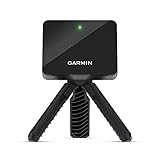
Garmin Approach R10
- Radar tracking that ignores lighting
- 10 hour battery
- Dispersion charts and video in the free app


All 10 Garage Golf Setups Compared Side by Side in 2026
| Product | Specifications | Action |
|---|---|---|
| Garmin Approach R10 |
|
Check Latest Price |
 Rapsodo MLM2PRO Rapsodo MLM2PRO |
|
Check Latest Price |
| GoSports Enclosure Nets |
|
Check Latest Price |
| ANYTHING SPORTS Enclosure Package |
|
Check Latest Price |
 Garmin Approach R50 Garmin Approach R50 |
|
Check Latest Price |
 HOMEVOL 2 in 1 Net System HOMEVOL 2 in 1 Net System |
|
Check Latest Price |
 Durbles Enclosure Kit Durbles Enclosure Kit |
|
Check Latest Price |
 Uneekor EYE MINI CORE Uneekor EYE MINI CORE |
|
Check Latest Price |
 Diandian Enclosure Kit Diandian Enclosure Kit |
|
Check Latest Price |
 SkyTrak ST MAX SkyTrak ST MAX |
|
Check Latest Price |
How We Picked These Garage Simulators
We read the long review threads, not just the top ratings. The pattern that repeats across garage builds is that a launch monitor is the smallest part of the project and the enclosure is where the money and the headaches go. So we weighted screen durability, blackout performance, rebound control and actual assembly time just as heavily as metric accuracy.
Forum threads on golf simulator builds also shape this guide. Owners with 8.5 to 9 foot ceilings repeatedly describe shortening their swing or giving up the driver entirely, and that reality shows up in how we rank the low profile options here. We also took seriously the recurring complaint about concrete floors, which is why joint protection gets its own section rather than a footnote.
Every product below ships as its own box. You will still need a projector, a mat, a launch monitor and a software plan for most of them, and we spell that out in the buying guide. Nothing here is a complete room for less than the sum of its parts.
1. Garmin Approach R10: The Proven Starting Point for a Garage Bay
Garmin Approach R10, Portable Golf Launch Monitor, Take Your Game Home, Indoors or to The Driving Range, Up to 10 Hours Battery Life – 010-02356-00
Radar based tracking
10 hour battery
340 g body
IPX7 waterproof
Pros
- Compact at 340 g and easy to move from range to garage
- Up to 10 hours of battery per session
- Radar reads are unaffected by dim garage lighting
- Free Garmin Golf app with dispersion charts and video
- Ball speed within about 1 mph of premium units
Cons
- Backspin estimates run high on drivers
- Missed reads below roughly 30 mph club speed
- Indoor distances can read about 20 percent short
- No putting capture
- App drops can force recalibration
The R10 is the launch monitor most garage builds in owner threads are centred on, and the volume of real-world use behind it explains why it holds up. It is 340 grams, roughly the weight of a paperback, and it runs for up to 10 hours on a charge. That combination means you can swing in a garage on a Tuesday night and take the same device to the range on Saturday without thinking about it.
Radar is the quiet hero in a garage. Because it does not depend on seeing the ball, it works in a single-bulb space with the door down. Owners pair it with a phone or tablet and get per club stats, a shot dispersion chart and automatic video clips with metrics overlaid, all inside the free Garmin Golf app.
The accuracy picture is more nuanced than the headline number suggests. Ball speed lands within about 1 mph and club head speed within about 3 mph, so ball speed and short iron carry are numbers you can trust. Spin is the weak point. Owners of all experience levels report backspin running high on drivers, which drags the calculated carry distance down with it, and a common fix among informed buyers is to hit spinning simulator balls such as Titleist RCT rather than cheap range balls.
Two other limits matter in a garage specifically. Fast swings and short chips produce missed reads, and there is no putting capture at all, so a full practice session has to be built around full swings and partial chips. Readings also tend to come in a bit short indoors, so treat the numbers as a trend line rather than a certified distance.
When the R10 makes sense in a garage
This is the right pick if you want usable data without committing to a subscription before you know you like it, and if your garage is the smaller of the two bays. About 8 feet behind the ball is enough room for a full swing. Because it is radar based, it also shrugs off the mixed lighting that makes camera systems struggle, and it doubles as a range device so the unit is not idle eleven months a year.
It also makes a sensible first step for anyone who is unsure about the whole hobby. A lot of owners start here, add a net, and only later add a projector and enclosure once they know they will use it. Our notes on bike storage racks for garages come up in the same conversation, because freeing wall space is often the difference between a workable bay and a cramped one.
When the R10 is the wrong call
Skip it if your practice is mostly inside 30 yards, since missed reads on short shots will frustrate you. It is also a poor fit for a household that wants putting data, and if you already know you will want course play with virtual rounds, the software ecosystem here is thinner than the hardware deserves. For a bay you plan to keep for years and show to guests, one of the higher tier monitors below is a better long term investment.
2. Rapsodo MLM2PRO: Tour Level Data With Cameras and Radar Together
Rapsodo MLM2PRO Mobile Launch Monitor Golf Simulator | 3 Chrome Tour Balls
Doppler radar plus dual cameras
15 metrics
3 inch LCD
3 balls included
Pros
- Slow motion impact video from two camera angles
- Club path and spin axis at a mid range price
- Three Callaway RPT balls ship in the box
- Works with third party simulator apps over Bluetooth
- Fits in a golf bag at 16 ounces
Cons
- Shared Wi-Fi connections drop mid round
- Drains the paired device battery
- Short chips and putts often read as zero spin
- iPhone shows three metrics versus six on iPad
- Paid membership needed for most software value
The MLM2PRO splits owners into two camps, and understanding the split tells you whether it belongs in your garage. Buyers who connect it directly to a tablet describe near professional level metrics at a mid range price. Buyers who rely on shared network connections describe a frustrating experience that has nothing to do with the hardware.
Technically it is a genuinely capable unit. Doppler radar combined with dual cameras captures 15 metrics including spin rate, spin axis, carry distance, club speed, club path and launch angle, and the slow motion contact video is the feature owners mention first. Three Callaway RPT Chrome Soft X balls are included, which removes the guesswork about which ball gives accurate spin readings.
The recurring technical recommendation in reviews is to use the direct Wi-Fi link rather than the shared network, and to use a larger screen. The catch with direct mode is that it cuts the paired device off the internet, which stops course downloads mid session. On an iPhone you see three metrics instead of the six an iPad shows, and the device battery drains hard during a long session.
Short game performance is the other weak spot. Chipping and putting frequently read as zero spin, so the practice modes built around those numbers are less useful than the full swing data. Firmware updates have added features over time, and a 45 day premium trial is bundled, but most of the software value still sits behind an annual membership.
Who should pair the MLM2PRO with a garage setup
It suits golfers who want club path and spin axis numbers without moving up to a dedicated bay, and who already own a decent tablet. It also performs well inside a home net, so you can start with a net and a mat and upgrade the enclosure later. If you split your time between the range and the garage, the 16 ounce weight and included tripod make it one of the easier units to move around.
A garage bay with a ceiling-mounted projector and this unit on the floor works well because the unit does not need to be mounted or wired. Keep a dedicated tablet charged near the bay and the battery drain complaint largely disappears.
Who should pass on it
Pass if you practice mostly chips and putts, since that is where readings disappoint. Pass if you are on a strict network setup with a shared Wi-Fi connection and cannot dedicate a device, because the dropouts are the top complaint in reviews. It is also a weaker choice for a household that wants multi user putting, and the phone versus tablet metric difference will bother you if you only have an iPhone.
3. GoSports Enclosure Nets: The Best Value Screen in a Garage
GoSports 10 x 8 ft Golf Simulator Enclosure Net – Complete Set with Frame and HD Impact Screen Kit
Commercial grade multi layer screen
10x8 12x9 14x8 ft
79 pounds
True blackout
Pros
- Screen holds up under thousands of hard shots
- True blackout panels measurably improve image brightness
- Assembles in about an hour with numbered poles
- Three widths including a 14 ft model
- Fast replacement covers and screens from support
Cons
- Included frame padding is thin and balls return
- No baffles so wedge shots can come back
- Top droops on the longer 14 ft model
- Shank nets are not included
- Occasional damaged packaging
This is the enclosure we point most people toward first, and the reason is simple: the screen is the part that has to survive thousands of impacts at full driver speed. Owners report the screen showing no meaningful wear after well over a year, and the multi layer commercial grade construction is what separates it from a thin net stretched on a light frame.
The blackout panels are the second reason. A garage is full of ambient light sources, including a big overhead door that leaks daylight, and true blackout fabric makes a visible difference in how the projected image looks. Assembly is reported at one to four hours depending on size and how many helpers you have, and the numbered poles keep that process orderly.
Because it is an enclosure rather than a monitor, this is a component you combine with a launch monitor, and owners commonly run an R10 into it. The screen, frame and blackout panels are included together, which removes the sourcing problem entirely. Three sizes give you real options, since a wide 14 ft model changes what you can do in a two car bay.
The main complaint is rebound. The supplied padding is thin, there are no hanging baffles in front of the screen, and wedge shots can find their way back toward you. The most common owner fix is adding 2 inch foam behind the supplied padding or laying turf along the base. Shank nets are not included and should be added, and the top of the enclosure can droop on the 14 ft model.
When this enclosure is the right fit
Choose it when your priority is a screen that will last and an image that looks good under garage lighting, and when you are assembling the bay piece by piece. The 10×8 ft version suits a single car bay, the 12×9 ft version handles most two car garages, and the 14 ft width gives a full field view in a wider space.
It is also the right call for anyone who hits hard. The commercial grade screen absorbs the punishment that destroys cheap screens. Pair it with a proper mat and the joint and floor problems we cover in the buying guide largely disappear.
When to choose something else
Look elsewhere if ball return is your biggest worry, because this kit has no baffles and thin padding as standard. If your bay is narrow, the fixed frame widths have no tolerance and you may need to trim poles before assembly. Skip it if you want the projector mount in the box, since this kit does not include one.
4. ANYTHING SPORTS Enclosure Package: A Full Cage With the Mount Included
Complete Golf Simulator Enclosure Package – 4K-Ready Impact Screen with Blackout Cage, Projector Mount, Frame Poles, Side Shank Nets | Indoor & Garage Practice | Easy Setup | 12-Month Warranty
11 x 8.4 x 5 ft metal frame
Projector mount included
4K ready screen
39 kg
Pros
- Sturdy metal pole frame that firms up once covered
- Projector mount and bar included in the kit
- Good value next to premium branded enclosures
- Screen shows no wear after 18 months
- Fast US based customer support
Cons
- Instructions are poor and sometimes incorrect
- Included pads are thin covers rather than padding
- Blackout fabric sags after several months
- Supplied bungee cords wrinkle the screen
- Unpadded top rear crossbar returns wedge shots
The thing that separates this kit from most budget cages is the projector mount. Almost every other enclosure in this price bracket leaves you sourcing a mount separately, and that single inclusion changes the install from a project into an afternoon. You get the mount, the bar, the poles, the screen and the side shank nets in one box.
The frame is metal rather than lightweight steel tubing, and owners note it firms up noticeably once the blackout cover is fitted. Screens rated for 4K come sized one inch smaller than the frame to minimize light bleed, which is the kind of detail that shows up in the finished image. Sizes cover 8.4 by 8.4 ft, 11 by 8.4 ft and 12 by 9.4 ft configurations.
Assembly is tool free with no drilling, which matters in a garage where you may not want to anchor anything. Turf and the projector itself are not included, so budget for those separately. Reviewers generally treat this as the budget alternative to a custom built bay and are satisfied once it is standing.
The dominant negative theme is documentation. Multiple reviews describe the instruction sheet as inadequate or occasionally wrong, with assembly times of 1.5 to 3 hours as a result. The second theme is safety around the unpadded top rear crossbar, which several owners have padded after wedge shots returned. Adding real foam behind the supplied pads is the other common upgrade.
Where this cage earns its spot
It is the pick for a first serious garage build where you want the projector mount handled and the frame already in place. The 4K ready screen and near full frame coverage give you room to grow, and the side shank nets protect the walls and anything stored nearby. Owners running launch monitors into it report clean contact and no screen wear over a long period.
For a two car garage, the 11 ft width gives you room to stand beside the mat rather than directly behind it. That extra space is often what separates a comfortable bay from one that feels cramped after twenty minutes.
Where it falls short
Pass if you are not prepared to spend an hour or two wrestling with poor instructions, because that frustration is the single most common complaint. The supplied pads are covers more than real impact padding, so budget for foam if you hit wedge shots hard. The blackout fabric also sags after several months, and the bungee cords can pull the screen tight enough to wrinkle it.
5. Garmin Approach R50: The Premium Centrepiece With a Built In Screen
Garmin Approach® R50, Premium Golf Launch Monitor & Simulator
3 camera system
10 inch touchscreen
9 pounds
HDMI output
Pros
- Three camera array delivers premium grade accuracy
- Built in 10 inch color touchscreen removes the phone
- Four hour battery plus a carrying case
- HDMI output drives a garage projector easily
- Putting is simulated which few rivals support
Cons
- Costs far more than any other unit in this guide
- Full simulator features need an active membership
- Shorter battery life than the portable R10
- Only 63 reviews so far
The R50 changes the shape of a garage build. A three camera array delivers metrics that budget radar units cannot match, and the 10 inch color touchscreen means the bay does not depend on a phone or tablet sitting on a bucket. Owners treat it as a permanent centrepiece rather than a portable device, and the included carrying case keeps that option open.
On the data side it tracks ball speed, launch angle, face to path with a tracking sticker, improved spin rate and spin axis, and a built in barometer adjusts carry distance for atmospheric pressure. That last feature matters indoors, where pressure readings are less intuitive than they are on a course. High speed impact video gives immediate visual feedback, and HDMI output makes driving a garage projector straightforward.
Virtual rounds include simulated putting for up to four players on more than 43,000 courses through Home Tee Hero. That is a meaningful difference in a garage, where four people can stand in and play. Club stickers are included in the box for the face to path measurement.
The honest caveat is cost of ownership. Full simulator features sit behind an active Garmin Golf membership, which shapes the total over several years. Battery life is 4 hours, shorter than the portable R10, and at 9 pounds it is a fixed installation rather than a grab and go device. Review volume is also thin compared with the entry level Garmin units, so the long term track record is shorter.
Who should buy the R50
It fits a household that plays rounds together, wants a shared screen, and is building a bay intended to last for years. If you host family or friends and want putting simulated, it is one of the few options in this class that supports it. The built in display also means fewer cables and less to charge in a bay that already has a projector and lighting to run.
Choose it when data quality is the reason you are building. The three camera array is the accuracy step up, and for a golfer chasing a specific number like face to path, that difference is the whole point.
Who should not buy the R50
Pass if the membership cost over several years is not in your plan, because the hardware alone does not unlock the full experience. Pass if you want one device for the range and the garage, since the battery is shorter and the weight is higher. If you are still deciding whether you will play virtual rounds at all, the entry level units in this guide give you real data for a fraction of the outlay.
6. HOMEVOL 2 in 1 Net System: The Safest All In One Starter Bay
2 in 1 Golf Simulator Net System, 10 x 8ft Golf Practice Net Hitting Net with 4K-Ready Impact Screen, Target Cloth, Foam-Padded Steel Frame Cage, Hitting Mat and Balls for Indoor and Outdoor Practice
10 x 8 ft
Steel frame with foam padding
Mat and balls included
2 year warranty
Pros
- Screen
- target cloth
- mat
- balls and stakes all included
- Foam padded steel frame cuts the harsh clang on off center hits
- Top net and side shank nets catch shanks and high wedges
- Dense surface resists sagging for cleaner projection
- Usable as a plain target with no projector or monitor
Cons
- Lighter duty than a full steel simulator cage
- Included mat and two balls are basic
- No blackout curtain for projector brightness
- 10x8 ft size limits full swings in small bays
This is the system to buy if a family wants something that works on day one without a shopping list. The box contains the impact screen, a printed target cloth, the steel frame cage, a hitting mat, two practice balls, six ground stakes and two side nets. Nothing is missing except the launch monitor and the projector.
What stands out for garage use is containment. A top protection net and side shank nets catch high wedge shots and shanks before they reach walls, shelves or a parked vehicle. The foam padding on key frame areas reduces the harsh metal clang on off center contact, which matters more in a garage than in a basement because everything reverberates off hard surfaces.
The 2 in 1 design is genuinely useful rather than a gimmick. Flip to the printed target cloth with chipping holes at varying heights and you have a practice game for family members who do not want to think about launch angles. The dense, sag resistant screen surface gives flatter projection for when you do connect a projector.
With a 4.6 average and a heavy share of top ratings, satisfaction is high, but review volume is modest at 63. The build is lighter duty than a full steel frame simulator cage, and the included mat and balls are basic. There is no blackout curtain, so projector brightness control is on you.
Why this is the budget pick
It wins for households sharing a garage with a car and for kids learning the swing. The top and side netting does more to protect the rest of the garage than any other kit in this range. Because the screen surface is dense and the frame is padded, it is also quieter, and quiet is worth real money in an attached garage.
If your ceiling is under 9 feet, the 10×8 ft footprint plus frame height is close to the limit, so measure carefully. For a taller bay or a wider two car space, the size is workable but you will feel the walls.
Where it is the wrong buy
Pass if you want a long term permanent installation, since the build is lighter duty than a full cage. Pass if projector image quality is the goal, because there is no blackout curtain and the frame is not sized for 4K projection coverage. It is also the wrong kit if your practice is entirely full swing in a tight bay, since the dimensions favour short game and mid iron work.
7. Durbles Enclosure Kit: The Thickest Screen and the Quietest Contact
Pros
- Triple layer screen is thicker and quieter than cheaper screens
- Padded poles and inside corner padding reduce frame contact
- Tool free setup with one owner finishing in about three hours
- Top blackout cover genuinely darkens the image
- Numbered parts make the build orderly
Cons
- Instructions assume ceilings over 9.9 feet
- Frame has zero width tolerance
- Some poles shipped without foam sleeves
- Screen still rebounds and some owners remove bungee cords
- One report of a top crossbar bending
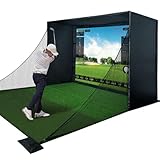
The Durbles sits between budget nets and custom bays, and the reason is the screen. It is triple layer, noticeably thicker than a standard net, and thicker screens sound and look better because they absorb rather than ring. Owners running a launch monitor into it highlight exactly that: quiet contact and an image that holds together under garage lighting.
Padding is unusually complete for this price band, covering poles and inside corners with thick sponge that the maker claims cuts ricochets by more than half. The heavy blackout curtain wraps the enclosure and genuinely darkens the screen from overhead lights, which is a real advantage in a garage with a standard ceiling fixture.
Assembly is tool free and one owner completed it solo in about three hours, with numbered parts keeping the process tidy. Sizes cover 8.4 by 8.4 ft and 10 by 8 ft, and the alloy steel frame is reinforced. Compatibility is broad, working with most launch monitor systems and projectors.
The friction here is dimensional, and it is exactly the issue low ceiling garage owners face. The instructions assume ceilings over 9.9 feet, which is taller than most residential garages, and the 10 ft frame width has zero tolerance, so a slightly narrow bay may require trimming poles. Some poles also ship without foam sleeves, and a few owners remove the bungee cords to reduce the rebound that remains.
Where this kit earns its keep
Choose it when noise is a factor, particularly in an attached garage where every ball return carries through the house. Acoustic complaints from family and neighbours are one of the most common regrets in owner threads, and a thicker screen is the least expensive fix available. The blackout curtain also makes it a good fit for garages with overhead lighting you cannot easily dim.
It works well as the middle option: more substantial than a starter net, less commitment than a custom frame. Add foam behind any exposed pole and the rig is close to finished.
Where it disappoints
Pass if your bay is narrow or your ceiling is low, because the fixed 10 ft width and the tall assembly instructions both work against you. Owners in tight spaces report trimming poles and building in place, which adds a project weekend. The screen still produces noticeable bounce back even with the padding, and there is an isolated report of a top crossbar bending.
8. Uneekor EYE MINI CORE: The Fewest Missed Shots in This Group
Uneekor EYE MINI CORE Golf Launch Monitor & Simulator, 15 Ball Data Points, Near-Zero Latency, Works with GSPro, TGC19 & E6
Cameras plus infrared sensors
8.4 pounds
6.5 x 3.38 x 13.9 inch
2 year warranty
Pros
- Near zero latency over hardwired Ethernet
- Reads virtually any ball with no stickers
- Reported zero or near zero misreads
- All metal build with a wide hitting area
- Two year warranty and responsive support
Cons
- Club swing data is a paid software upgrade
- Annual third party subscription needed to reach GSPro
- Wired only with no iPad support
- Putt and delicate chip reads unreliable
- Full simulation needs a gaming PC and multiple displays
Reliability is the reason to look at this unit. The EYE MINI CORE pairs high speed cameras with infrared sensors for near zero latency tracking, and owners moving up from budget camera monitors report that misreads essentially disappear. In a garage, where you may be swinging on a concrete floor with imperfect lighting and no second chance to re hit, that reliability is worth a lot.
Dimple Optix reads any dimple pattern, so you do not need stickers or premium balls. That removes a whole category of frustration, and the included 20 club sticker sheets relate to the optional club data rather than being required. The VIEW software provides 15 ball data points and session reports, with a three month trial of the Ultimate package including GameDay 4K simulation.
The hardware build is solid, an all metal body at 8.4 pounds, with a wide hitting area and a two year warranty. It connects over hardwired Ethernet, a CAT6 cable and a LAN to USB cable are in the box, and the 20V power adapter gives you about 11 feet of reach. Club Optix real time impact visuals are available as a software upgrade.
Total cost of ownership is the real story here. Club level swing data such as swing speed, face to path and swing direction is not included at this price, and connecting to GSPro, E6 Connect, TGC19 or Creative Golf 3D requires a third party subscription billed annually. It is wired only, so no iPad support, and full simulation wants a gaming class PC with an RTX4070 and 32GB of RAM.
Who this monitor suits
It suits golfers who are tired of missed shots and who practice in an environment the camera units struggle with. Anyone already running GSPro or E6 Connect will find the workflow familiar, since compatibility is the strength. The all metal build and two year warranty also make it a natural fit for a fixed bay rather than a portable device.
If your garage bay has a desk area, the Ethernet and power run is straightforward to plan. Owners who have committed to playing full courses rather than just watching numbers tend to find the extra cost justified.
Who should skip it
Skip it if you only want ball data. The missing club level swing data is a meaningful gap for anyone chasing face to path or swing direction at this budget. Pass if you want to swing casually without a PC and a subscription, since putting and delicate chips are unreliable and the wired only design has no iPad path.
9. Diandian Enclosure Kit: The Most Practical First Garage Build
Diandian Golf Simulator Enclosure Kit 10 x 8 ft with 4K-Ready Impact Screen
10 x 8 x 5 ft
75 pounds
600D Oxford cover
Spring button assembly
Pros
- Spring button assembly needs no tools and takes about 45 minutes to two hours
- Real 600D Oxford cover instead of thin tarp
- Mesh backed screen is quieter than many budget screens
- Foam coverage on the inside keeps balls from returning
- Light enough to slide around and 10 ft wide suits most garages
Cons
- No projector mount or sandbags included
- Instructions can be sparse
- Screen wrinkles are common out of the box
- Roof can sag and the 10 ft width has no tolerance
- One report of bottom screen stitching tearing
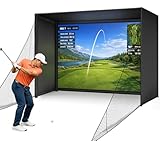
Two materials choices put this kit ahead of most budget cages. The cover is a one piece 600D Oxford blackout wrap rather than thin tarp, which looks better and quiets impact noise, and the screen is mesh backed, which owners report is noticeably quieter than many budget screens. Full foam coverage on the inside edge keeps balls from returning, addressing the single most common complaint about cheap enclosures.
Assembly is the other strength. Spring buttons and a click lock frame mean no tools and no wrenching, often 45 minutes to two hours. The frame uses reinforced carbon steel tube thicker than standard lightweight frames, and the 600D Oxford cover wraps the whole enclosure with no light leak gaps. It is also light enough to slide around on carpet, which matters if the bay is shared with a vehicle.
Owners compare this kit to well known custom bay brands and estimate roughly 85 to 90 percent of the quality for less than half the outlay, which is a reasonable trade for a garage. The dual layer 4K ready screen has a mark resistant, easy to clean front surface, and reinforced Velcro stitching runs along the bottom and sides where screens usually fail first.
The practical cautions are straightforward. No projector mount or sandbags are included at this level, so plan to add a mount. The instructions can be sparse and a QR video is more useful, budget about two hours, and expect screen wrinkles out of the box that relax over time or can be steamed out. A 9 foot ceiling is the recommended minimum.
Why this works for a first build
It is the enclosure we would put in a garage belonging to someone who has never done this before. No tools, no drilling, a fast build, and a finish that looks far more premium than an entry tier product usually does. The blackout wraparound solves the ambient light problem that makes garage projections washed out, and foam coverage handles the rebound problem that makes cheap kits dangerous.
At 10 feet wide it suits most single car and small two car bays, and the 14 by 8.5 ft version is available if you need the width. A related note on wall mounted bike racks applies here, since vertical storage is how most owners free the floor area an enclosure needs.
Where it falls short
Pass if you want a true zero tool weekend project with no wrinkles to deal with, because the fabric needs a little settling. The roof can sag and the 10 ft frame width has no tolerance, so measure the bay opening before the box arrives. Budget separately for a projector mount, sandbags and a mat, and check the stitching on arrival since one report describes bottom screen stitching tearing within days.
10. SkyTrak ST MAX: Built In Speed Drills and Mac Compatibility
SkyTrak ST MAX Golf Launch Monitor with 1-Year Software Included
Dual Doppler radar plus cameras
5 pounds
Needs about 10 x 10 ft
GOLFTEC Speed Training
Pros
- Data quality owners trust for diagnosing a slice
- Built in GOLFTEC Speed Training drills are unique in this class
- One of the few units that works cleanly on Mac
- Plug and play setup and good portability
- Dual USB-C ports charge and transfer at once
Cons
- Small hitting zone causes frequent no reads
- Driver distances read 20 to 30 yards short
- Subscription is required for courses with no free tier
- USB wired mode can freeze mid round
- Upgrade over the older Plus model is modest
The ST MAX has the strongest hardware and the most awkward software experience in this group, and that tension shows in its 4.2 average. Owners who built a full garage setup around it generally consider it worth it, but they arrive knowing what they are getting.
On the plus side, dual Doppler radar combined with photometric cameras produces data quality that owners trust for diagnosing a consistent slice. GOLFTEC Speed Training is built in, with guided drills and swing insights, and it is the one capability the other launch monitors in this guide do not have. Mac compatibility is singled out repeatedly as a decisive reason to buy, and dual USB-C ports let you charge and transfer data at the same time.
There is a real constraint here, so measure before buying. A full swing needs about 10 by 10 ft of indoor space, which is more floor depth than the radar units in this guide ask for, and a narrow single car bay may not provide it.
The hitting zone is described as small, so short shots and off center ball placement produce frequent no reads, and teed shots are reported as particularly awkward. Driver carry reads roughly 20 to 30 yards shorter than real play while irons are closer, so calibrate your expectations before you start chasing a number. Courses require a subscription and there is no meaningful free tier. In Wi-Fi direct mode the unit works well but cuts your internet, which blocks course downloads, and USB wired mode can freeze mid round and needs a power cycle.
Who the ST MAX fits
It fits a Mac user who wants structure in practice rather than random swings. Wedge Matrix, Bag Mapping, Skills Assessments and Randomized Practice give a session a plan, and the built in speed drills add something no competitor here offers. One year of software is included, which softens the subscription sting for the first season.
It is also portable at 5 pounds, so the same unit moves from a garage bay to a bay on the range. For a golfer who wants both practice structure and occasional course play, that combination is compelling.
Who should choose a different monitor
Pass if you are a heavy wedge player, because the small hitting zone produces no reads on exactly the shots you want to hit. Pass if you cannot commit to a subscription, since there is no free course tier. Mac users should note the Wi-Fi direct mode removes internet access, and anyone who prefers a phone or tablet over a laptop should know this is the more computer dependent unit in the group.
Garage Golf Simulator Buying Guide: Ceiling Height, Climate, Power and Flooring
Run the swing test before you buy anything
Stand in the bay, address a ball, and take your full driver swing. If you need to shorten the swing to avoid the ceiling, every monitor on this list will disappoint you, because the problem is the room, not the device. Owners with 8.5 to 9 foot ceilings repeatedly report restricting driver use or modifying their swing, and the practical fix is usually shortening the mat and moving the screen closer, not buying a better monitor.
For width and depth, most owners land on about 10 feet wide for a comfortable single car bay and 12 feet or more for a two car garage. Camera based systems need a clear line of sight behind the ball, while radar units are more forgiving about depth because they only need the ball tracked in front of them. In a one car garage, radar is the more forgiving choice.
Camera based or radar: which reads better in a garage
Camera systems such as the three camera array in the premium Garmin unit, or the dual camera setup in the Rapsodo, give more metrics including spin axis and club path, but they need consistent light. Radar units are unaffected by lighting conditions, which matters in a garage with one overhead fixture and a door down. The compromise most owners settle on is radar for the metric work plus a light source for the phone camera that records video.
Wired systems give the most reliable readings because there is no network to drop, which is why a hardwired Ethernet unit is a good match for a fixed bay. The trade is flexibility: a wired monitor stays where you put it.
Retractable and shared bays versus permanent installations
If you park in the same bay, you have two paths. A retractable screen and enclosure system folds away so the car goes back in, at the cost of several thousand dollars more and more moving parts to maintain. The alternative is a permanent cage plus a plan for reclaiming the space, which is what most owners do.
The practical middle ground is a light enclosure you can slide, which is why build quality and weight matter. If you also use the garage for storage, our notes on extra refrigerators for family garages and wall mounted bike racks are about moving the non golf stuff off the floor rather than around the bay.
Concrete floors, mats and joint protection
This is the most repeated regret in garage build threads. Hitting a concrete slab with an iron twists joints, and repeated sessions make it worse. A proper mat, ideally one of the fibre filled or foam filled models owners recommend most, is not an accessory, it is the single best thing you can buy for your body.
Turf laid over a mat also deadens sound and protects the mat edges. When you shop a kit, check whether the mat is included, because only the starter kits in this guide include one. An efficient shop vacuum also matters more than it sounds, since concrete dust settles on electronics and affects readings.
Climate control, power and lighting
An unheated garage in a cold climate is unusable for four months of the year, and a garage in a hot climate will cook your equipment in summer. Owners in cold regions routinely add a mini split heat pump, which is the most commonly cited single upgrade for year round use. It is an electrical and construction project, so plan it before you build the bay, not after.
Power is the quiet constraint. A projector, a monitor, lighting and any climate control all drawing at once can exceed what an older garage circuit supports, and the fix involves an electrician rather than an adapter. For lighting, aim for even coverage without glare on the screen, since a bright fixture directly behind the impact screen washes out a projected image that a good blackout cover was meant to protect.
Counting the true cost of a garage simulator
A launch monitor is one line in a list that usually includes an enclosure or impact screen, a short throw projector, a mat, simulation software and the electrical and lighting work. Ceiling mounted projectors save floor space in a shared bay but need a proper mount and throw distance, and in tight garages a short throw unit is the only realistic option.
Software is where the running cost hides. Some monitors bundle a year, some need a third party subscription to reach GSPro or E6 Connect, and one of the premium units gates its virtual courses behind a membership. Add insurance considerations too, since equipment of this value in a detached garage is worth a conversation with your insurer, and a warranty on a permanent installation is worth checking in writing before you buy.
Frequently Asked Questions
Can you put a golf simulator in a garage?
Yes. A garage is one of the most practical indoor golf spaces you already own, because it gives you a flat floor, three walls, a door for ventilation and enough headroom for a real swing. Plan around ceiling height, a proper mat over concrete, and enough depth behind the ball for the launch monitor to read cleanly.
How big of a garage do I need for a golf simulator?
Most owners land on about 10 feet wide for a workable single car bay and 12 feet or more for a two car garage. Run a swing test first: stand in the bay and hit a full driver. If you have to shorten the swing to clear the ceiling, the room is the problem. Radar monitors are more forgiving about depth than camera systems.
Is a 9 foot ceiling high enough for a golf simulator?
A 9 foot ceiling is workable but tight, and it is the most common constraint in owner threads. Many golfers with ceilings between 8.5 and 9 feet restrict driver use or modify their swing. Choosing a low profile mat, moving the screen closer, and picking a radar based monitor that does not need to be mounted high all help.
Which golf simulator can be attached to a garage door?
A few retractable systems mount to the garage door or its header so the whole unit moves out of the way when you want the bay back. They cost more than a fixed enclosure and need a reinforced header plus professional installation, so most homeowners in owner threads build a permanent bay and manage floor space instead.
How much does it cost to put a golf simulator in your garage?
A complete build is a sum of parts, not a single purchase: launch monitor, enclosure or impact screen, short throw projector, mat, software, and often electrical, lighting and climate work on top. Entry level setups start with a portable radar monitor and a net, while premium builds add a multi camera monitor, a full blackout cage and year round climate control. The monitor itself is usually the smallest share of the total.
The Best Golf Simulators for Garages: Final Verdict
Start with the Garmin Approach R10 if you want the most proven foundation for a garage bay. It has the largest review base in this group, radar tracking that ignores your lighting, and a battery that lasts a full session. Add the GoSports enclosure for a screen that survives heavy hitting and real blackout performance, or the ANYTHING SPORTS cage if you would rather have the projector mount in the box.
Move up to the premium monitor only when you know you will play virtual rounds, and put the money saved on a mat and climate control, because those protect your body and your season far more than a fourth camera. The best golf simulators for garages in 2026 are the ones that fit your bay, your ceiling and your budget, and the swing test will tell you which of these ten that is.