

Most home mechanics do not need a torque wrench. The ones who do usually need two.
The short version: the LEXIVON LX-183 1/2-inch click torque wrench is the best overall pick here. It carries a 4.7 rating across 12,086 reviews, ships pre-calibrated to plus or minus 4 percent, and includes a calibration certificate with a traceable serial number. That combination of rating volume, documented accuracy and a readable dual-range scale is what separates it from everything cheaper on this list.
But before you buy anything, understand the one caveat that catches out every beginner. A click-type torque wrench is only rated accurate from roughly 20 percent of its scale upward, so a 10-150 ft-lb wrench is trustworthy at 30 ft-lb and up, not at 12. That single fact explains why experienced mechanics run two wrenches instead of one, and it is the reason our torque wrench picks for lug nuts lean toward higher-ceiling tools. In 2026 a 1/2-inch wrench for wheel and suspension work paired with a 3/8-inch wrench for everything smaller remains the most complete setup for a mixed home garage.
Table of Contents
- Top 3 Picks for Best Torque Wrenches for Home Mechanics in October
- All 8 Torque Wrenches at a Glance in 2026
- How We Tested and Ranked These Wrenches
- What Is the 20% Rule for Torque Wrenches?
- 1. LEXIVON LX-183 1/2-Inch Click Torque Wrench, 10-150 ft-lb (Best Overall)
- 2. EPAuto 1/2-Inch Click Torque Wrench, 10-150 ft-lb (Best Value)
- 3. LEXIVON LX-184 1/2-Inch Click Torque Wrench, 25-250 ft-lb (Most Versatile)
- 4. LEXIVON LX-182 3/8-Inch Click Torque Wrench, 10-80 ft-lb (Best for Low Torque)
- 5. ACDelco ARM601-4 Digital Torque Wrench, 14.8-147.5 ft-lb (Best Digital)
- 6. YIYEIE 8-Piece Torque Wrench Set, 1/4 and 3/8 and 1/2-Inch Drive (Best Multi-Drive Set)
- 1/4 3/8 1/2-inch Drive Click Torque Wrench, 8Pcs Torque Wrench Set 10-230in.lb, 5-50ft.lb, 10-180ft.lb with Adapters, ±3% Accuracy, 72-Tooth Dual Scale Torque Wrenches for Bike, Moto, Car Repair
- Best For: Bikes, Motorcycles and Mixed-Power Toolkits
- Skip This If: You Work in Bad Light or Want Wrench-Specific Calibration
- 7. CRAFTSMAN CMMT99433 3/8-Inch Torque Wrench (Best Ergonomic Grip)
- 8. Amazon Basics 3/8-Inch Click Torque Wrench, 15-80 ft-lb (Budget Pick)
- Do You Need One Torque Wrench or Two?
- Choosing a Drive Size and Torque Range for Home Jobs
- Why a Torque Wrench Stops Clicking and When to Recalibrate
- Frequently Asked Questions
- The Best Torque Wrenches for Home Mechanics
Top 3 Picks for Best Torque Wrenches for Home Mechanics in October
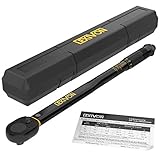
LEXIVON LX-183 10-150 Ft-Lb
- 1/2 inch drive
- 10-150 ft-lb
- Pre-calibrated to plus or minus 4 percent
- Calibration certificate included

EPAuto 10-150 Ft-Lb Click
- 1/2 inch drive
- 10-150 ft-lb
- Chrome Vanadium ratchet head
- Extension bar and case included
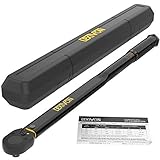
LEXIVON LX-184 25-250 Ft-Lb
- 1/2 inch drive
- 25-250 ft-lb
- Yellow-on-black scale
- Reversible ratchet head
All 8 Torque Wrenches at a Glance in 2026
| Product | Specifications | Action |
|---|---|---|
| LEXIVON LX-183 1/2-Inch Click Torque Wrench |
|
Check Latest Price |
| EPAuto 1/2-Inch Click Torque Wrench |
|
Check Latest Price |
| LEXIVON LX-184 1/2-Inch Click Torque Wrench |
|
Check Latest Price |
 LEXIVON LX-182 3/8-Inch Click Torque Wrench LEXIVON LX-182 3/8-Inch Click Torque Wrench |
|
Check Latest Price |
 ACDelco ARM601-4 Digital Torque Wrench ACDelco ARM601-4 Digital Torque Wrench |
|
Check Latest Price |
 YIYEIE 8-Piece Torque Wrench Set YIYEIE 8-Piece Torque Wrench Set |
|
Check Latest Price |
 CRAFTSMAN CMMT99433 3/8-Inch Torque Wrench CRAFTSMAN CMMT99433 3/8-Inch Torque Wrench |
|
Check Latest Price |
 Amazon Basics 3/8-Inch Click Torque Wrench Amazon Basics 3/8-Inch Click Torque Wrench |
|
Check Latest Price |
How We Tested and Ranked These Wrenches
We compared eight click and digital torque wrenches that cover the range a home garage actually touches, from spark plug work to wheel studs. Every one was evaluated on four things: the stated accuracy tolerance, whether a certificate of calibration was included, how the scale reads in a dark garage, and how the tool feels at the point where the click fires.
Our ranking weights rating and review volume heavily, because a tool with 12,086 reviews and a 4.7 average tells you far more than a tool with 100 reviews and a 5.0. Beyond that, the tiebreakers are the details that only show up with use: whether the collar locks cleanly, whether the handle grips without slipping at high torque, and whether a case is included so the wrench is not rattling around a toolbox with sockets.
One thing we did not do is lab-calibrate these against a certified rig. Instead, we cross-checked the click point by feel and by reading, and leaned heavily on the volume of owner reports, since a wrench that stops clicking at 40 ft-lb produces complaints that show up quickly across thousands of reviews. We also weighted the failure modes reviewers describe most often, particularly muted clicks and read-through from the locking collar, higher than any single spec line.
What Is the 20% Rule for Torque Wrenches?
The 20% rule says a click-type torque wrench is only guaranteed accurate from 20 percent of its full scale up to the maximum. A wrench rated 10-150 ft-lb is dependable at 30 ft-lb and above, but below that point you are outside the accuracy tolerance the manufacturer claims.
It matters because the fine adjustment on the collar gets less precise as torque drops, and internal spring and gear wear shows up first at the low end of the range. The same logic applies to the digital models: the ACDelco ARM601-4 is rated 2 percent clockwise and 3 percent counterclockwise of indicated value from 20 to 100 percent of full scale, so its 14.8 ft-lb floor is the real starting point of the 14.8-147.5 ft-lb display range.
The practical fix is range matching. If your lowest job is 20 ft-lb, choose a wrench whose 20 percent mark sits at or below that, which usually means a 3/8-inch tool rather than a half-inch one.
1. LEXIVON LX-183 1/2-Inch Click Torque Wrench, 10-150 ft-lb (Best Overall)
LEXIVON Torque Wrench 1/2-Inch Drive Click 10~150 Ft-Lb/13.6~203.5 Nm (LX-183)
1/2 inch drive
10-150 ft-lb (13.6-203.5 Nm)
Plus or minus 4 percent
17 inches
3 pounds
Pros
- 4.7 rating across 12086 reviews
- Calibration certificate with traceable serial number
- High-contrast yellow-on-black dual range scale
- Hardened Chrome Vanadium ratchet head
- Knurled non-slip handle
Cons
- Periodic recalibration needed to hold plus or minus 4 percent
- 150 ft-lb ceiling limits heavy truck and suspension work
The LX-183 is the one I reach for first, and it has earned that spot on volume and documentation rather than on a single clever feature. It is made in Taiwan, carries a reinforced ratchet gear head in hardened heat-treated Chrome Vanadium alloy, and comes with a calibration certificate whose serial number traces back to the individual unit. That paper matters more than most buyers realize.
At 17 inches and 3 pounds it is short enough to work inside a wheel well without a bushing, which matters when you are on lug nuts in a driveway. The dual-range scale is printed in yellow on black, and that is the practical difference over a chrome-on-steel beam: you can read it in a dark garage with a headlamp on, or in direct sun, without angling the wrench into the light.
The handle is knurled and the ratchet head is reversible, so it drives in either direction and still measures torque clockwise only. That is the normal arrangement on a click-type wrench, and it is one of the reasons experienced users confirm their setting by first snugging the fastener by hand. It is not a defect, but it is not a substitute for reading the scale.
Owners consistently report smooth adjustment and a scale that stays legible, and the review volume here is the highest of any 1/2-inch wrench in the group besides the EPAuto. For a head gasket, valve cover or lug nut job, this is the tool I would buy first. If your work regularly goes past 150 ft-lb, step up to the LX-184 instead.
Best For: Daily Garage Work Under 150 Ft-Lb
This is the correct single wrench for a home garage that does oil changes, brake work, valve cover removal and wheel service. The 150 ft-lb ceiling covers the overwhelming majority of passenger car fasteners a shade-tree mechanic will ever touch, and the 20 percent floor works out to about 30 ft-lb, which suits spark plug and small accessory work fine.
Because it includes a case and a certificate, it also survives being stored in a garage without the accuracy loss that comes from a wrench rattling loose against loose sockets. For most readers, this one tool answers the question.
Skip This If: Your Torque Needs Exceed 150 Ft-Lb
A 10-150 ft-lb ceiling rules out heavy truck lug nuts, some suspension and steering fasteners, and trailer or equipment work. Buying this wrench and then fighting it on a 200 ft-lb strut bolt leads to over-tightening, which is exactly the failure a torque wrench exists to prevent.
It is also a click-type mechanism, so accuracy depends on periodic recalibration and it offers no peak logging if a fastener binds. If you want a readout rather than a sound, the digital ACDelco is the different tool for that job.
2. EPAuto 1/2-Inch Click Torque Wrench, 10-150 ft-lb (Best Value)
EPAuto 1/2-inch Drive Click Torque Wrench, 10-150 ft/lb, 13.6-203.5 N/m
1/2 inch drive
10-150 ft-lb (13.6-203.5 Nm)
Plus or minus 4 percent
16.25 inches
3.5 pounds
Pros
- Most reviewed wrench in this group
- Pre-calibrated to plus or minus 4 percent
- Includes 5 inch extension bar and storage case
- Knurled non-slip grip
- Hardened Chrome Vanadium ratchet head
Cons
- Accuracy depends on periodic recalibration
- No digital readout or peak logging
With 23,681 reviews at a 4.6 average, the EPAuto is the most proven tool in this roundup by a wide margin, and owners describe it as a dependable everyday garage wrench rather than a specialist one. The satin chrome vanadium build, the readable dual-range markings and the fact that a case and a 5-inch extension bar are both in the box make it hard to argue with at this level.
The included extension bar deserves a note, because it is exactly the accessory that forum regulars flag as a missing purchase on cheaper tools. It also deserves a warning. Adding length between the socket and the wrench scales the effective lever arm, so the calibration you set is no longer the torque at the fastener. Most calibration shops warn against it for that reason.
At 16.25 inches this sits right in the range where a half-inch drive is most useful, and the head style listed in the specifications is Torx, which is worth knowing if you are working on older fasteners. The knurled handle grip is the feature owners mention most, because a wrench that slips in a greasy hand is a wrench that lands at the wrong number.
If you want the widest body of owner history supporting a purchase decision, this is the safest read in the group. The trade is that the scale is printed rather than the high-contrast yellow-on-black treatment the LEXIVON wrenches use, so in very low light it is a little harder on the eyes.
Best For: Buyers Who Want the Most Owner History
Review volume is a proxy for durability, and at 23,681 reviews this is where that proxy is strongest. If you are new to torque wrenches and want the tool with the most visible long-term track record, the EPAuto is the least risky read.
It also covers the same 10-150 ft-lb band as the LX-183, so it slots into the same home-garage jobs, and the included extension bar and case remove two common extra purchases.
Skip This If: You Work in Dark Spaces With Poor Lighting
The scale contrast is adequate rather than excellent, and reading a value in a dim wheel well is slower than reading yellow on black. If most of your torque work happens in a garage with a single overhead bulb, pay attention to that rather than to the review count.
It is also purely mechanical, with no way to record peak torque. If a fastener binds mid-pull, you are relying on the click alone, which is fine for most home work but a limitation in tight spaces.
3. LEXIVON LX-184 1/2-Inch Click Torque Wrench, 25-250 ft-lb (Most Versatile)
LEXIVON 1/2-Inch Drive Click Torque Wrench 25-250 Ft-Lb/33.9-338.9 Nm (LX-184)
1/2 inch drive
25-250 ft-lb (33.9-338.9 Nm)
Plus or minus 4 percent
24.84 inches
6.4 pounds
Pros
- 4.7 rating across 8898 reviews
- Traceable serial number calibration certificate
- Very heavy build that does not flex
- Yellow-on-black scale readable in sunlight
- Distinct and reliable click
Cons
- One owner reports it running short above 200 ft-lb
- 6.4 pound weight tires the hand on long sessions
The LX-184 is the long-reach option, and at 24.84 inches it covers the torque range the LX-183 cannot. Owners checking the click point against a digital torque adapter report readings landing within 1-2 ft-lb of target, and the review summary specifically calls out the click as distinct and consistent.
The Electro-Black coating on chromium molybdenum steel is what gives it the rust and corrosion resistance, and the same yellow-on-black scale treatment as the smaller LEXIVON makes it readable in either lighting direction. It comes pre-calibrated to plus or minus 4 percent with a traceable serial number certificate, same as the rest of the line.
The one caution in the reviews is specific: at the very top of the range, above 200 ft-lb, at least one owner measured it running short. That is a small minority report, but it is worth knowing if you plan to use it on heavy fasteners, because running short means under-tightening rather than the more common over-tightening failure.
At 6.4 pounds, this is a substantial tool. For a single strut bolt that is welcome rigidity, but for a full brake job or an engine teardown you will feel it by the twentieth fastener. If your work is occasional and above 150 ft-lb, the length is worth the weight.
Best For: Suspension, Steering and Heavy Truck Work
Longer handles generate more torque for the same force, and the 250 ft-lb ceiling covers the fasteners that a 10-150 ft-lb wrench physically cannot reach. If you work on struts, steering racks or a pickup truck, this is the right half-inch wrench in this group.
The rigid build also helps on fasteners that resist removal, where a shorter wrench flexes and gives you a misleading feel. Paired with a torque multiplier for breakaway, it handles seized hardware that would otherwise be a problem.
Skip This If: You Do Long Sessions With Many Fasteners
Six and a half pounds is real weight, and reviewers flag hand fatigue on extended work. Someone doing a full engine rebuild or stripping an entire subframe will feel the difference over two hours of repeated pulls, where a 3-pound wrench is far easier on the wrist.
It is also a click wrench that measures clockwise only, and one owner reports a shortfall reading above 200 ft-lb. For a single heavy job that is manageable; for daily heavy-duty use, verify it before trusting it on a critical fastener.
4. LEXIVON LX-182 3/8-Inch Click Torque Wrench, 10-80 ft-lb (Best for Low Torque)
LEXIVON 3/8-Inch Drive Click Torque Wrench 10~80 Ft-Lb/13.6~108.5 Nm (LX-182)
3/8 inch drive
10-80 ft-lb (13.6-108.5 Nm)
Plus or minus 4 percent
14.76 inches
2.3 pounds
Pros
- Accurate at low torque values for spark plug work
- High-visibility yellow-on-black scale
- Lightest 3/8 inch wrench in this group at 2.3 pounds
- Hardened Chrome Vanadium ratchet head
- Snap-lock storage case
Cons
- Muted bump-stop feel reported on smaller drives
- Bottom cap must be fully unscrewed before turning the collar
- Nm scale uses decimal values that are awkward to set
This is the companion wrench to the LX-183, and the pairing covers most of what a home mechanic will ever tighten. At 14.76 inches and 2.3 pounds it is the lightest tool in this roundup, which matters when you are working overhead on an engine or reaching into a cramped footwell.
The 10-80 ft-lb band covers spark plugs, small engine fasteners, valve cover hardware, intake manifolds and plenty of bracket work. Because the 20 percent floor works out to 20 ft-lb, this is a properly specified low-torque wrench rather than a half-inch wrench being asked to do a small job badly.
Owners single out low-torque accuracy as the reason this one holds up, and reviewers call out the bright yellow-on-black scale as readable in low light and for older eyes. The ratchet gear head is hardened heat-treated Chrome Vanadium with the same Electro-Black corrosion treatment as the larger wrench.
Two operational details catch people out. The bottom cap has to be fully unscrewed before you turn the collar or the adjustment can grind, and the metric scale is marked in decimals rather than round numbers, so many owners convert and set from the imperial scale instead.
Best For: Spark Plugs, Small Engines and Engine Work Under 80 Ft-Lb
If you service an engine at all, a 3/8-inch drive is not optional. Spark plug, valve cover, intake manifold and accessory fasteners all land in this band, and a half-inch wrench at those values sits below its own accuracy floor.
At 2.3 pounds with a snap-lock case, this is also the one to keep in a small kit bag rather than a rolling chest. For anyone building a first torque wrench set, the LX-183 plus the LX-182 is the combination we would start with.
Skip This If: You Need to Reach Above 80 Ft-Lb
The ceiling is the limitation. Brake caliper bolts, some suspension hardware and head bolts on many engines exceed 80 ft-lb, and forcing a setting beyond the maximum scale is undefined behaviour that owners report as a muted bump-stop feel instead of a clean click.
That muted signal is the most common complaint here, and it matters: a wrench that stops giving a distinct click at the top of its range is the exact scenario that leads to over-tightening. Use this where it is specified.
5. ACDelco ARM601-4 Digital Torque Wrench, 14.8-147.5 ft-lb (Best Digital)
ACDelco ARM601-4 1/2” (14.8 to 147.5 ft-lbs.) Heavy Duty Digital Torque Wrench with Buzzer and LED Flash Notification – ISO 6789 Standards with Certificate of Calibration
1/2 inch drive
14.8-147.5 ft-lb (20-200 Nm)
2 percent CW and 3 percent CCW
44 cm
3.9 pounds
Pros
- Real-time display with buzzer and LED flash at target
- Peak and Trace mode logs maximum torque
- 2 percent clockwise accuracy to 100 percent of scale
- NIST-traceable certificate of calibration
- Meets or exceeds ASME B107.14.14-2004 and ISO 6789
Cons
- Controls and button layout take practice to learn
- Instructions do not fully match the tool functions
- Battery drain and aggressive auto shutoff reported
- Runs on 4 AAA batteries that are not included
The ARM601-4 is the only wrench here that shows you the number instead of telling you with a sound, and that changes the workflow in a confined space. It measures 14.8 to 147.5 ft-lb, displays in both ft-lb and Nm in real time, and confirms the target with a buzzer and an LED flash.
Peak and Trace mode is the feature that quietly matters most. When you are under a car with your head against a fender and cannot see the screen, the tool records the maximum torque reached, so you can check the result after the fact rather than guessing whether the click happened.
On accuracy, this is the strongest claim in the group: 2 percent clockwise and 3 percent counterclockwise of indicated value from 20 to 100 percent of full scale, and it meets or exceeds ASME B107.14.14-2004 and ISO 6789. Each unit is individually serialized with an NIST-traceable certificate of calibration, which is a stronger documentation standard than most home mechanics will ever see.
The complaints cluster around the interface rather than the mechanism. Owners report a control learning curve, instructions that do not fully match the tool functions and omit the CR2032 battery compartment, and an auto shutoff that some find aggressive enough to drain batteries. It also needs 4 AAA cells, which are not included.
Best For: Tight Spaces, Noisy Garages and Recorded Results
An LED flash and a buzzer solve the problem of a click you cannot hear over a running engine, and the real-time readout removes the guesswork of reading a scale in bad light. For wheel work where the display is genuinely hard to see, peak logging is what makes the result verifiable.
Owners report spot-on accuracy on lug nuts, axle nuts and head bolts, and the composite housing keeps it at 3.9 pounds, lighter than the comparable half-inch click wrenches here. It comes with a one year limited warranty and a hard case.
Skip This If: You Want a Tool With No Electronics to Fail
There is no digital torque wrench that has zero failure modes. Battery drain, the auto shutoff behaviour and a control layout that needs practice are the recurring complaints, and the alarm cannot be set below 10 ft-lb, so light-torque work depends on watching the display.
It is also the lowest rated of the mechanical-capable picks here at 4.4 across 1,443 reviews. That is a good score, but the review volume is far thinner than the LEXIVON and EPAuto wrenches, and on a purely mechanical tool you get a simpler design with fewer things to go wrong.
6. YIYEIE 8-Piece Torque Wrench Set, 1/4 and 3/8 and 1/2-Inch Drive (Best Multi-Drive Set)
1/4 3/8 1/2-inch Drive Click Torque Wrench, 8Pcs Torque Wrench Set 10-230in.lb, 5-50ft.lb, 10-180ft.lb with Adapters, ±3% Accuracy, 72-Tooth Dual Scale Torque Wrenches for Bike, Moto, Car Repair
Three drive sizes in one kit
Plus or minus 3 percent accuracy
Certificates for each wrench
72-tooth reversible ratchet heads
Pros
- Covers quarter three-eighth and half inch drives in one kit
- Plus or minus 3 percent accuracy is the tightest claim here
- Very loud audible click above 5 Nm
- Each wrench ships with a calibration certificate
- Extension bars universal joint adapter and hard case included
Cons
- Arrive coated in factory grease that needs degreasing
- Items sit loosely in the case
- Printed scale numbers are hard to read in poor light
- Scale markings can scratch off with repeated use
This is the answer if your work spans disciplines rather than just cars. The kit covers three drive sizes with genuinely useful ranges: the quarter-inch runs 10-230 in-lb for bicycle and electrical hardware, the three-eighth-inch covers 5-50 ft-lb, and the half-inch covers 10-180 ft-lb.
That quarter-inch wrench is the piece most home mechanics never buy and end up wanting. Carbon handlebars, seat post clamps, stem bolts and bottom bracket hardware all fall inside 10-230 in-lb, and bike communities treat a small Nm-rated wrench as its own purchase rather than a sub-case of an automotive set.
The accuracy claim is plus or minus 3 percent, tighter than the plus or minus 4 percent on every mechanical wrench here, and each wrench is instrument tested with its own certificate. Owners who checked the certificates report results well inside that tolerance, and the click is deliberately louder above 5 Nm with a subtler feel below it.
Two design choices stand out. The adjustment uses a click-in-place handle lock rather than a screw collar you have to tighten every time, and the 72-tooth reversible heads drive in both directions. The box also includes extension bars, a universal joint, an adapter and a hard case, plus quick-release buttons to keep the accessories in place.
Best For: Bikes, Motorcycles and Mixed-Power Toolkits
If you touch a bicycle as well as a car, this single kit replaces two or three separate purchases. The quarter-inch range covers bicycle components, the three-eighth covers motorcycles and small engines, and the half-inch covers general car work to 180 ft-lb.
Owners consistently single out the loud click, the click-in-place adjustment and the certificates as reasons it performs above its tier. For a first torque wrench purchase that spans more than one hobby, the coverage is hard to argue with.
Skip This If: You Work in Bad Light or Want Wrench-Specific Calibration
The scale numbers are printed and reviewers report they are hard to read without good lighting or glasses, and the markings can scratch off with repeated shop use. The Newton-metre scale is also not intuitive, so many owners convert and work from the imperial side.
It is a set, not a single tool, which means a case that lets items sit loosely. The wrenches also arrive coated in factory grease that needs degreasing before first use, and 3.47 kg across eight pieces is a lot to carry if you only want one wrench.
7. CRAFTSMAN CMMT99433 3/8-Inch Torque Wrench (Best Ergonomic Grip)
CRAFTSMAN Torque Wrench, 3/8″ Drive (CMMT99433)
3/8 inch drive
Rated to 100 ft-lb
17.2 inches
Locking ring adjustment
Case included
Pros
- Locking ring makes setting changes quick and uncomplicated
- Bi-material handle is comfortable and grips well
- Inch and metric scales stamped into the housing
- Meets or exceeds ASME specifications
- Durable case included
Cons
- Stamped markings read harder in bright sunlight than printed scales
- Replacement parts reportedly hard to find
The CRAFTSMAN is the one to pick if hand comfort is your deciding factor. The bi-material handle is a two-density grip, softer where your palm sits and firmer where you squeeze, and owners consistently mention that it stays comfortable through a long session.
The locking ring is the other feature that shows up repeatedly in positive reviews. Instead of loosening a collar, turning to your target and tightening the collar again, the ring locks the setting with a twist. Over a full brake job that is dozens of settings, and the difference adds up.
Both inch and metric scales are stamped directly into the housing, which means nothing can scratch off or wear away the way printed decals can. The wrench meets or exceeds ASME specifications and comes with a durable case for storage or transport, rated to 100 ft-lb on a 3/8-inch drive at 17.2 inches.
The honest weakness is readability. One owner comparing it against a LEXIVON finds the stamped markings harder to read in bright sunlight than printed high-contrast scales, and that is consistent with what stamped-versus-printed construction normally costs you. It is legible, not effortless.
Best For: Long Sessions and Wrench-Sensitive Hands
If you have arthritic hands, a grip issue, or simply do a lot of fasteners in one sitting, the bi-material handle and quick locking ring reduce the number of adjustments and the amount of force needed. The stamped dual scales also survive a decade of garage use without degrading.
At a 3/8-inch drive rated to 100 ft-lb, it covers more than the LX-182 and slots into the same home-garage range. The case is included, which protects calibration from the toolbox damage that loosens a spring.
Skip This If: You Need Maximum Scale Contrast or Easy Repair
Stamped numbers are the compromise that keeps the markings permanent, and they are the hardest to read in bright sun among the wrenches here. If you work outdoors in direct light, the yellow-on-black printed scales on the LEXIVON line are the better choice.
Replacement parts for failed CRAFTSMAN torque wrenches are also reportedly hard to find, so a broken unit means a new unit rather than a repair. Check the scale readability yourself before committing.
8. Amazon Basics 3/8-Inch Click Torque Wrench, 15-80 ft-lb (Budget Pick)
Amazon Basics 3/8-inch Drive Click Torque Wrench Ratchet, 15-80 ft.-lb, 20.4-108.5 Nm
3/8 inch drive
15-80 ft-lb (20.4-108.5 Nm)
Plus or minus 4 percent
15.55 inches
1075 g
Pros
- Pre-calibrated to plus or minus 4 percent
- Hardened heat-treated Chrome Vanadium ratchet head
- Polished chrome finish wipes clean and resists rust
- Storage case included
- 15-80 ft-lb range covers most light and mid torque jobs
Cons
- Unlock and lock ring takes practice and must be reset to the lowest value after use
- Metric scale less precise for fine adjustment than the imperial scale
- Widest rating spread with a higher share of one-star reviews
The Amazon Basics wrench is the entry point, and it is serviceable rather than impressive. It measures 15-80 ft-lb on a 3/8-inch drive. At 15.55 inches and 1,075 grams it is the most compact tool in the group, and the ratchet head is hardened heat-treated Chrome Vanadium with a polished chrome finish.
That polished finish is a small but real advantage in a working garage. It wipes clean of oil and grease without pitting the way a satin coating can, and it resists rust the same way. The scale is high contrast and pre-calibrated to plus or minus 4 percent, and a sturdy plastic case is included.
Two operational habits matter more here than on the other wrenches. You have to unlock the ring before adjusting, lock it after adjusting, and return the setting to the lowest value when you finish, because an unlocked collar that shifts in the case is how accuracy quietly drifts.
The accuracy gap shows in the ratings rather than the spec sheet. This one holds a 4.3 with 3843 reviews and the widest spread in the group, including 11 percent one-star feedback, driven by the locking ring behaviour and by owners finding the metric scale less precise for fine adjustment than the imperial side. The manufacturer guidance is to set from the imperial scale, where 1 Nm equals 8.86 in-lb.
Best For: Learning the Habit on a Tight Budget
Not every torque job you will attempt needs a documented calibration certificate. For a 15-80 ft-lb range on non-critical fasteners, a pre-calibrated plus or minus 4 percent wrench with a Chrome Vanadium head is a reasonable first purchase, and the case keeps it protected.
It is also a good second wrench for a small secondary vehicle or a beater car, where you would not want your best tool sitting in the dirt. Just reset it to the lowest value after every job.
Skip This If: You Are Working on Cylinder Heads or Rotors
This is not the wrench for fasteners where over-tightening causes expensive damage. The higher one-star share and the locking ring complaints are the honest signal here, and a manual tool that drifts in a toolbox is a poor match for a head bolt or a wheel stud.
It is also the least precise option for metric work, since owners report the metric scale is harder to set finely. Save it for imperial settings and light-to-mid torque, and move up a tier once you find yourself wanting to re-check a value.
Do You Need One Torque Wrench or Two?
You need two, and the reason is the 20 percent rule rather than fashion. One wrench cannot cover both 20 ft-lb spark plug work and 90 ft-lb lug nut work, because the scale that reaches 90 ft-lb puts 20 ft-lb below its accuracy floor.
Map it to jobs instead of to theory. A 1/2-inch drive at 10-150 ft-lb covers wheel and lug nut service, brake rotor bolts, caliper hardware and most suspension fasteners. A 3/8-inch drive at 10-80 ft-lb covers spark plugs, valve cover bolts, intake manifolds, small engine hardware and light electrical work.
If you only ever do oil changes and tire rotations, one half-inch wrench is genuinely enough. If you do brakes, engine work or anything with a spark plug in it, the second wrench is what stops you from using a big tool on a small job. Our impact wrench picks for car repairs cover the loosening half of the job, which is the part where a torque wrench does not belong.
That distinction matters more than most buying guides admit. An impact wrench is for breaking fasteners loose, not for tightening them to spec, and a breaker bar has no torque control whatsoever. Use each tool for the job it was designed to do.
Choosing a Drive Size and Torque Range for Home Jobs
Choose the drive size by the fastener, and the range by the lowest job you will actually do on that wrench. A quarter-inch drive covers bicycle and electrical hardware in inch-pounds, a 3/8-inch drive covers mid-range engine and small engine work, and a half-inch drive covers wheel, brake and suspension service.
Match the ceiling to the highest fastener you will tighten, not the lowest. Buy a 1/2-inch wrench with a 250 ft-lb ceiling if you work on trucks or steering, and one with a 150 ft-lb ceiling if you do sedans and crossovers. Remember that a longer handle generates more torque for the same applied force, so a 24-inch tool reaches its rated number with less effort than a 14-inch tool.
Check the units before you buy. Most wrenches here carry dual ft-lb and Nm scales, and the metric scale on some models is marked in decimals rather than round numbers, which makes it slower to set. For metric-only work, the YIYEIE set covers 1/4 inch in inch-pounds down to 1.1 Nm, which nothing else in this list does.
Pay attention to accuracy language, not just accuracy numbers. A tool rated plus or minus 4 percent of indicated value across 20 to 100 percent of scale is more useful than one rated the same figure across the full range, because the bottom fifth is where precision falls apart.
Why a Torque Wrench Stops Clicking and When to Recalibrate
The most-reported problem with any click-type wrench is that it stops clicking at a particular value, and that is dangerous rather than annoying. If the signal stops firing, the bolt keeps turning, and you have no indication that the fastener went past spec.
Common causes include a spring that has relaxed from age, a wrench that has been dropped or used as a breaker bar, a socket extension that changes the effective lever length, and a setting that was cranked below the minimum and then left there. The fix for the last one is simple: work the collar back and forth to re-seat it, which is a well-known workaround among regular users.
The question that follows is how often to recalibrate. Treat it as an annual item for a wrench you use regularly and whenever a wrench has been dropped, overloaded or abused. Recalibration is far cheaper than a head gasket, a warped rotor or a stripped head bolt, and a wrench that cannot be recalibrated economically is a wrench you should replace rather than keep hoping.
Two habits prevent most of the damage. Reset the setting to the lowest value after every job, and store the wrench in a case or a foam cutout rather than loose in a toolbox where sockets can knock the calibration out of alignment. Never add an extension bar to a click-type wrench, and never use it to break a fastener loose.
Frequently Asked Questions
What is the 20% rule for torque wrenches?
It means a click-type torque wrench is only guaranteed accurate from 20 percent of its full scale up to the maximum. A 10-150 ft-lb wrench is dependable at 30 ft-lb and above, but below 30 ft-lb you are outside the manufacturer’s stated accuracy tolerance, so use a smaller-range wrench for light work.
What type of torque wrench is most accurate?
Digital electronic wrenches generally claim the tightest tolerance, and the ACDelco ARM601-4 here is rated 2 percent clockwise and 3 percent counterclockwise from 20 to 100 percent of full scale. Among mechanical wrenches, split-beam designs beat simple click mechanisms, and the YIYEIE set claims plus or minus 3 percent with individual calibration certificates.
What is a good affordable torque wrench for a home garage?
For most home mechanics the LEXIVON LX-183 at a 4.7 rating across 12,086 reviews is the strongest balance of rating, review volume and included calibration documentation. The EPAuto 1/2-inch wrench is the alternative pick, with the largest review base in this group at 23,681 and a 4.6 rating.
Why is my torque wrench not clicking anymore?
The usual causes are a relaxed internal spring from age, a wrench that has been dropped or used as a breaker bar, a socket extension altering the effective lever length, or a setting cranked below the minimum and left there. Try working the collar back and forth to re-seat it, and recalibrate the tool if the signal still does not return.
How long is a torque wrench calibration good for?
There is no fixed interval, because accuracy depends on use rather than time. A wrench used regularly should be checked or recalibrated annually, and any wrench that has been dropped, overloaded or used to break a fastener loose should be recalibrated immediately regardless of how new it is.
The Best Torque Wrenches for Home Mechanics
The best torque wrenches for home mechanics come down to two decisions. Buy the LEXIVON LX-183 if you want one 1/2-inch wrench with the strongest combination of rating, review volume and calibration documentation, and pair it with the LEXIVON LX-182 at 3/8 inches so your light-torque jobs land inside a usable accuracy range. Add the ACDelco ARM601-4 only if you work blind in tight spaces and need a readout.
Whichever you choose, verify the click point on a known-good fastener before trusting it on anything expensive, reset the setting to the lowest value after every job, and never use a torque wrench to break a bolt loose. Those three habits matter more to the life of your fasteners than the model you pick.